

8 Cool New Gadgets For 3D Printing Coming In 2026
We are a long way from the early days of 3D printers, when you'd practically have to assemble the whole thing from parts and needed complex and precise technical knowledge just to print a benchy boat, much less an intricate and beautiful model.
For one thing, 3D printers are actually reliable now! More often than not, if something has gone wrong, it's more likely user error than the printer that's at fault. Cheap 3D printers are now easy to use and can knock out high-quality models, day in and day out. So, clearly, the 3D printer world has reached a level of maturity where you can recommend a printer to your dear old grandma and be confident she'll be able to use it with no more trouble than any other household appliance. Okay, maybe not quite that simple, but you no longer need to be a rocket scientist to make it work.
That said, there's still a lot of room for advancement now that the fundamentals are so well thought-out. To meet that challenge, dozens of companies are competing to create new gadgets and upgrades to push 3D printing to the next level. We've shortlisted some of the innovations that have us the most excited for 2026.
Creality Sermoon P1 3D Scanner
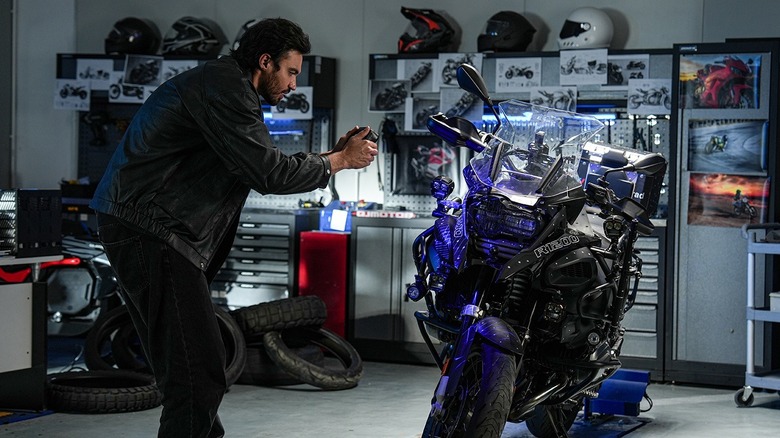
There are broadly two ways to make a 3D model that can later be printed. The first is to use 3D modeling software to build the model from scratch. This takes a significant amount of skill, and it's particularly hard if you need to replicate a real-world object. The good news is that these days, you can simply scan the object and turn it into a digital model, which is the second method. It's possible to get really good results if you use LiDAR on your iPhone, which a lot of people already have.
However, to get the best professional-grade results, you need a dedicated 3D scanner, and the Creality Sermoon P1 is one of the most exciting next-gen models we've seen. The headline feature here is that the P1 is a self-contained system. While you can connect it to a computer and get some performance benefits as a result, the scanner doesn't need to be tethered at all. It's already got all the memory and processing power onboard it needs to do the job.
Accurate down to 0.02 mm, the P1 uses a hybrid light-source system that includes several blue-light lasers and near-infrared (NIR) structured light scanning. This means it can adapt to different types of object surfaces. You could be scanning metal engine components one minute and a human face the next. The launch was in February of 2026, with units expected to actually ship in March.
AtomForm Palette 300
If you've been following the world of 3D printing even loosely, you'll know that multi-color, multi-material 3D printers are the hot new trend. The problem is that if you only have one print head, multi-filament 3D printers are incredibly wasteful. Every time the printer has to change to a different filament, it has to purge a small amount of the current filament as waste. Depending on the model and how often filament changes have to happen, this can lead to a situation where you're throwing away as much filament as you use in the model itself!
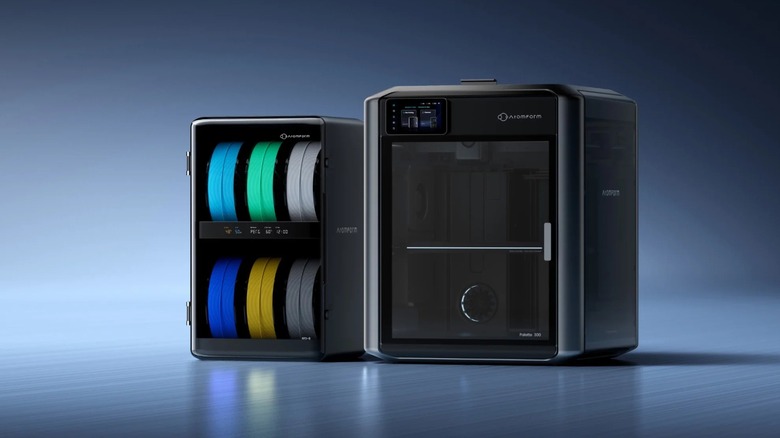
Short of large and expensive multi-head 3D printers, 3D printing engineers have been racking their brains to come up with something at the consumer level that can minimize this waste and improve the performance of printing with multiple filament types. This is like the point in history where paper printers were going from monochrome to full color, and every printer company had its own idea of the best way to make the leap. Which brings us to the AtomForm Palette 300. This printer was announced in early 2026 without a firm confirmation of when it will be available, but the promises it makes are definitely exciting.
With 12 auto-swapping print nozzles and a sophisticated filament-swapping system, this printer claims to reduce waste by 90% and improve filament-swapping speed by 50%! If there ever were a printer we'd hate to be vaporware, this is it.
Bambu Lab Vortek Hotend Upgrade Kit
As we mentioned a little earlier, one of the biggest problems everyone is trying to solve with multi-filament printing machines is wasting material through purging. The aforementioned AtomForm Palette 300 uses a multi-nozzle system with a complex mechanical design, but Bambu Labs has something at least as interesting and sells it as an upgrade kit for its H2D and H2S printers. It's called the Vortek system and has an "estimated earliest release in Q1 2026."
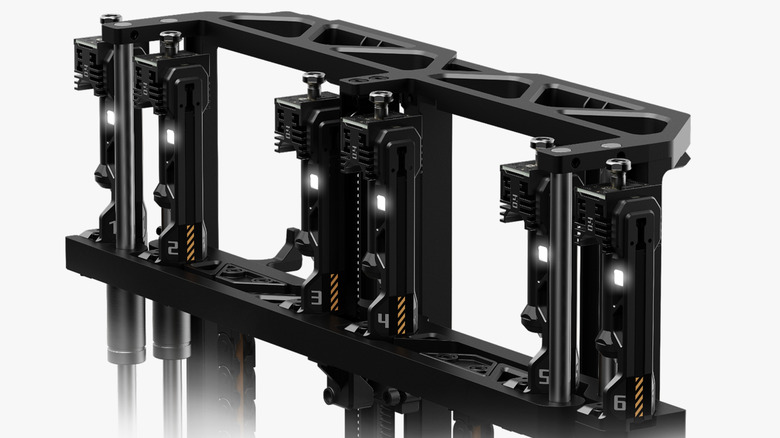
Bambu put out a video in 2025 showing how Vortek works, and the upgrade kit was officially released last November. It's a real boon for current H2D and H2S owners who don't want to buy a whole new printer to get the latest technology from the company. Vortek is similar to the AtomForm solution in its goals, but the details are very different. The system holds up to six hotends, each with wireless chips inside that keep track of the nozzle's state and which filament it's associated with. When the printer needs to change filament, it moves the toolhead to the Vortek, drops the current hotend, and then retrieves the required one.
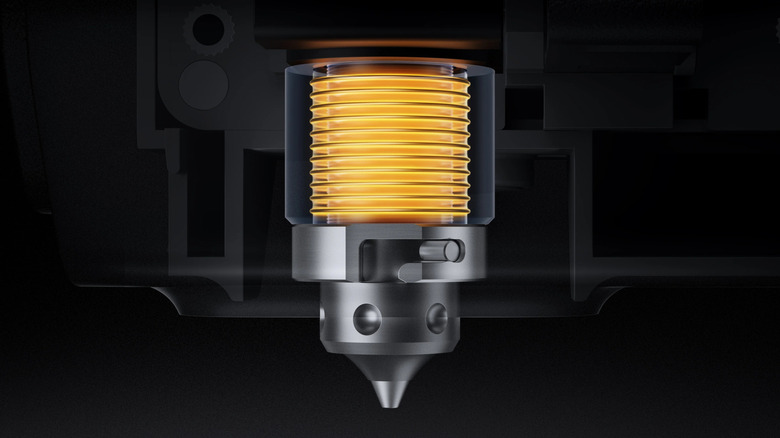
Using induction heating, the hotend is up to full temperature within eight seconds, and since you never have cross-contamination between the hotends, there's no need to purge and waste filament. It's an ingenious way to bypass the complexity and cost of multiple toolheads or multiple nozzles per toolhead. It's also just so darn cool to watch!
Prusa Bondtech INDX Tool-Changer Upgrade
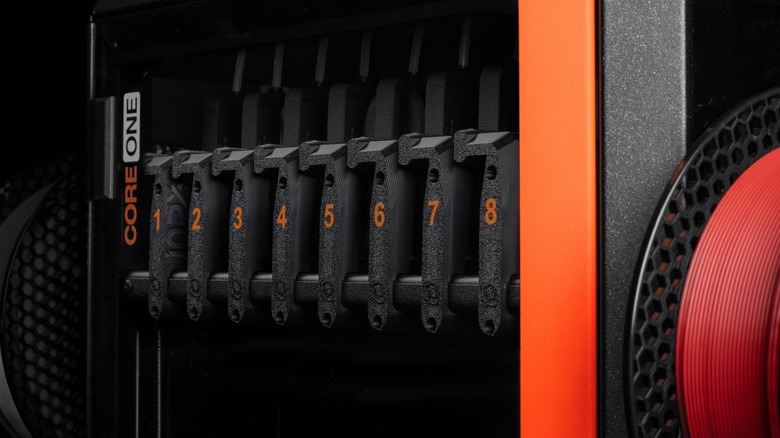
Stop us if you've heard this one before, but Prusa Research announced (via a blog post by Josef Průša himself) a new tool-changer system called the Bondtech INDX system. Yes, everyone is rolling out a solution for reducing or eliminating waste when it comes to multifilament printing. It's an upgrade for the company's CORE One printer that allows for up to eight spools of filament to be loaded at the same time. Using the INDX system, the printer can switch between filaments "in seconds with near-zero waste."
One interesting aspect of this printer gadget is that two companies, Bondtech of Sweden and Prusa, collaborated to make it happen. Seeing the little animated GIFs of the system in action is delightful!
These tool-changing systems are turning printers into something that resembles clockwork automatons, and that's just cool. Unlike the Vortek system we just looked at, the tools in the INDX sit right in front of the toolhead, which doesn't have to travel far. Also, unlike the Vortek solution, these tools don't contain any electronics. They're simple and cheap, practically disposable. "They are essentially just a filament path and a special nozzle," according to Prusa.
This is another solution that makes use of induction heating to get the hotend up to temperature rapidly, and it's starting to look like this is the future of hotends. Induction-heated nozzles have been around the corner for over a decade, and now they are finally here.
Prusa HT Hotend Upgrade
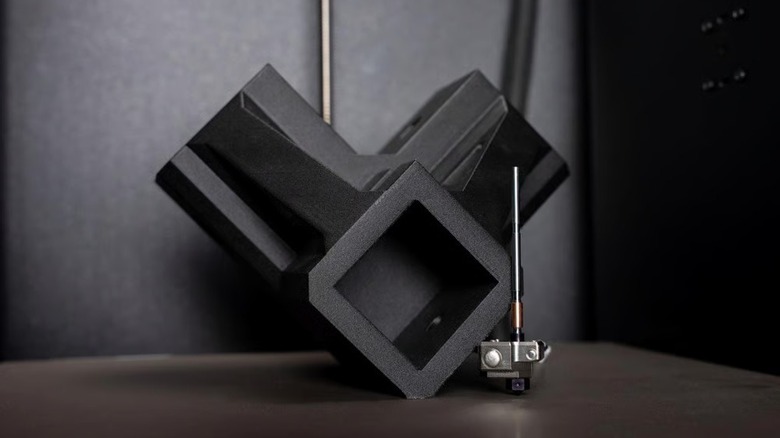
Prusa is offering more than just upgrades that allow for fast tool changing and multi-materials. Sometimes, you want to print one material at the best quality possible. The Prusa HT hotend upgrade for the CORE One/+ and CORE One L promises to enable a whole new range of material possibilities.
Common filament types like PLA, ABS, PETG, Nylon, and TPU can be printed at temperatures below 300 degrees Celsius. In fact, Nylon comes the closest to that number with an optimal temperature of just 290 degrees Celsius. So what does a hotend that reaches 400 degrees, as Prusa HT does, enable? Your printer can now print PEKK-CF, PPS-CF, PPSU, PPA-CF, and more besides. This moves you into the industrial end of 3D printing. It's not just about gaining access to fancier materials, as higher temperatures can also be used to enhance the quality of some common materials such as ASA, PA, and PETG filaments. At least, that's Prusa's sales pitch for this hotter-than-hot hotend.
There's a great breakdown on the HT hotend's announcement post of the pros and cons of the new materials you'll be able to print, but the short version is that filaments that need high temperatures to print are more resistant to everyday conditions. Whereas if you leave your PLA prints inside a hot car, they may not be in exactly the same shape you left them in when you come back, higher-temperature prints won't have the same problem.
BIQU Panda Treat
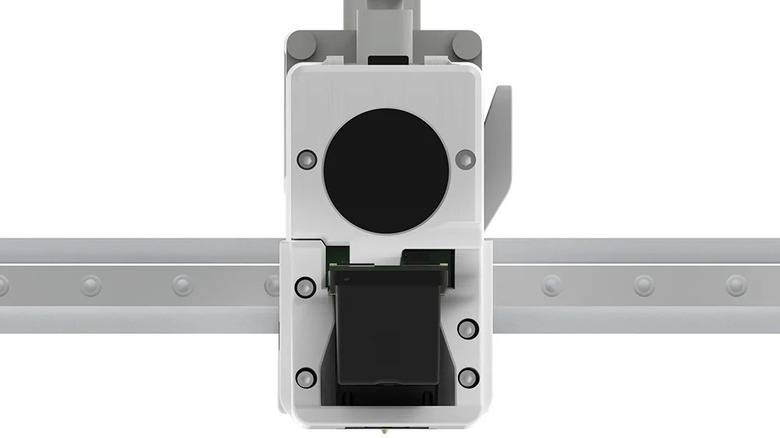
You may have heard that food utensils are one of the things you should never 3D print, and about the numerous potential issues with 3D-printed kitchen gadgets. So you might be a little surprised, like we were, to see BIQU announce a printer mod called the Panda Treat that turns an A/P/X or H Series Bambu printer into an edible ink printer.
However, while 3D-printed food is a growing field, this attachment actually turns your printer into a 2D printer that can use FDA-approved edible ink to print images on 3D food objects. So you can print on cookies, cakes, or "anything you like," according to the product page.
BIQU claims it's an "extremely simple one wire installation," and the kit includes a single PCB (Printed Circuit Board), printable mounts for each Bambu machine this works with, and presumably the hopes and dreams of children who desire cartoon characters on their birthday cakes.
Creality Filament Maker M1 and Shredder R1
If you ever wondered how long plastic takes to decompose and actually looked it up, you'll know that we're talking decades to centuries of time. You might also have heard that the most popular 3D printer plastic, PLA, is biodegradable. That's only technically true, however. The processing and additives used to make the various PLA filament types end up increasing how long it takes to degrade, and this is the best-case filament for environmental-friendliness!
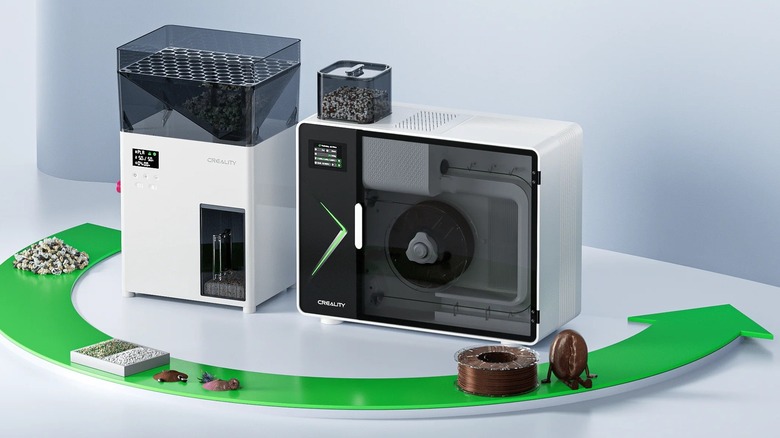
We've seen that there's a major effort to reduce filament waste with new printer upgrades and technologies, but some waste is inevitable. What do you do with models you no longer want or need? That's where Creality's M1 and R1 machines come into the picture. The R1 is a filament shredder that processes waste filament into a form that can be made into new filament. The M1 makes filament from that shredded waste.
Creality is taking deposits via crowdfunding, and $50 reserves either or both of these machines, along with a nice early-bird discount. According to the site, the expected shipping period is Q2 2026. So if you have a mountain of waste filament you couldn't bring yourself to dump, perhaps your time has finally come.
3D printing just keeps getting more exciting!
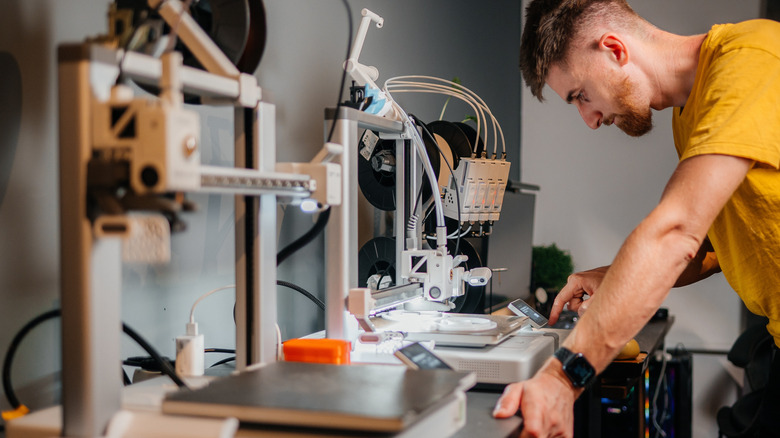
It seems like 2026 is shaping up to be the year when multi-filament 3D printers finally address their waste problem, and when 3D printing hobbyists and businesses can start to take action when it comes to present and past waste that's already here.
Besides these amazing new gadgets, there are some truly next-generation printing systems on the horizon, too. The Flashforge CJ270 is being touted as the "world's 1st desktop full-color 3D printer." Industrial or professional printers that can paint the outside of a 3D model have been around for a while now, but seeing that come to the desktop is incredibly exciting.
Likewise, the Gauss MT90 promises to bring metal 3D printing to the desktop, using PME (Paste-based Metal Extrusion), yet another brand-new branch of 3D printing to get excited about. For those of us who have been in the hobby since the very early days, it almost feels like the replicators from Star Trek are just about here.