

7 Weird Tech Fads That Completely Vanished
In over two decades of technology journalism, I can tell you I've seen some truly weird tech fads come and go — from weird web crazes that every venture capitalist and tech blog swears will change everything to pointless hardware that somehow captured the zeitgeist and opened our wallets. I might even be guilty of backing some of them on Kickstarter. In fairness, sometimes technology does change everything: the internet was once considered a fad, after all.
But we've gathered up the worst offenders, and thankfully they've gone to the great tape drive in the sky. Sadly, the awkward Facebook Poke is not among them because Meta keeps trying to bring this feature back.
Of course, nothing ever really dies on the internet, and you may even have some of these sitting in your drawer; but technology loses its fad status when it falls out of the mainstream consciousness, the headlines stop, and projects are silently canceled or relegated to niche fan sites.
1. NFTs

Imagine falling for the idea that you could digitally own a one-of-a-kind GIF of a monkey. Some people certainly fell for it, and others made an insane amount of money off non-fungible tokens (NFTs). The concept behind them was that anything could be "tokenized" on a blockchain to prove digital ownership (at least until the URL it pointed to was taken offline). NFTs were a particularly nasty offshoot of cryptocurrency meme coins that can thankfully be relegated to the history books — and frankly, good riddance.
Proponents of NFTs soon realized there were only so many monkey-based image variants one could feasibly sell before hapless buyers realized it was all a scam, so they pivoted to claiming the technology could be used to transfer items and cosmetics across games. Naturally, the only games this ever worked for were those designed from the outset to sell you NFTs. Where the technology did bleed into existing platforms, such as Reddit collectibles, they were quietly removed and forgotten.
It's not just NFTs, of course — any time the underlying blockchain technology has attempted to move beyond digital currency it's been shoehorned in where a better solution already existed. There are a few exceptions, such as the Matter smart home standard that uses a blockchain-based Distributed Compliance Ledger to verify hardware devices and manufacturers — supposedly a security feature to avoid rogue devices getting on your network.
2. Curved TVs
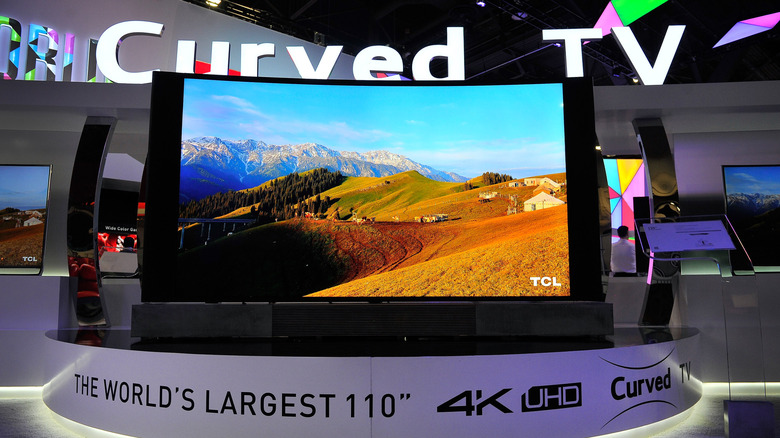
When you're sitting at a desk, a curved superwide monitor is a glorious thing; I'm writing this on a 40-inch one. It's incredibly immersive for all kinds of gaming and great for productivity, reducing glare by focusing the screen toward the viewer. But when there's more than one of you viewing a display — as a family TV tends to be — curved TVs were utterly useless. If you're the unlucky one relegated to the guest seat at the side of the room, half the screen became an unwatchably murky puddle.
Not to mention the fact that TVs tend to be mounted flat on the wall rather than freestanding on a desk, and that made them look even more awkward and unbalanced. More than anything though, curved TVs were just entirely unnecessary at the distance you usually sit from one. When you're sitting less than two feet from a big monitor, it's arguably an essential feature.
3. 3D TVs
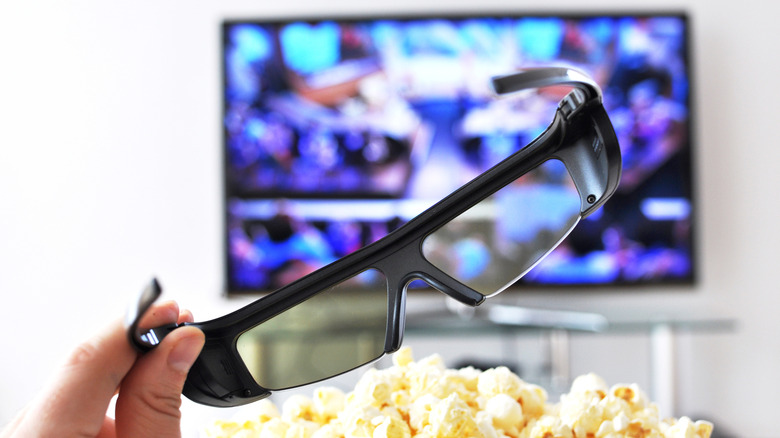
The premise of bringing the IMAX 3D cinema experience into your home was alluring, but the practicalities of making everyone wear some bulky flickering glasses for the privilege just didn't catch on. At least when it came to TVs.
It wasn't just the practicalities of 3D TVs either but the availability and quality of content too. A typical conversation about 3D movies invariably starts with "Avatar," a shining example of 3D done right. But to make that movie, James Cameron and Vincent Pace had to custom-design a camera rig that mimicked human focus. From concept to final production, the movie was shot with 3D in mind. Lower-budget movies often just attempted to separate the left and right channels in post processing, with abysmal results. No wonder people weren't impressed.
That's not to say that 3D content doesn't have a place in the modern world, however — VR headsets and Apple Vision Pro make for a fantastic personal cinema experience (Disney+ has a great selection of 3D movies for the Vision Pro), where 3D content is a natural match given the dual eye output. Nothing beats the immersion offered by VR180 3D video in 8K resolution, but those aren't movies — they're travel logs and short experiences. Shoehorning 3D into TVs was a disaster.
4. Modular phones
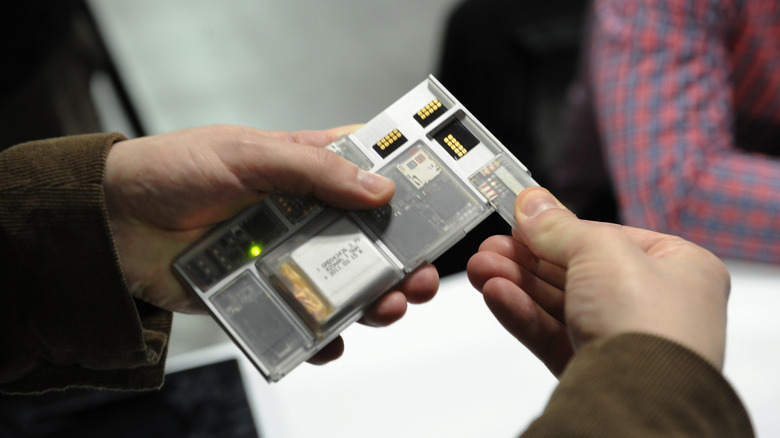
Of all the weird tech fads that came and went, this is perhaps the only one we'll shed a tear for. The idea for modular phones was admirable: What if phones were just like PCs, where you could upgrade your storage, replace the graphics card, or swap out your regular camera lens for a telephoto one? That would extend the lifespan of a smartphone to potentially decades, reducing the impact of e-waste piles that are destroying the earth. But upgradeable desktop PCs are bulky devices, and the practicality of creating a modular phone that's designed to fit in your pocket was doomed to failure. Google's Project Ara was the most famous but certainly not the only attempt during the rise and fall of the modular phone dream.
Honestly, I think we'd all appreciate an easily replaceable battery, but market forces for the major players dictate ever slimmer devices that are almost impossible to repair. Whether the modular phone is completely dead is debatable, with modern attempts like the Fairphone 6 taking a modular approach to accessories, at least. It's not nearly as extensive as being able to change the camera module or upgrading the system on a chip, but you can swap the back panels at least and repair the battery.
5. Google Glass
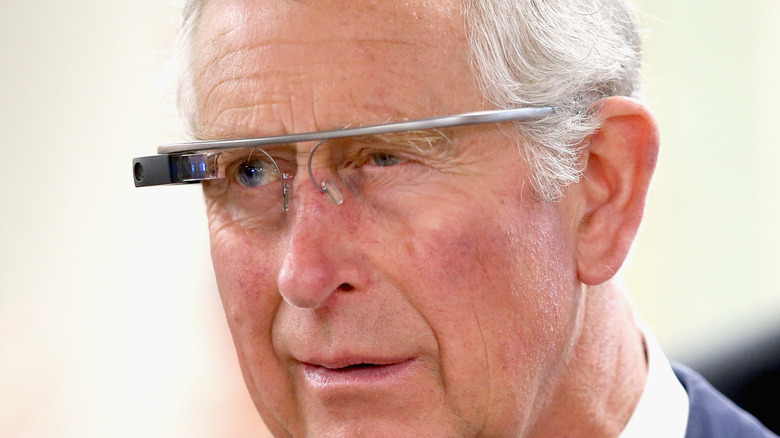
Google Glass was a head-mounted display with built-in camera launched in 2013 as an always-on digital assistant. It could give directions, walk you through recipes, or let you search for things in real-time that were in your visual field.
Glass was before its time, in our opinion, but the main concerns involved its surreptitious recording abilities. Ultimately, it was a combination of buggy software, no clear purpose, and public hysteria whipped up by a media frenzy that killed the Glass, with the limited production run halted less than two years later and support finally ending in 2023. It reached such a fever pitch that The Guardian even published a piece on "how to avoid being a glasshole." Meta didn't get the memo, though, and has launched its own smart glasses with a camera that are already being called pervert glasses. And Google didn't give up either, teasing the Project Astra smart glasses back in 2024.
6. GeoCities, Angelfire, and Tripod

For those of us old enough to remember the creation of the internet, you'll know that everyone and their dog needed their own website. Services such as Geocities, Angelfire, and Tripod let you easily stake out your own little patch, organized into virtual "neighborhoods." These personal homepages were filled with autoplaying MIDI files, spinning GIFs, hit counters, sparkly text, and guestbooks. It was an exciting new way for anyone to express themselves online. Unfortunately, it exposed the harsh truth that most people don't have anything interesting to say and should probably just ... not. There are lots of other 1990s websites still alive and kicking you can explore.
Personal homepages have largely disappeared, replaced by huge social platforms where everyone says increasingly outrageous things to garner exposure. The stubborn few who persevered when blogging was invented occasionally found themselves becoming professional writers, covering topics such as strange technology fads that completely disappeared and other such things.
7. Netbooks
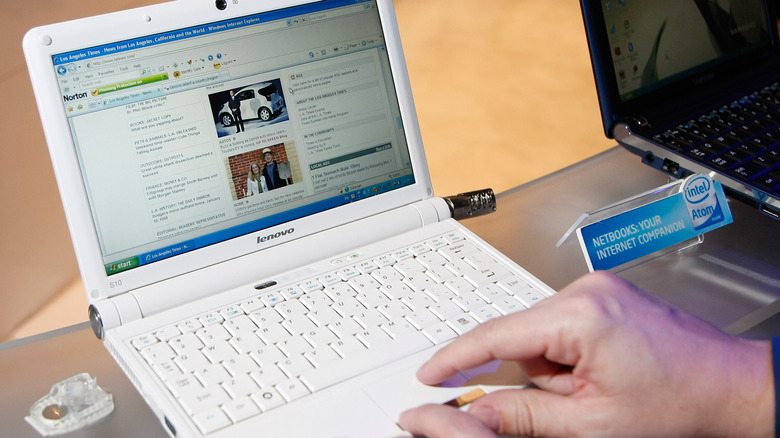
Netbooks such as the Asus Eee PC were tiny, underpowered, budget laptops, so-called because they were designed mainly for browsing the net. Or to put it another way: They were incapable of doing much else. Some people actually thought they would be the future of computing, and the review hyperbole was in full swing for the "ultimate laptop."
You can understand where the netbook trend came from, and it's a great of example of a dead evolutionary branch of technology history. Laptops used to be a lot bulkier — we're talking multiples inches, not fractions of one. The allure of a smaller portable computing device was understandable. But around the same time as the first netbook launched in 2007, the world was introduced to the iPhone — and we all know how that story ended. The iPhone became a more functional full computing device, offering web access, email, and eventually apps in your pocket. The netbooks were relegated to e-waste piles.
Some might argue that the netbook failed because it ran Windows, which brought a truckload of legacy support baggage and unnecessary features. The concept of a single-purpose web-browsing laptop lived on in the form of Chromebooks until only recently when it was announced that ChromeOS and Android would be eventually be merged into Aluminium OS.