

If You Think Laptops Are Expensive In 2026, You Won't Believe What They Cost In The '80s
We may receive a commission on purchases made from links.
If you check the prices of high-end laptops, you might come to a premature conclusion that modern-day laptops have become expensive. For instance, the 16-inch MacBook Pro powered by an M5 Pro or M5 Max chip starts at $2,699, while the Lenovo ThinkPad P16 Gen 2 starts at $2,539. Both can easily surpass the $3,000 mark if you add some extra features to your configuration, but if you think these prices are high, then you won't believe how much laptops were selling for in the '80s.
Back then, the concept of laptops was still in its infancy, and these gadgets weren't as impressive as even the cheapest laptops that you can buy today for less than $300. Like all technology, early laptops did command a premium while being less capable than modern-day entry-level laptops.
The first modern laptop with a clamshell design was the GRiD Compass 1101, which was launched in 1982 with a minimum price of $8,150. That price tag made it impossible for the laptop's target audience of business professionals to acquire it in large numbers, and instead, the GRiD Compass 1101 was mainly used by NASA and the U.S. military. This early laptop had a 6-inch screen with 320x240 resolution, and it lacked an integrated battery, floppy drive, or hard drive.
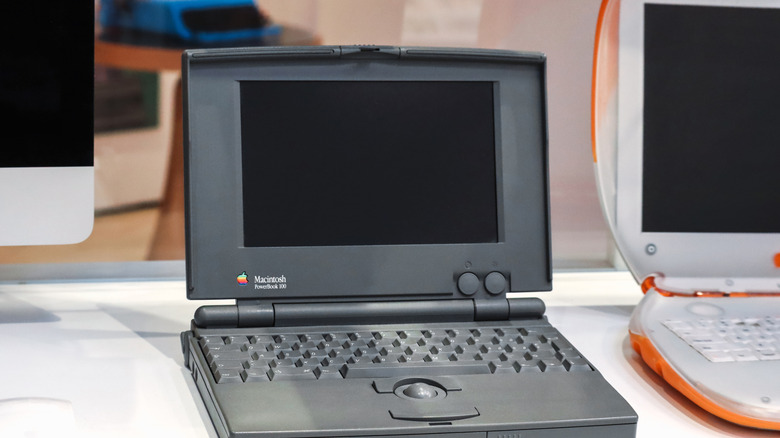
Early laptops had premium price tags and offered less
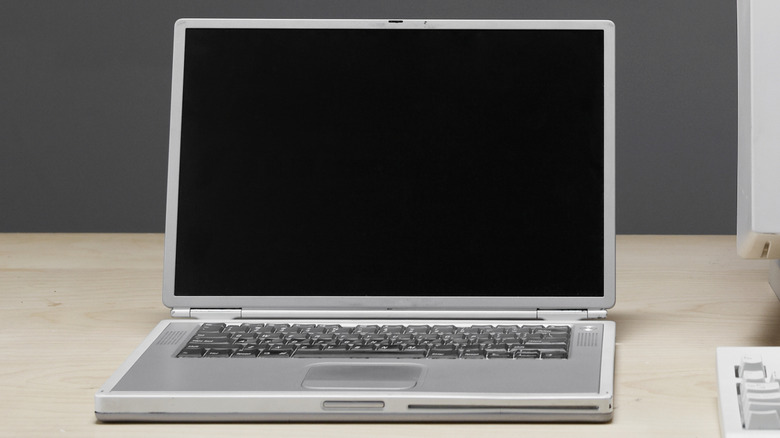
Even as the '80s progressed, laptops were still luxury gadgets, costing thousands of dollars. The high prices meant that only businesses or well-to-do individuals could afford them. Apple's first Macintosh laptop, the Macintosh Portable, debuted on September 20, 1989, and it wasn't cheap — it cost $6,500.
Another excellent example that should give you an idea of just how expensive laptops were in the 1980s, is the $6,899 Toshiba T3100, which was introduced in 1986. Despite the price, Toshiba's laptop didn't even have a battery, an important feature to consider when buying laptops, and, as a result, it had to be plugged in at all times.
Compare those early prices to that of modern laptops, where a device going for just $250 will get you a better processor, lots of memory and storage, and a better display than what you'd be able to buy in the '80s for thousands.
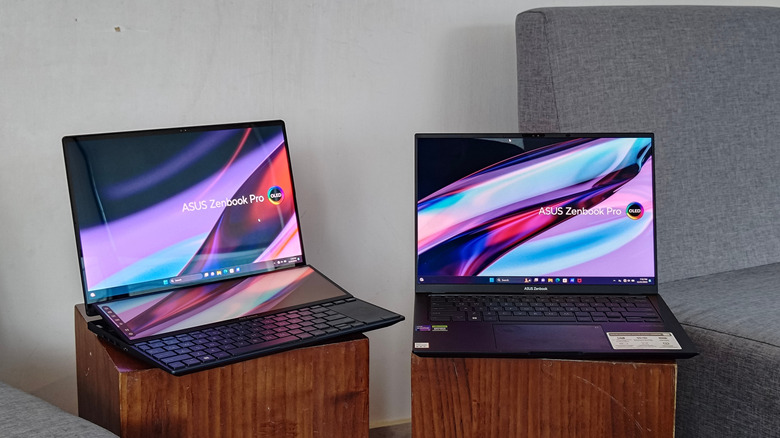
Take the Asus Vivobook Go Slim laptop, for example. It has a list price of $229.99 on Amazon but offers 4 GB of RAM, a 128 GB SSD, a 15.6-inch display with 1920 by 1080 resolution, a 720p webcam, and is powered by a 2.8 GHz Intel Celeron N4500 processor. That's way more powerful than the GRiD Compass 1101 or Apple's Macintosh Portable.
The price of modern laptops vs. early models
From the prices alone, it's evident that laptops were expensive back then. However, judging the price of early laptops as they were doesn't tell the whole story of just how much these gadgets used to cost. That's because of an economic concept called inflation, which, in a nutshell, is the decrease in the purchasing power of money, according to Investopedia. In other words, the value of money decreases as time goes by. With that in mind, it's not fair to directly compare current laptop prices to what the early models from the '80s were going for because of the difference in the value of money.
For an accurate comparison, we have to factor in inflation and use the adjusted figures to find how much a dollar in the '80s is worth in today's money. Based on the Federal Reserve Bank of Minneapolis' Inflation Calculator, $6,500 in 1989 is worth around $16,880 in today's currency. On the other hand, the GRiD Compass 1101's price from 1982 is equivalent to $27,190 after adjusting for inflation. That would make both of these early laptops pricier than the most powerful laptops you can buy in 2026 — imagine paying that much for the specs the laptop offers.
Overall, when you factor in inflation, the gap between today's laptops and early models widens, making it crystal clear that the current models are cheaper and, of course, offer more value for your money. So the next time you think you're paying a premium for a laptop, take a trip down memory lane and remember just how expensive they used to be.