

5 Ways To Speed Up Your Old MacBook
A MacBook laptop can last for several years thanks to a combination of factors. First, Apple pays attention to durability, with its MacBook Neo, Air, and Pro models being made of aluminum. Second, Apple controls the software, ensuring that a Mac can support several years of macOS updates. Finally, Apple has been making its own M-series chips for its Macs since 2020, which provide dependable performance and efficiency. Despite all that, an old MacBook can show its age after several years. Before replacing the MacBook with a brand-new model, you can try various tricks to speed it up and have it perform at its best.
What you can't do to speed up your MacBook is replace key internal components. The RAM and SSD are soldered to the motherboard, so you can't upgrade them as was once the case with some Intel-based MacBooks. On that note, if you still use a MacBook that has a replaceable HDD/SSD and upgradeable memory, these are things you can consider. However, you must own a 2017 MacBook Air (or earlier) or a 2015 MacBook Pro (or earlier) to be able to swap the SSD. As for memory, MacBooks have not supported RAM upgrades since 2012, when the last MacBook Pro with user-replaceable RAM shipped.
If you want to speed up a MacBook that's almost a decade old, you'll still have to deal with the same processor, which can't be replaced. Also, macOS updates may no longer be available for your model. A better option may be to buy a new device. The new $599 MacBook Neo is a good place to start. The tips below will apply to newer MacBooks that feature soldered components that can't be upgraded.
Keep your MacBook clean
One reason your MacBook may feel slow is temperature. It may overheat depending on how you use it and how clean it is. The computer heating up during regular tasks, especially more intensive ones, is normal. However, the laptop can also overheat because of external factors. Apple recommends using the MacBook in an environment with a temperature between 50 and 95 degrees Fahrenheit (10 and 35 degrees Celsius). Apple also advises using the laptop in an environment where the relative noncondensing humidity is between 0% and 95%.
You should also avoid covering the Mac's keyboard and using it in bed or on a pillow, which may prevent the laptop from cooling properly. Apple also recommends not blocking ventilation openings. The extra heat resulting from improper use may impact the performance of the device, as the processor may throttle its performance. In turn, your MacBook may feel slower.
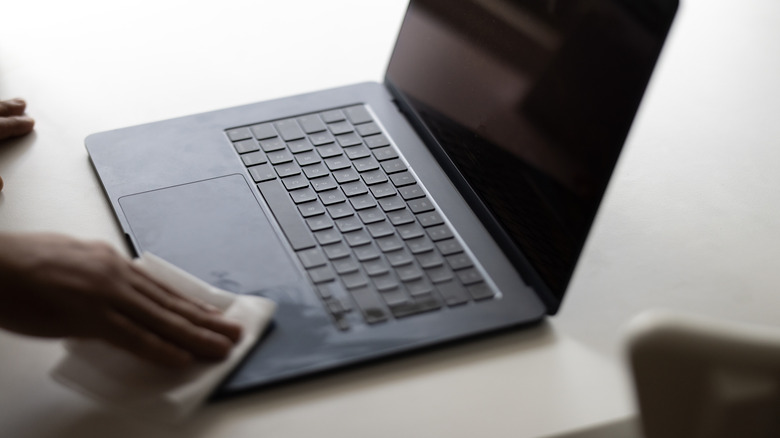
Apple's recommendations also imply that you have to keep your MacBook clean to prevent the accumulation of dust and debris in vents and the keyboard. The company has a support page dedicated to cleaning Apple products, advising MacBook owners to shut down their computers when cleaning them. A soft, lint-free cloth is recommended for the exterior of the laptop. Only the MacBook Pro in Apple's M-series MacBook lineup features internal fans. While Apple doesn't recommend opening the bottom case to clean its laptops, more tech-savvy users who have owned their laptop for several years may want to remove dust from the notebook's interior. iFixit has a tutorial on how to clean the MacBook's fans to prevent overheating.
Remove the apps you don't need
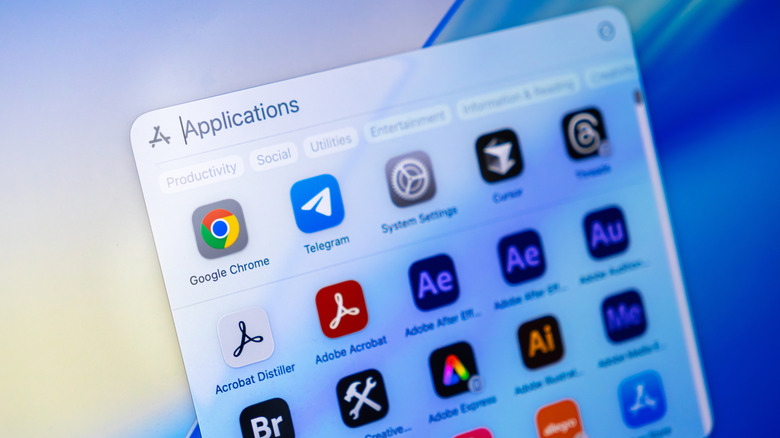
The place to start when trying to speed up your MacBook is the apps, as they can also cause overheating, which lowers performance. In addition to straining the processor and RAM, some apps can also use a large amount of storage. Open the Activity Monitor app on your device and look at which apps may be responsible for slowing down the computer. You'll want to look at CPU and memory usage, and make notes of the apps that may be a drain. Your internet browser may show up in there as using plenty of resources. If that's the case, you'll want to see how many tabs are open on your device, and close the ones that aren't needed. Disable extensions to determine whether they may be consuming resources.
For all other apps hogging resources in Activity Monitor, you should turn them off, especially if you're not using them. Look at the apps in your dock, and quit all the ones that have a dot under them, but you're not actively using. You can delete the apps you almost never use, and download them later, when needed.
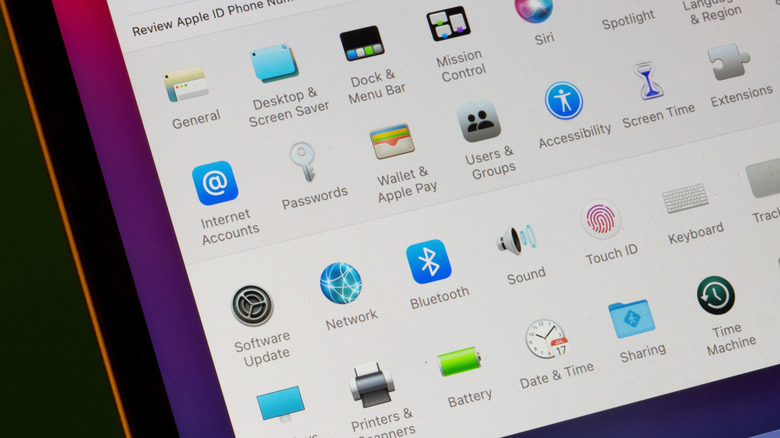
Another thing to consider is preventing some of the unused apps from starting when your MacBook boots up. Click the Apple menu, start the System Settings app, and go to the Login Items & Extensions under General. The Open at Login menu will show you all the apps that have ever asked for permission to start when you log in. Remove the ones you don't want. Also, the same menu shows you which apps perform tasks in the background. You can turn off some of them to improve performance, but this action may impact the operation of certain apps.
Declutter your storage
Once you've cleaned up your apps, you should restart the MacBook. You should also routinely restart the laptop rather than simply closing the lid and putting it to sleep. Even then, your Mac may slow down if you don't have enough storage space. An old MacBook may feature 128GB or 256GB of storage that you can't upgrade. You will want to free up space on the SSD to speed up the MacBook, but remember to back up sensitive data to cloud storage or an external SSD.
Go to the same System Settings app and look at the Storage menu, which will give you a breakdown of what is using your storage. The app will show you which apps take up storage space and identify other potential culprits, like iPhone backups, photos and videos (synced in the Photos app), and other content. The Storage menu also gives you access to an Optimize Storage menu that lets you remove movies and TV shows you've watched automatically, and a setting for emptying the trash automatically. Finally, the Storage menu will also use the Store in iCloud feature to move some of your data to the cloud. You can use other cloud services to back up your data.
Keeping local copies of your data may be a good idea. You can save photos, videos, music, and documents on external drives and only access them from the external SSD when you need them. On that note, it may be a good idea to back up your MacBook on a separate external SSD via Time Machine to ensure that you have a copy of your data in case something goes wrong with your aging MacBook.
Perform a clean macOS install
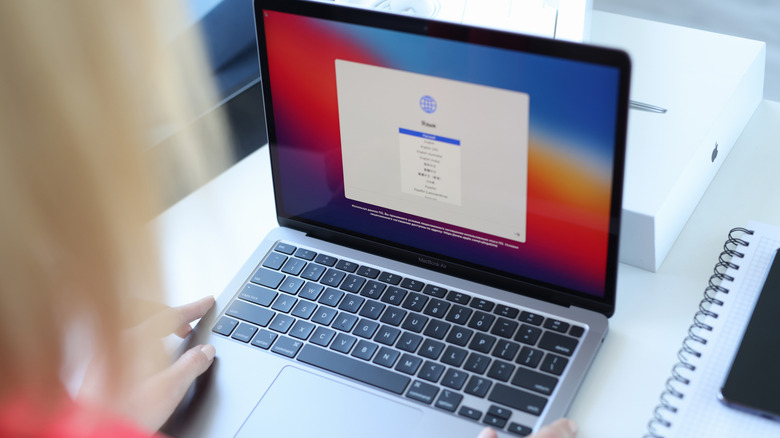
You should update macOS and the apps you have installed on your Mac to ensure you benefit from the best possible software. Each new macOS release brings new features, but also security updates and fixes for bugs that may have impacted your Mac's performance. If you've tried everything, including updating the laptop and nothing seems to speed up your Mac, you can consider installing a clean version of macOS after you've backed up all your data. This method may help improve performance, as it will get rid of software issues you may not be aware of, originating from old apps that you're no longer using. A new macOS install will also remove previous settings and system caches and may speed up your experience, at least initially.
However, performing a clean macOS install isn't for everyone. Some people may not be comfortable erasing their MacBooks to start over, as they will worry about data loss and other issues. More experienced users who are comfortable with such tasks should also consider not restoring from a previous macOS backup after the clean install, to avoid any bugs that may be tied to a previous macOS state. Instead, they should install apps from scratch and migrate personal data manually from an external drive, rather than via a Time Machine restore process.
Run macOS on an external drive
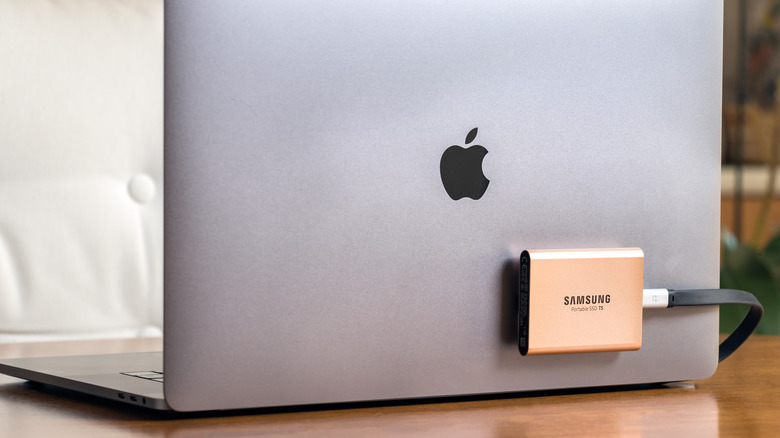
Despite your best efforts, you may not be able to free up enough storage space on a 128GB or 256GB MacBook. There's an option you can consider here, but it's not necessarily a convenient one. You can install macOS on an external SSD that may be faster than your old MacBook's SSD. An external SSD may also be a solution if the health of your old MacBook's SSD is a risk factor. The MacBook's Disk Utility app will provide more information about the health of the laptop's built-in SSD, which may warn you that the disk may soon fail.
You can buy an external SSD with a significantly larger capacity and turn it into a bootable macOS drive. You'd need to be a somewhat savvy Mac user to be comfortable with performing the steps needed to boot your laptop from an external drive, which may include restoring your data from a MacBook Time Machine backup to the new drive.
After you've performed all the steps, you'll be able to boot your MacBook directly from the external SSD. This is also one of the main drawbacks of using this procedure. You'll need to carry the drive with you at all times and ensure it's not lost or stolen. Also, using the MacBook with an external SSD attached to it may not be convenient at all times. You'll need to ensure the drive is connected to one of the MacBook's USB-C ports when sitting on the couch or using the drive in bed. Forgetting the SSD at home can also be an issue that can impact your productivity.