

What A 'Smart Home' Looked Like In The 1930s Will Blow Your Mind
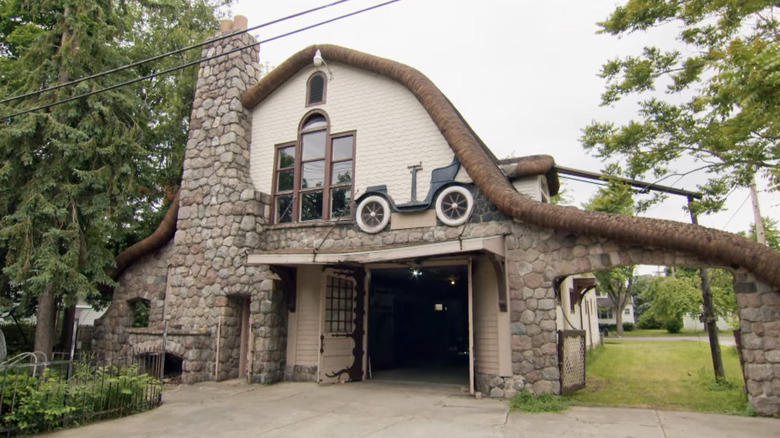
In early 2025, the History Channel reality series "American Pickers" showcased what could be called a "smart home" from the 1930s. It's a fascinating glimpse at not only how far technology has come, but also how resourceful the owner was back in the day. Once owned by telecommunications inventor W.J. Moore, the home located in Caro, Michigan, is unique in its design and set-up. The show's hosts described it as the "wizard's castle," calling it "hands-down the most customized home I've ever been in in America." Most notably, it features elements that today, almost a century later, we might call early glimpses of the concept for a smart home.
Given Moore's experience in the earliest days of technological innovation, having founded Moore Telephone Manufacturing Company and Moore Telephone System in the late 1800s, it's no surprise that the house would feature what people might have referred to back then as high-tech innovations. Today, of course, they are rudimentary in comparison to our AI-driven smart home world. But it's an intriguing look into the past and the early makings of smart control for lights, locks, even a home security system and garage door opener.
Early automation

Automating tasks with essential smart home gadgets is at the forefront of smart homes today, and Moore figured out an analog way to do that long before this century. The carriage house, for example, which served as his workshop, has a pulley system that functions like an early version of an automatic garage door opener. Another pulley system was set up for a zipline that hung over the backyard pool so he could drop in from a model plane, the home's owner showing a photo of Moore using it in the '50s.
Throughout the home, there's hardwiring to control everything from door locks to lighting, arguably the earliest known version of smart lights and remotely controllable locks. He couldn't use voice commands or apps to turn on the lights or lock the door. But he did create an elaborate control panel — similar to smart control hubs or smart displays, or devices like the Amazon Echo Hub, and tablets like the Google Pixel Tablet and Apple iPad, all of which can be used as portals to control smart home devices. It was designed so he could get tasks done with a physical button push. He set up the equivalent of zones with names like "south hall" to control only connected devices in that area. The family notes detailing instructions Moore typed up at the time are still there, providing a glimpse into how he set things up and how it all did, at one point, work.
Sign of things to come
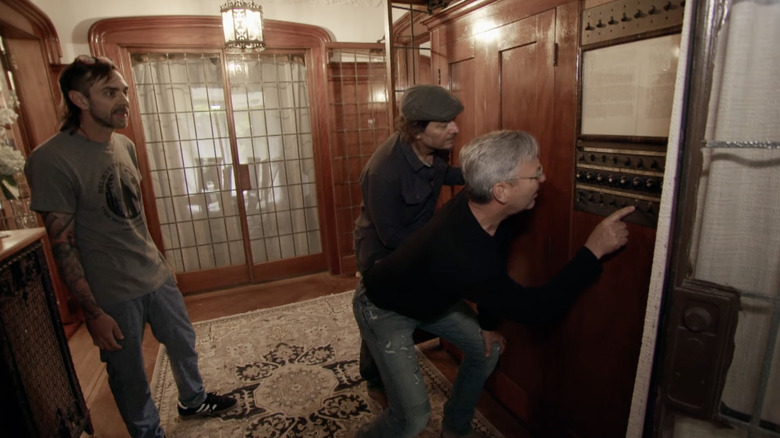
Moore was clearly ahead of his time, going much further than basic automation with a self-made alarm system. An ingenious interpretation of a smart security system or smart alarm, it could lock the doors, turn on lights, and contact emergency services through connection to his phone line in the event of a break-in. No fees or subscription required. The control panel also has light indicators to advise of the status of water pumps, an great-for-its-time alternative to push notifications and other mobile warning alerts. Similar indicator lights were set up in other areas of the home, like by the fireplace, so he would know when a door was open, for example. He basically had his own version of a Ring video doorbell or smart lock app in the form of physical, illuminating buttons.
While the gadgets and gizmos in the house are no longer functional, there are preservation efforts being made to return it to its original state. From a technological perspective, it's a mind-blowing look back at how the idea of automating tasks and creating smart gadgets in the home isn't as new as we thought it was. The technology pales in comparison to today's innovations, of course. But back then, they would have been just as groundbreaking. You can check out the segment of "American Pickers" Season 23, Episode 19, on History Channel or YouTube.