

That Circle On Your Car's Dashboard Is Actually A Sensor – Here's What It Does
We may receive a commission on purchases made from links.
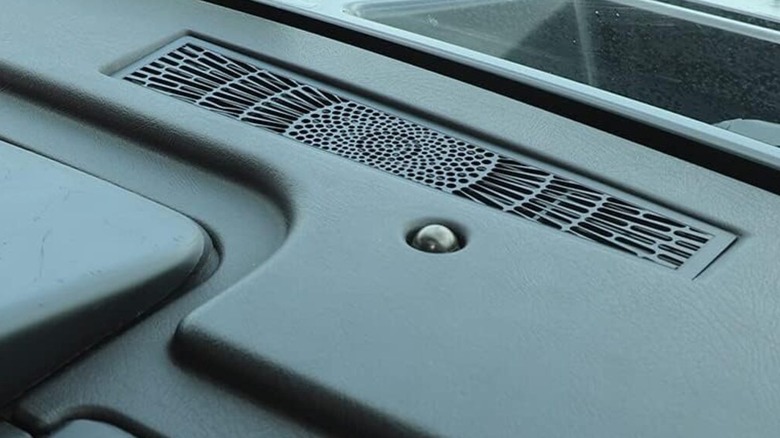
Have you ever wondered what that strange-looking circle on your car dashboard is for? You know, the one that's placed just below your windshield. Not to be confused with the common car feature that can be used to track you, this is an important bit of tech known as a sunload sensor. Working in unison with your vehicle's climate control system, a sunload sensor has one important job: Monitor the intensity of the sunlight that pours into your car's cabin.
Typically equipped with a photodiode — a semiconductor that uses light to generate electricity — the sunload sensor sends commands to the HVAC system based on how intense the sunlight is. The more intense the sun, the harder your vehicle's air conditioning will need to work to keep you cool. While some vehicles only have one sunload sensor, cars with dual-zone automatic climate systems often have a sensor located on both sides of the dashboard. These sunload sensors may be located on a speaker grill, defroster vent, or some type of removable trim plate.
Sunload sensors help keep your car's cabin comfortable
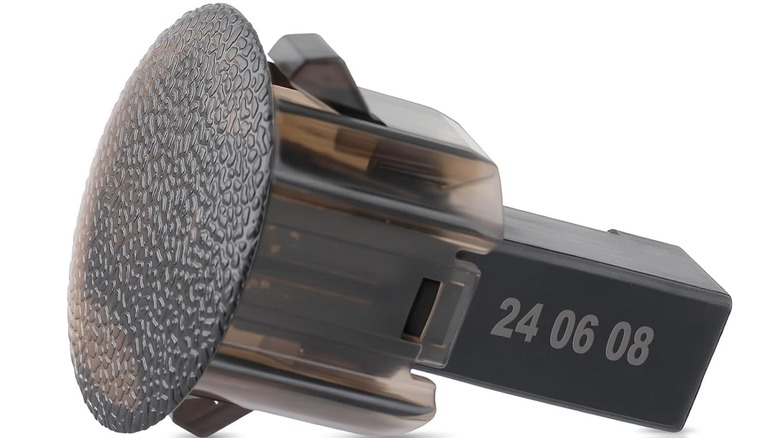
When a sunload sensor communicates with your vehicle's climate control system, factors like fan speed, blend doors (that mix hot and cold air), and air temperature are affected. If you've ever noticed your car auto-adjusting the A/C on a hot day, you're not dealing with faulty HVAC; that's just the sunload sensor doing its job.
Occupants can of course override the vehicle's target temperature manually. However, the sunload sensor should still make HVAC adjustments to maintain the new, chosen temperature. Considering that sunlight makes up about 60% of the interior heat load that vehicle climate control systems contend with, we'd say the sunload sensor is a key component.
So, it's important to make sure your sunload sensor is operating correctly at all times. Covering it up, or blocking the area of the windshield it sits beneath, may result in the sensor delivering inaccurate readings. And no one wants it to be too warm on a hot day, or too cold when it's frigid out — unless you're a fighter pilot running their A/C on full blast in winter of course.