

Micro HDMI Vs. Mini HDMI - What's The Difference?
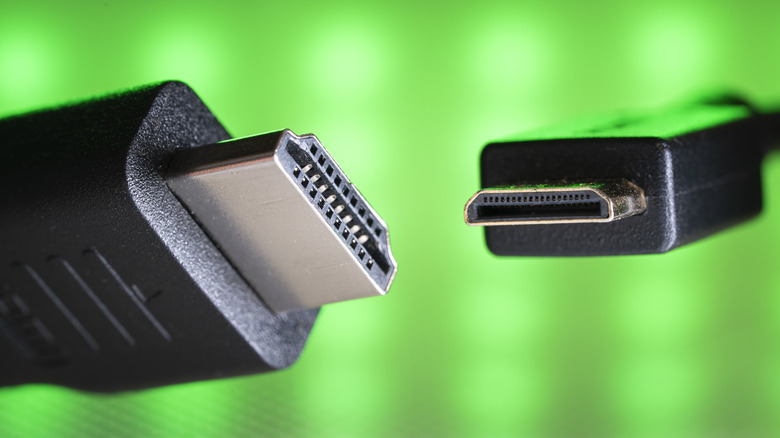
The world of High-Definition Multimedia Interface (HDMI) cables has expanded over the years. Where once a single cable type was enough to transmit video and audio from a device to a television or monitor, we now have several types of HDMI cables to help address the needs of new and advancing technologies.
Both Micro HDMI and Mini HDMI were designed to address space limitations. As devices continue to get smaller and smaller, video output standards need to adapt in order to address these new devices. But what makes both of these cable types interesting is that they each contain the same 19-pin layout as standard HDMI, only shrunken down.
The Mini HDMI (Type C) cable standard features a connector measuring 10.42 mm by 2.42 mm and is typically used in handheld devices such as cameras, camcorders, laptops, and various microcomputer boards. Micro HDMI (Type D) features an even smaller connector (5.83 mm by 2.2 mm) and is more rarely used than Mini HDMI, built to address ultra-compact devices such as action cameras and smartphones. It's also essential for connecting various Raspberry Pi accessories.
The same purpose at different scales
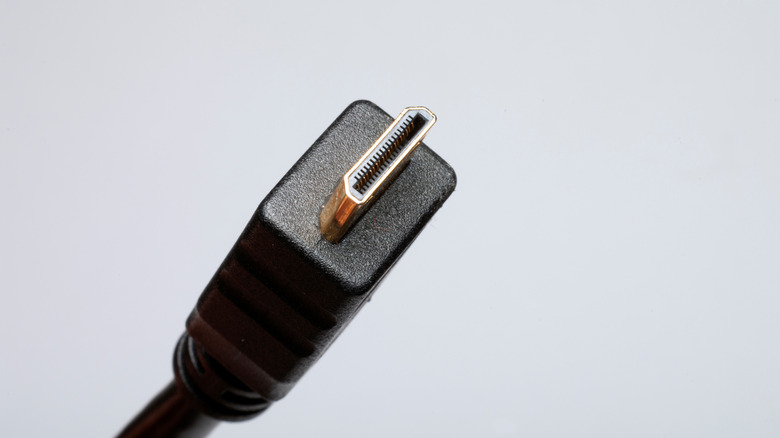
Both Micro HDMI and Mini HDMI cables serve the same purpose, which is to deliver high-density video and audio through small connector plugs, often for use with portable devices. This allows manufacturers to choose which HDMI type best fits within their overall product design.
Both cable types can support 4K resolution and all the same standards, making neither cable superior to the other on a technical level. You can also purchase adapters to allow for standard HDMI cables to be plugged into Micro or Mini HDMI ports, with some supporting both types in a single cable. And while HDMI connectors seem to be getting smaller, the announcement of HDMI 2.2 means more changes are coming.
The focus of this new standard, the first update in nearly a decade, will be on future expansion of the technology. Specifically, HDMI 2.2 supports 96Gbps bandwidth (double the current standard) and 10K video, both of which will take a while for equipment manufacturers to implement. It's not hard to imagine some cabling changes might be in the works to support this new standard, too.