

5 Major Electric Cars Models Ranked By How Much They've Depreciated Since 2020
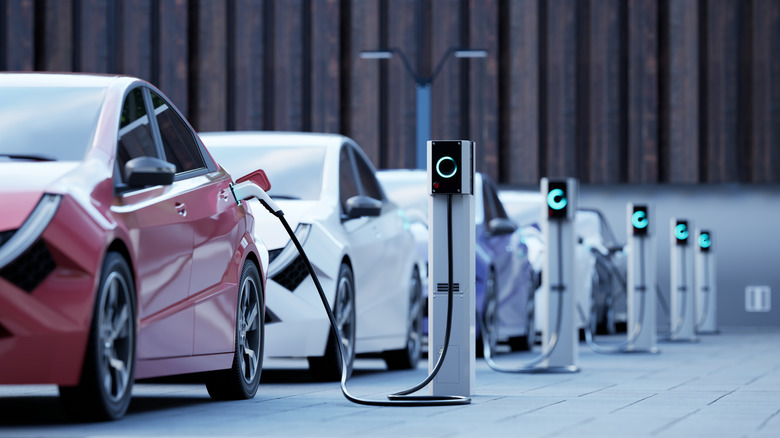
Compared to standard gasoline-powered vehicles, electric vehicles (EVs) suffer from higher retail prices when new and higher depreciation on the resale market, and the latter seems to have gotten even worse after the federal EV tax credit ended in 2025. EV technology has advanced in recent years with EVs that now boast ranges in excess of 450 miles on a single charge, but deprecation continues to climb as well, with some EVs selling for less than 70% of the original MSRP. This is all bad news if you bought an EV when it was brand new, but it's great news if you're in the market for an older, pre-owned model.
To compile this list of the highest-depreciating EVs, we compared the original MSRPs of major models that were released or updated in 2020 with what each model is worth on the used-car market, as of today's writing. Keep in mind that used car prices fluctuate constantly, so vehicle values may change. We have all the details about our selection process at the end of the article to show exactly how we calculated the data to rank these EVs.
Audi e-tron Sportback
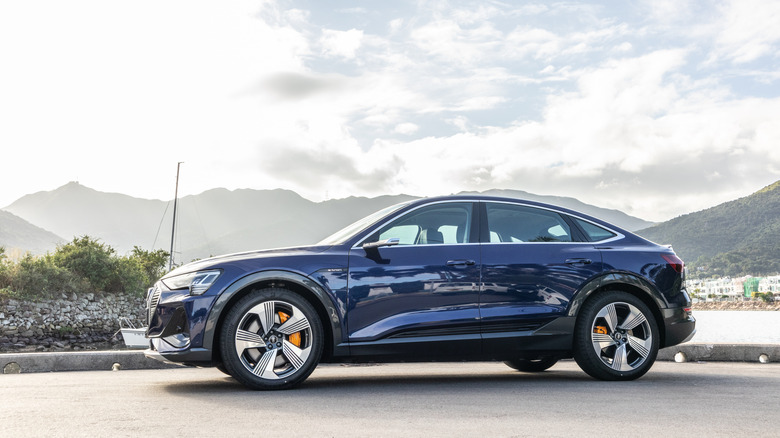
The 2020 Audi e-tron Sportback is an all-electric crossover that comes with two rows that can seat up to five passengers. While there was a standard version of the e-tron SUV with the Sportback's fastback roofline, it was not offered for the 2020 model year. At launch, the e-tron Sportback had a starting price of $78,395. That price was for the base Premium Plus Sport Utility model, but Audi also offered a higher Prestige Sport Utility trim starting at $84,395. However, if you want to buy one of the e-tron Sportback models today, it'll cost you much less than that. According to data from Kelly Blue Book (KBB), the average price of a used 2020 Audi e-tron Sportback is $22,300 for the lower trim and $18,600 for the Prestige Sport.
Subtracting these figures from the original MSRP, the e-tron Sportback Premium Plus and Prestige lost $56,095 and $65,795, respectively, since 2020. On average, this EV lost $60,945 in value, which is roughly 75% down from its average MSRP of $81,395. That makes the e-tron Sportback EV the model that has had the highest depreciation rate on this list.
Chevrolet Bolt EV
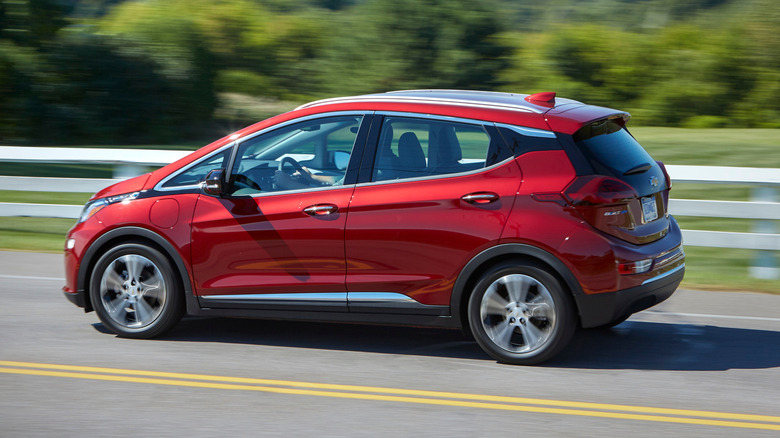
When it arrived on the scene in 2016, the Chevrolet Bolt EV was the first mainstream electric car capable of driving over 230 miles on a single charge. The 2020 model year brought significant upgrades, including an increased range of 259 miles. The 2020 Bolt EV had a starting MSRP of $37,495 for the LT Hatchback trim and $41,895 for the top-of-the-line Premier Hatchback model. However, if you were to get the same model today, it would cost you just $12,000 for the LT Hatchback or $12,900 for the Premier Hatchback, according to KBB.
That means the Bolt SUV LT and Premier lost $25,595 and $28,995, respectively, with the top trim depreciating the most. That's an average price of just $12,450 in the used market, down from an average MSRP of $39,695 across the two models. If we tally these figures, we find that on average, the Bolt EV has lost $27,245, or roughly 69% of its original value.
Hyundai Kona Electric
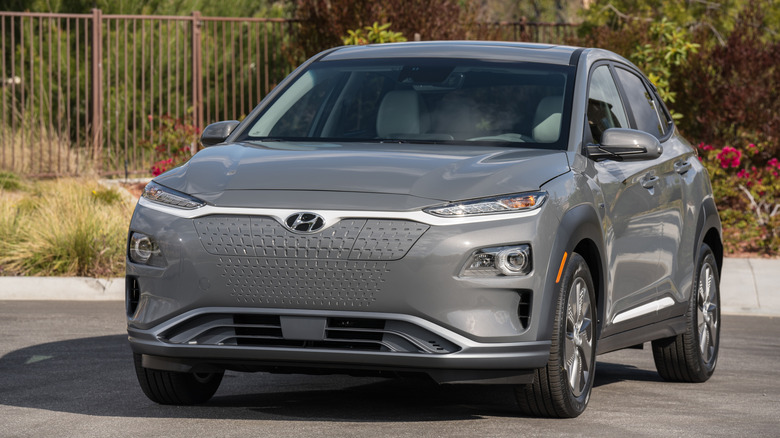
Named KBB's best electric car of 2020, the Hyundai Kona Electric is a subcompact SUV that offered three trim levels: SEL, Limited, and Ultimate. The entry-level trim, the SEL, had a starting MSRP of $38,365, with the mid option priced at $42,975 and the highest Ultimate trim at $46,575.
However, five years down the line, you can get the Kona Electric for around $15,000. Data from KBB estimates that a pre-owned Limited trim is the lowest-price Kona Electric at $14,150, followed by the SEL ($14,650) and Ultimate ($15,100). Based on these figures, the various trims of the Kona Electric have lost a minimum value of $23,715 and a maximum of $31,475.
Similar to other EVs we've discussed, the highest model has depreciated the most since 2020. With an average MSRP at $42,638, used 2020 Kona Electric prices now average $14,633. That's a decrease of $28,005, or about 66% of its original value.
Porsche Taycan
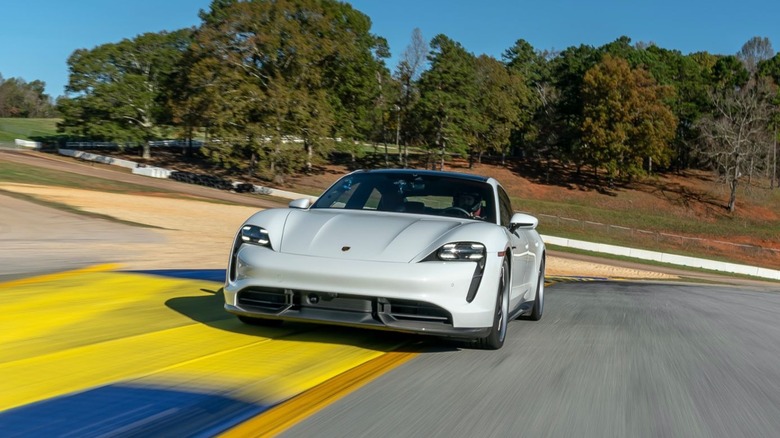
The 2020 Porsche Taycan has a special place in Porsche's EV lineup as it was the company's first all-electric car. It's a four-door sedan that was launched as Porsche's answer to the Tesla Model S. The German automaker launched the Taycan with a starting price of $105,150. That entry-level price got you the 4S, but there were two more trims to pick from: the Turbo starting at $152,250 and the Turbo S at $186,350. It's a Porsche, so it definitely wasn't cheap when it came out.
However, if you were to buy a 2020 Tacan EV in 2026, you can get it at a lower price. According to KBB, the average price for the base 4S is $47,300, while the Turbo and Turbo S are going for about $63,500 and $76,600, respectively. If we subtract the current price in the used market from the respective MSRPs, the 4S Sedan, Turbo Sedan, and Turbo S Sedan have lost $57,850, $88,750, and $109,750, respectively. That brings down the average price of the Taycan from $147,917 at launch to $62,467 in 2026, meaning it has lost about 58% of its value or $85,450.
Tesla Model 3
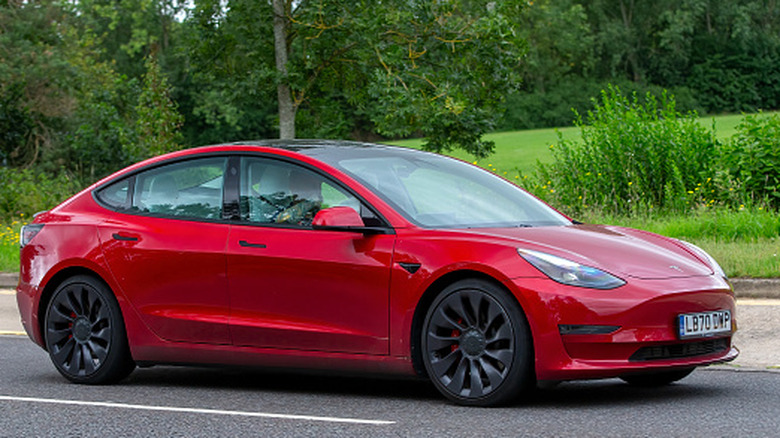
The Tesla Model 3 was updated in 2020, and this four-door, five-passenger sedan had a starting price of $36,200. That base price got you the lowest-priced model from one of the most reliable brands in the EV market, while the top-of-the-line Performance model started at $56,190.
Data from KBB estimates the current price of the Model 3 at $19,050 for the entry-level trim, having lost $17,150 from its original value after just five years. The highest trim level, the 2020 Model 3 Performance, saw its value drop to $23,200. The price of middle trims has decreased from $39,190 for the Standard Range Plus and $48,190 for the Long Range to $18,600 (yes, it has the lowest average price of all the trims) and $21,400, respectively. When we tally the depreciation figures of all the trims, the 2020 Model 3 lost an average value of $24,380, or about 54%.
Methodology

To compile this list, we looked at the notable EVs that were released or updated in 2020. We relied on data from different sources, such as Car and Driver and KBB, to find five EVs from different automakers that were considered some of the best of the year. Then, once we had our list of five models, we exclusively used KBB data to determine the original MSRP from 2020 and the current selling price in the pre-owned market.
KBB looks at the national average of used car prices to calculate its Fair Purchase Price. However, as usual, the actual price of any used vehicle will vary depending on various factors, such as the condition, mileage, and even location. Additionally, the Fair Purchase Price isn't fixed. It's updated weekly, and therefore, you might find a discrepancy between what we've listed as an EV's value and what you'll find at KBB by the time you read this. We've listed the EVs based on how much they've depreciated in value as a percentage of the MSRP, from the highest to the lowest.
For ranking, we determined the average MSRP from 2020 across for all trim levels and then subtracted the average price listed by KBB's Fair Purchase Price. This showed us the average amount of value each EV lost since it was new. Finally, we calculated the depreciation percentage of each EV by dividing the average value lost by the average MSRP. That gave us the depreciation percentages (we rounded off to the nearest whole number) that we used to rank these EVs.