

Why Most Home Security Cameras Record Such Low Quality Footage
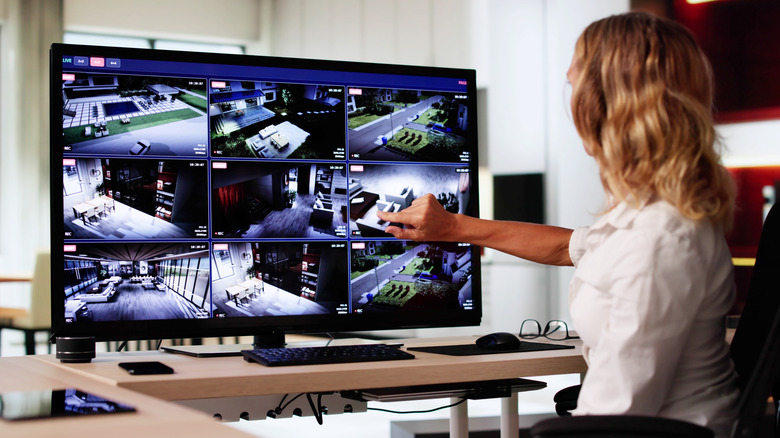
Long gone are the days when a home security camera was reserved for wealthy folks protecting their mansions or Batcaves. According to Safewise, almost half of all homes in the U.S. now have some form of security camera protection. This shift is largely thanks to the rise of smart security cameras, which have made this form of home protection accessible to more homeowners than ever before.
However, while the technical specs of different home security cams vary from model to model, many fail to deliver clear images. This lack of clarity can prevent important details (like faces or license plates) from showing up in recorded footage. In an age when a smartphone can take pro-quality photos, consumers might understandably wonder why the video from their security cameras looks like the trailer for a found-footage horror movie. With all their advanced features and capabilities, these security systems still can't offer visual clarity?
There's actually a genuine explanation for the disparity between the image quality a user gets from a phone's camera and the quality they get with a home security camera. It (mostly) all comes down to file size. To continuously record and store video, most smart home security camera systems need to sacrifice image quality in favor of storage capacity.
Home security cameras deliver low quality video because of data storage realities
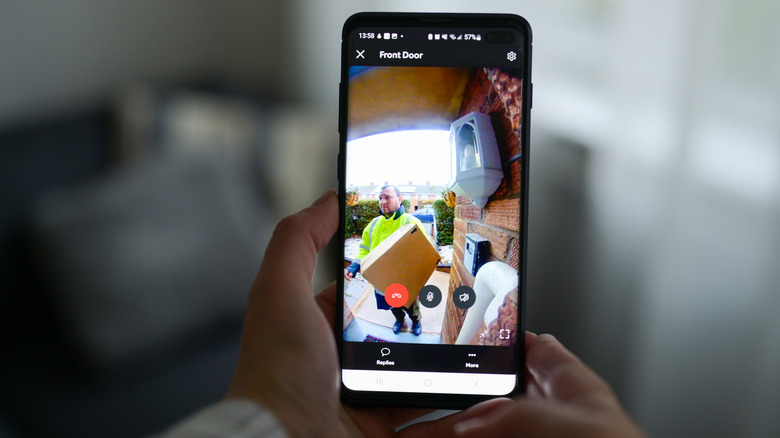
One of the key purposes of a home security system is to identify intruders, vandals, thieves, and others who might target a property for criminal activity. Thus, many homeowners naturally prioritize storage when installing and implementing smart security cameras. If someone tried to break into your house two weeks ago when you were on vacation, you want the system to store the footage accordingly. Otherwise, it's of no use.
However, storing large volumes of 4K footage is a data-heavy proposition. For example, estimates indicate that shooting 4K footage at 120fps on an iPhone 16 Pro uses up about 7GB of storage every minute. For a home security camera that's meant to potentially store hours of footage for weeks (or more), that type of data consumption is unreasonable.
Hawk Bo Wang, an assistant professor of computer and information science at the University of Mississippi, also points out that low-quality footage can be the result of sensors within a camera system getting "confused" about the time of day. Many smart home security cameras technically feature night vision capabilities that are meant to switch on automatically in low-light conditions. However, when it's not completely dark out, such as during the early evening or late in the morning, the infrared sensors might detect too much light to activate the built-in night vision. In addition, factors like the presence of nearby streetlights or vehicle headlights can essentially "trick" the sensors into thinking it's still the daytime, resulting in grainier footage than the cameras would deliver if night vision were working properly.
How to choose a home security camera that meets your video quality needs
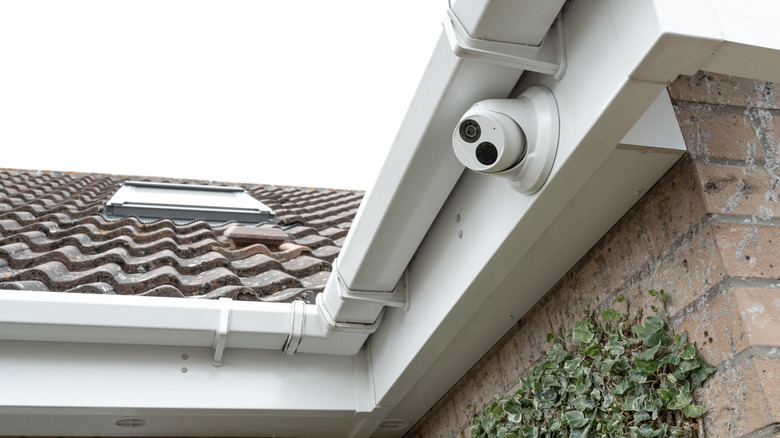
Not all home security cameras offer the same image resolution. If capturing and storing relatively high-quality video is important to a homeowner, they should prioritize features like wide-angle lenses, large sensor sizes, efficient data compression, and, of course, the capability to record in 4K. On the other hand, homeowners who don't want to invest in potentially costly systems that might offer more features than they need can first experiment with setting up their own webcam-based security cameras.
In general, doing research is key before investing in any home security system. Your goal when choosing a home security camera should be peace of mind. You'll be more confident that your system will protect you, your property, and your loved ones if you understand its technical capabilities and limitations. Vetting your options before choosing a home security system won't just help you identify which is right for you — it can also help you know which options to rule out.