

Why Are iPads So Much Cheaper Than iPhones?
They're closely related and may seem like almost identical devices, but the iPhone and iPad are two distinct product categories for Apple, each targeting specific users and offering particular sets of features. That's why Apple markets the two product lines differently, and that includes prices. The iPad is generally more affordable than the iPhone, even though some tablet versions feature advanced technologies and high-end designs. It may seem counterintuitive for a large-screen device like the iPad to be more affordable than an iPhone, but there's a good explanation for that, including two main components. First, Apple sets higher prices for the iPhone than the iPad because it can. There's no right or wrong price for the iPhone, iPad, or any other product. Vendors can set whatever price tags they think the market can absorb. Second, the iPhone is more expensive to make than an iPad, considering the form-factor constraints.
Before we explore each factor, it's important to understand the pricing structure. As of this writing, the cheapest iPhone Apple sells costs $599: the iPhone 17e. The base iPhone 17 is priced at $799. The iPhone Air starts at $999. The iPhone 17 Pro and iPhone 17 Pro Max are the most expensive models in Apple's lineup, starting at $1,099 and $1,199.
The cheapest iPad 11 starts at $349. The iPad mini 8 starts at $499, while the cheapest M4 iPad Air costs $599 or $799 (depending on size). Finally, the M5 iPad Pro starts at $999 (11-inch model) and $1,299 (13-inch model). These prices cover Wi-Fi versions. To get cellular connectivity, you'd need to pay an extra $150 for all non-Pro iPad models. Cellular connectivity comes with a $200 premium on the M5 iPad Pros.
The iPhone is a key device for consumers
The more expensive iPads can match the prices of some of the most expensive iPhones in Apple's lineup. But, at the lower end, a tablet is cheaper, and that strategy is intentional. The smartphone is the main computing device for many people. It provides access to key applications, including online banking, chat apps, and social media. The smartphone offers access to web browsing, shopping online, streaming content, and gaming. Smartphones also feature advanced cameras, and can be used for productivity on the go.
The iPhone is one of the most powerful smartphones consumers can buy, and the device that Apple rivals have tried to emulate or outclass since the first-generation model revolutionized the mobile industry. The iPhone continues to be one of the most coveted mobile devices, with Apple selling more than 200 million units every year. In 2025, Apple reported $209.6 billion in revenue from iPhone sales, selling 251.7 million units. The implied iPhone average selling price is $833, compared to $669 in 2020. Many buyers even prefer the iPhone Pro devices, despite their higher price tags. Experiments like the iPhone mini and iPhone Plus have been short-lived, likely due to lower-than-expected demand. The iPhone Air is also the only member of the iPhone 17 series not to have been consistently sold out for most of 2025's fourth quarter.
The iPad can do almost everything the iPhone can, but the tablet isn't a must-have device like the smartphone. The iPad is a complementary product. iPad revenue amounted to $28 billion for fiscal year 2025, with Apple selling an estimated 59 million tablets. This implies an average selling price of under $480.
Manufacturing costs
The figures above show the iPhone remains Apple's main source of revenue. While the company has not raised the starting price of its cheapest iPhones, it's made changes to its iPhone family that allowed it to raise the average selling price in recent years. That's only because consumers were willing to pay the higher prices. Incentives from carriers, and the ability to pay off iPhone purchases in installments make those higher price tags easier to adjust to. The iPad doesn't see similar demand from consumers, so Apple can't adopt more aggressive price hikes.
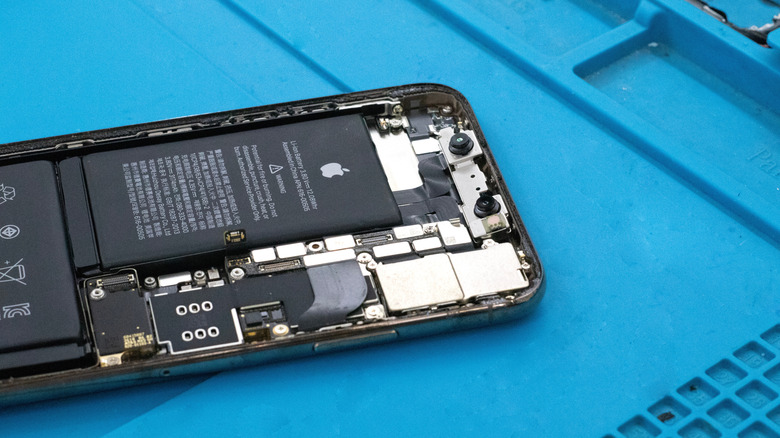
Manufacturing iPhones is also more expensive. Space is at a premium inside a smaller device like a smartphone, making it harder to design and manufacture an iPhone than an iPad. Apple has to cram cutting-edge components inside the iPhone, including fast chips, multiple cameras, a large battery, and the key components that allow the phone to connect to cellular networks (the modem and antennas). The iPhone Air may not have sold as well as the more expensive iPhone 17 Pro models, but it showcases the sort of miniaturization Apple is capable of to create an ultra-slim device. The bill of materials (BOM) for the iPhone 13 Pro was $570 in 2021.
The iPad Pro may feature advanced components like the M5 chip that also powers MacBooks and a dual-tandem OLED display that allowed Apple to design an ultra-thin iPad Pro model in 2024, but still only has one camera, and cellular connectivity is optional. The cheaper iPads still have LCD screens, which are cheaper than OLED, and feature less powerful cameras than iPhones. The 12.9-inch iPad Pro had an estimated BOM of $510 in 2021, but its mini-LED display was responsible for much of that.