

4 Reasons Why '80s Arcades Died Out

Third places. You've likely heard about their slow death in recent years. A third place is essentially a space other than the home or workplace, where members of a community can mingle and interact. As The Week reports, many factors have contributed to the decline of third places, including the rise of social media and suburban sprawl.
Third places in general may also be dying because specific examples of third places have gradually disappeared. Consider arcades. For gamers, the arcades of the 1980s weren't just spots to feed coins into mildly addictive dopamine machines. The arcade was where you hosted fun birthday parties, where you met other gaming geeks, and maybe even where you took a date (if your date was cool).
Times have changed, and not just in the U.S. According to The Japan Times, in 1986, Japan was home to 26,573 arcades. As of 2019, there were only 4,022 arcades in the country. The Strong National Museum of Play reports a similar trend in the U.S. While there were approximately a whopping 24,000 arcades in the U.S. in 1981, these days, a business that operates solely or primarily as an arcade is a rarity in the States. What accounts for this shift? And, perhaps more importantly, is it possible to reverse the trend?
'80s arcades began dying with the rise of home gaming

One of the most obvious factors contributing to the death of the classic arcade is the increased accessibility of gaming consoles. According to ABC News, video game industry professionals cite the Nintendo vs. Sega console wars as the beginning of the end for the '80s arcade industry. In addition, many classic arcade games are available as phone apps now.
Being able to play a game at home is obviously more convenient than traveling to an arcade to get your gaming fix. Similar to the way movie theaters are struggling to thrive in an age when home theaters can offer near-cinematic experiences, arcades struggle to attract consumers who don't need to leave their homes to play "Pac-Man." Unfortunately, in favor of convenience, gamers may have sacrificed connection. Although online gaming may fill in the gaps to some degree, it doesn't involve the same type of real-world connection the classic arcade environment promoted.
The decline of malls correlates with the decline of arcades

Shopping malls were often home to classic '80s arcades. However, in an online shopping age, malls have been on the decline. Newsweek reports that between 2015 and 2025, in-store shopping in the U.S. declined by 62%. The shift to ordering products online instead of buying them in stores has contributed to an overall decline of the American mall. If people aren't going to the mall, the arcades that used to call these malls home are naturally going to lose foot traffic.
A report from WFMZ-TV 69 News on the closing of one mall arcade in Pennsylvania highlights a related issue. The owner of said arcade explains that he had to make the difficult decision to shut down his gaming business after rent increases made it too difficult to break even. An individual example like this could be evidence of a larger trend within the industry. If gamers are staying home to play and rent is constantly increasing, an arcade owner may have no choice but to shut down.
COVID-19 hit arcades hard
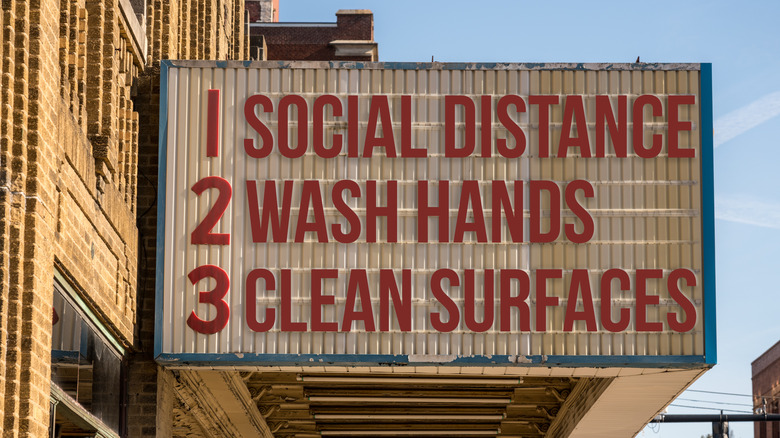
More recent global developments have also played roles in the shuttering of arcades across the world. The Japan Times cited COVID-19 as a significant threat to that country's arcade industry. A Denver 7 report from January 2021 also explains how the pandemic forced many arcades and similar spots to close their doors.
It's not merely small and independent arcades that struggled as a result of the pandemic. Per a report from The AV Club, in late 2020, Sega announced plans to shut down its arcade business. The gaming titan released a statement saying, "As Amusement Center Operations area in Entertainment Contents Business is strongly affected by COVID-19 ... Utilization of facilities has declined remarkably." Although Sega retained a stake in the company worth just below 15%, the company's decision to sell off most of its arcade subsidiary offers a major example of the profound impact COVID-19 had on any business offering in-person amusements and entertainment.
The slow death of '80s arcades began long ago

Recent trends aren't the only culprits behind the death of arcades. A decades-old New York Times article covered the now-infamous 1983 video game industry crash, when Atari lost $180 million in its third quarter, and numerous other game companies reported major losses or completely went out of business. As Cambridge Corp (a Cambridge University Press blog) explains, the video game industry crash of '83 was likely a factor contributing to the decline in popularity of arcades.
However, there may be hope for gamers nostalgic for the sense of community arcades offered. The Economist reports that malls are making a comeback in the U.S. According to The Wall Street Journal, this is partially thanks to Gen Z-ers, who seem to prefer in-store over online shopping. Malls that survive or make comebacks these days often do so by offering both social experiences and shopping opportunities, meaning arcades could someday find a home in the same communal spaces they used to inhabit.
Let's hope so. Gaming by yourself at home (or even gaming online with friends from across the world) will never be a substitute for spending hours taking down real-life opponents on a classic "Mortal Kombat" machine.