

Does Your Credit Card Chip Store Your Purchase History?

Credit card chips have been in modern cards for a while now, and are a security feature used for authentication, as Mastercard ditched the magnetic stripe completely years ago. But to make it all work, the chips store encrypted payment data, which is used to verify the card's authenticity and facilitate successful payments. Called EMV chip technology, it stands for Europay, Mastercard, and Visa, the three companies that helped develop the standard. Benefits aside, what kind of information do these chips store? Is your full purchase history on there?
No. The chip doesn't store any transaction details, nor does it store your PIN. What it does store is your account number or unique ID, the cardholder's name, and the expiration date. That's all the information needed to authenticate a transaction. Unlike a magnetic strip, which can be read with any compatible device, data stored on EMV chips is encrypted. They also use something called tokenization, which replaces the card's real unique number with a generated string of characters during digital transactions. Together, encryption and tokenization verify your card is genuine, and you are indeed making a real purchase while providing enhanced protection.
Although it should be noted that the data may not be stored on the chip or the card itself, credit card companies can see your transaction history connected to your accounts, including merchants, amounts, dates, and locations. They cannot see what's generally purchased, just the store or vendor. But they can cross-reference the information they do have and share it with other parties.
How is an EMV chip different than a magnetic strip?
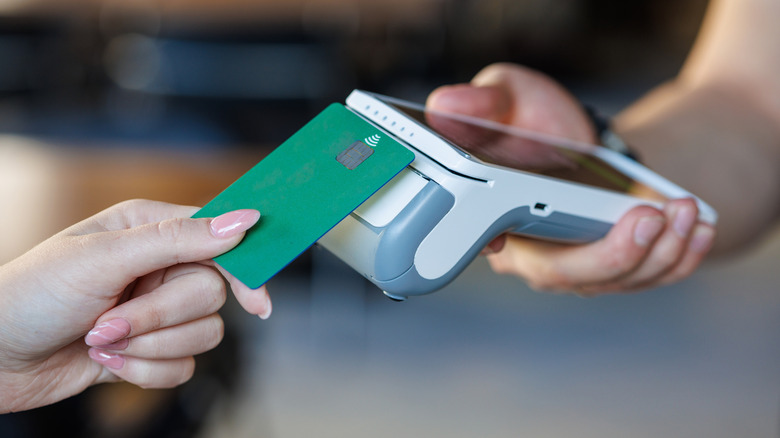
Similar to a magnetic strip, when you swipe a chip card, insert it into a payment system, or tap it to a compatible chip-pay station, it shares your payment information to complete a transaction. In this way, the magnetic strip and the chip are both being read, or essentially, the data they contain is being accessed. EMV chips are significantly more secure, which is why credit card companies are switching over to the technology. They don't transmit the card's real number; they use tokenization instead. That means they generate a unique code for every purchase, so they cannot be easily cloned — though it's still possible, just more challenging.
Bear in mind that, because the online shopping process remains the same, where you're manually entering your card information, chip cards still have their vulnerabilities. For this reason, many of the more common online credit card scams still apply to chip-enabled cards. It's not as secure if you're manually sharing the payment information through forms, websites, and other communications. That's not to say they're not a significantly better and more secure option.
The codes generated by EMV cards cannot be replicated, used more than once, or easily spoofed. You still need to be careful about who you're sharing information with and how you're using the cards, especially online and for digital payments. So, don't let that stop you from shopping for and using some great cards with benefits — like the cards that net you tons of cash back at Costco. Instead, be more careful about where and how you're using the cards, even those with EMV chips.