

The Engine Of The Future Has One Major Problem It Can't Overcome - Yet
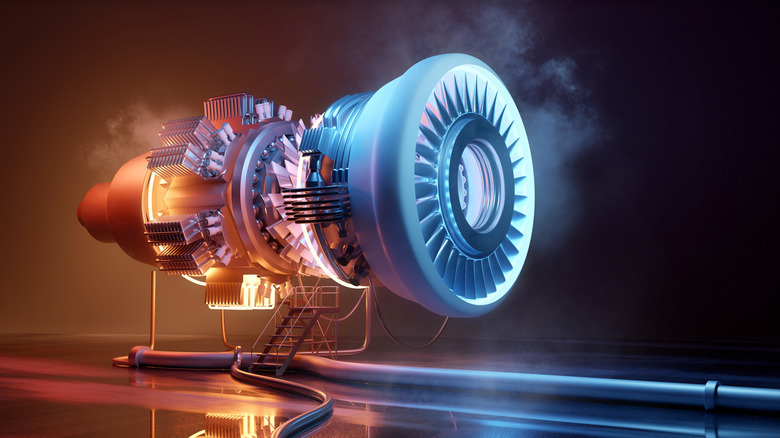
In the endless pursuit of faster, more efficient travel, engineers have been cooking up all kinds of new forms of propulsion. One of the most interesting to emerge in the last decade is the electric plasma jet engine, a battery-powered thruster that uses superheated plasma and compressed air to generate speed output of up to 20 kilometers per second. If this technology could be perfected, it would be an unprecedented boon for travel technology, but there's a consistent snag keeping that from happening: the unwieldy size and weight of the batteries necessary to power the engines.
To generate the intense heat and quantity of plasma necessary for a plasma jet engine to function, enormous quantities of power are required. For a plane equipped with these engines to fly, it would also need to have an enormous dedicated power plant mounted on it, which, assuming you could even find a decent spot for such a thing, would make the plane far too heavy to even attempt to take off. There is always ongoing research into new batteries of smaller size, but as of now, plasma-powered travel remains out of reach.
A plasma jet engine's power source is too big and heavy
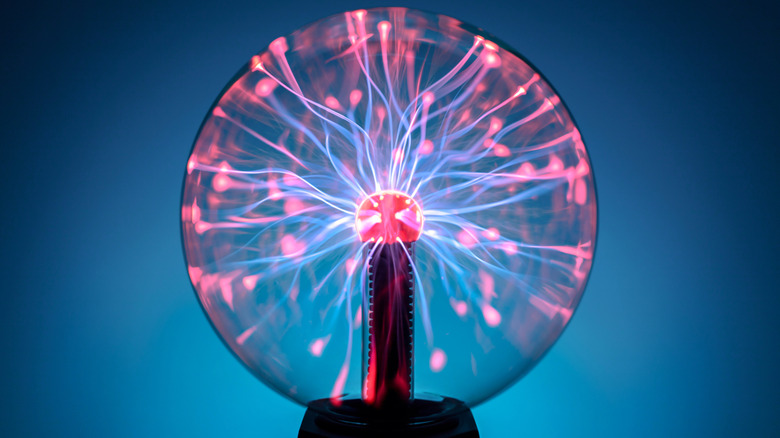
A traditional jet engine functions by combusting a combination of compressed air and petroleum-based jet fuel. A plasma jet engine follows the same basic principles, but with a crucial difference: instead of jet fuel, it substitutes plasma, generated from superheated air particles. With a comparable degree of explosive force, a plasma jet engine could, at least in theory, generate the necessary thrust for takeoff.
The problem here is that plasma only manifests in extremely hot, highly charged environments, like the heart of a collapsing star or in the vicinity of a lightning bolt. As you'd expect from such a comparison, this takes a lot of energy to make work. It's not impossible with the right setup; a team of researchers out of Wuhan University managed to create a functioning plasma jet engine using a combination of a specially-designed quartz tube holding low-temperature plasma and a magnetron emitter, not unlike a souped-up microwave.
Unfortunately, this procedure requires ample, steady power, and at least as of now, there's no way to generate that kind of power on an aircraft. Whether you used an array of smaller plasma-based thrusters or one big one, it would require a power plant of monumental size and weight. On the bright side, there has been some interesting research in this field up in space, where a plasma engine could get astronauts to Mars in just 30 days. For those on Earth, though, it will likely be a while until there's a battery small and light enough to power plasma jet engines.