

Why The Old 'First Charge' Battery Rule Doesn't Apply To New Phones Anymore
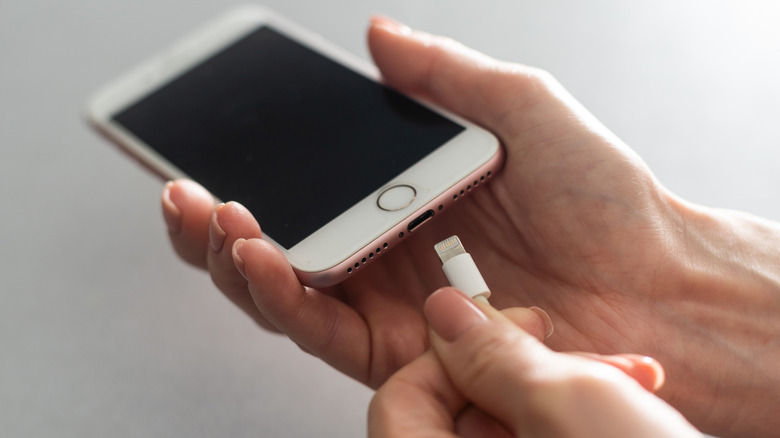
Remember when you had to fully charge and discharge a new smartphone the first few times after you bought it? You don't need to do that anymore. Older phones benefited from this habit, but modern phones use lithium-ion batteries instead. Lithium-ion batteries work very differently from the older nickel-cadmium (Ni-Cd) batteries, where nickel oxyhydroxide (NiOOH) worked as the positive electrode while cadmium functioned as the negative electrode. The first charge rule made sense when phones came with nickel-cadmium (Ni-Cd) batteries because these benefited from a few complete discharge cycles.
These older batteries had what's called the memory effect. This means that if the battery was repeatedly discharged only partially, say until 50%, the battery would assume that it was the lowest point, which leads to a lower overall capacity. The problem was more pronounced in nickel-cadmium (Ni-Cd) batteries, significantly reduced in nickel-metal hydride (Ni-MH) batteries, and largely eliminated in lithium-ion batteries. That's one of the key reasons lithium-ion batteries became mainstream and why modern phones have better battery life.
Lithium-ion batteries changed the first charge rule
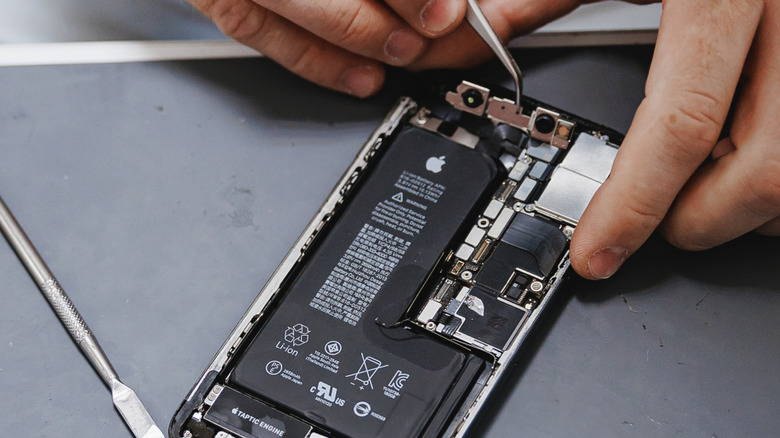
Lithium-ion batteries are not impacted by the memory effect, making them more efficient and long-lasting. It doesn't matter whether you completely or partially charge or discharge them; they still retain the same capacity. Additionally, they can retain 80% of their capacity even after a few years, making them more suitable for portable devices. Apple uses lithium-ion batteries across its devices, be it your iPhone, iPad, Apple Watch, MacBook, or AirPods. Lithium-ion batteries also have a higher energy density. Generally speaking, it's about twice the energy density of nickel-cadmium (Ni-Cd) batteries. They are lighter too and charge quicker than their older counterparts.
Keep in mind that batteries still benefit from smart charging habits. Some optimizations are handled at the software level. For instance, iPhones now come with a built-in feature called Optimized Battery Charging. It learns your charging habits, pauses charging at 80% at night, and then fully charges the device before you wake up. This ensures that the battery doesn't retain 100% charge for extended periods, as it may shorten its lifespan. On your part, you should unplug the phone when it's fully charged, not use unsupported chargers, and avoid charging in extremely low or high temperatures.
If you've always believed in the first charge rule, it's time you skip the practice for good because it offers no real benefit with modern lithium-ion batteries. These batteries are already pre-calibrated at the factory and are ready for use right away. Instead, focus on smart charging habits.