

Don't Wait To Buy A New Tablet - Here's Why
We may receive a commission on purchases made from links.
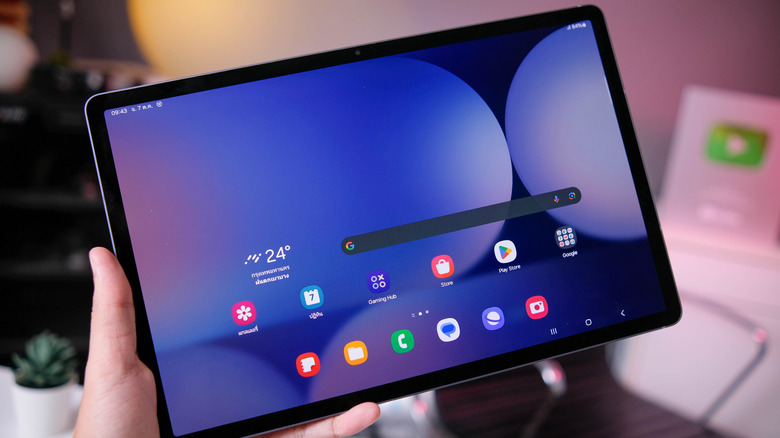
The tech industry is in a strange place right now, where mid-generation devices that would usually be going down in price are actually doing the opposite. Some companies let customers know in advance when costs are about to go up — like Sony announcing the PlayStation 5's price hike — giving people a chance to pick up devices at a lower price before they're forced to pay more or can no longer afford them. However, other companies have quietly raised their prices overnight. Lenovo recently did just that for its popular lineup of tablets, and there's reason to believe other tablet manufacturers could soon follow suit, making now a great time to buy one if you've been on the fence.
The Lenovo situation is a wake-up call because the price hikes were rather jarring, with increases ranging from $30 to $70. For instance, the Lenovo Tab One went from $149.99 to $179.99, the Lenovo Tab Plus went from $299.99 to $329.99, and the Lenovo Yoga Tab went from $549.99 to $619.99. You might be taking a wait-and-see approach, hoping this is a short-term response to some volatile market situation — namely, the ongoing chip shortage. Surely at some point, Android tablets will go back to their original prices, right? Unfortunately, industry analysis indicates the price hikes are just beginning.
The price of Android tablets will keep going up
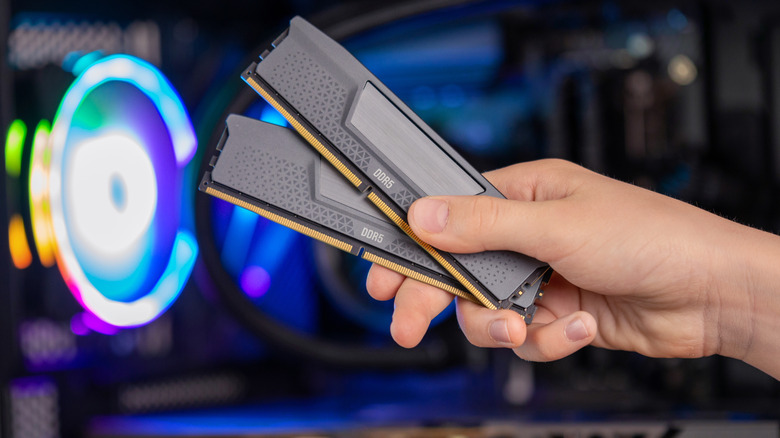
If you're not well-versed in the current chip shortage situation, there are two terms you need to be aware of: RAMageddon and chipflation. RAMageddon refers to the ongoing shortage of memory chips driven by the rapid expansion of AI data centers to meet the surging demand for AI. This has led to chipflation, where the price of RAM has skyrocketed since there is high demand for memory chips, but the supply is limited. Naturally, manufacturers of consumer gadgets, including Android tablets, are passing on the costs of acquiring RAM at high prices to their customers.
On the optimistic side, industry analysts expect RAM supply and prices to potentially stabilize in late 2027, with 2028 being the more likely scenario. This is not because the demand for AI will go down, but because the RAM fabrication factories being built by manufacturers to get more RAM into the market will have come online by then. Still, tablets and other RAM-dependent devices are expected to see AI-driven price increases until then, because insiders believe the RAM available for consumer devices will be in short supply through 2027. Even then, material costs may not return to what they were before the increase, meaning that the tablet prices you see now might be the lowest you'll see in years.
Get an Android tablet that will get you through RAMageddon
Android tablets last three to five years on average, depending on the model and how well you take care of them. While no device is completely future-proof, if you're in the market for a tablet, you should target one that can comfortably run apps as they get more demanding and bigger in size over the next couple of years while RAMageddon runs its course. Something with a minimum of 8 GB of RAM and 128 GB of storage should be able to last you at least that long while allowing for moderate multitasking, productivity, and gaming. If you plan on continuing to use the tablet past RAMageddon, having more RAM and storage would be even better. You should also look for something that will get software updates for the next three years.
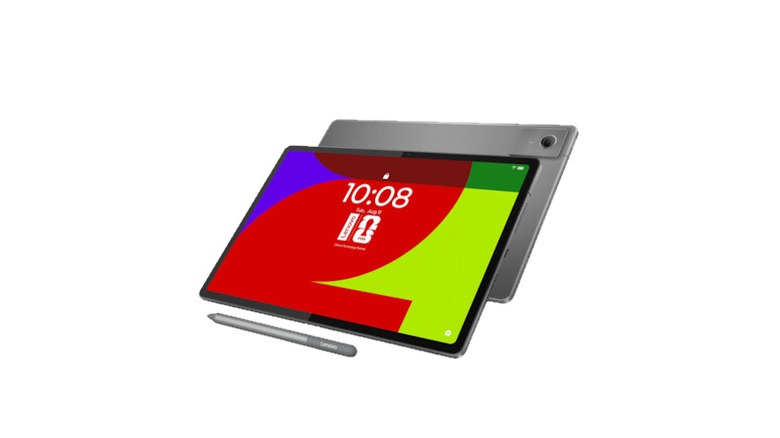
One example of a mid-range tablet that meets those requirements is the Samsung Galaxy Tab S10 FE. It was released in 2025, and the base model has 8 GB of RAM and 128 GB of storage. You can get it starting from $499. Also, it's expected to get software updates for seven years (up to 2032). A good budget option is the Lenovo Idea Tab Plus, even at its current price of $329.99. It has the same RAM and storage space as the Samsung Galaxy Tab S10 FE and is guaranteed to get software updates until 2029.