

Why Are MicroLED TVs So Big?

We may receive a commission on purchases made from links.
MicroLEDs are a relatively recent innovation in the world of displays and monitors. The technology produces individual pixels using small collections of light, which improves picture quality and brightness compared to OLED and LCD screens. However, the associated screens are anything but "micro." We can blame prohibitive costs for this one.
Despite the advantages of microLED technology, maintaining all of them on smaller screens — especially resolution — requires shrinking the LEDs even more. And that costs additional effort and money, often more than companies are willing to spend. That's why when you go shopping for microLED TVs, your only options are products like the Samsung 114 Inch Class Micro LED MS1C. Manufacturers haven't quite hit the limit of how much they can shrink microLED displays, but doing so with current techniques would drive up the costs even more. And at $149,999.99 through retailers such as Best Buy for a television that takes up an entire wall, the MS1C and other microLED TVs already exceed the budgets of many people.
While microLEDs could very well be the future of television technology, the costs and work required to make small screens are giving manufacturers cold feet. Apple wanted to create an Apple Watch Ultra with a microLED screen, but the project was allegedly scrapped due to the enormous production costs.
MicroLEDs aren't being abandoned, just altered
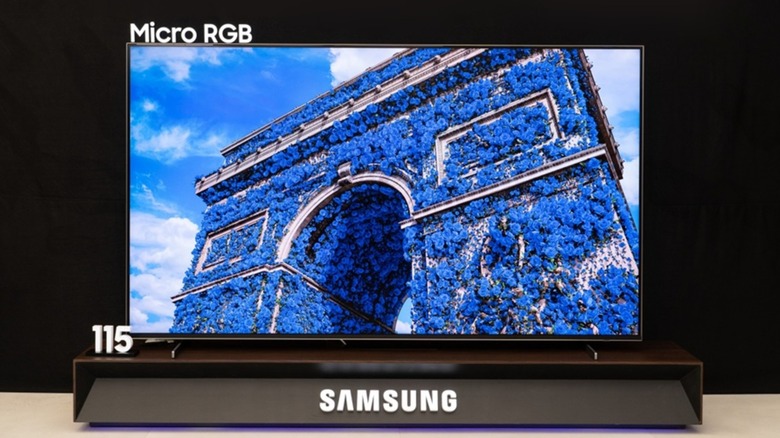
Since shrinking microLEDs to fit smaller displays is so expensive, many companies have begun to rethink the economic viability of microLEDs. More specifically, they're rethinking the viability of producing display screens that rely exclusively on microLEDs. The technology is just as good at increasing picture quality, even when it supplements other display techniques.
Micro RGB television sets are being touted as the next big evolution in display technology and, more importantly, as a replacement for microLED sets. This technology uses RGB microLEDs as the backlight, but the bulk of the display relies on LCD technology. The microLEDs are only used to supplement the LCDs and can be tweaked separately from the main display. Since the microLEDs are a source of backlighting, manufacturers can potentially install fewer in smaller screens without affecting resolution, which could do wonders for prices.
While micro RGB technology was only recently unveiled, outlets such as Popular Mechanics believe it could potentially outperform OLED TVs. Expect plenty of Micro RGB TVs throughout 2026, and treat this year as one big experiment for the technology. Their popularity (or lack thereof) could influence more manufacturers to figure out how to shrink microLED displays without inflating their costs, or they could decide to leave them as is and relegate microLEDs to a life of color correcting other monitor technologies.