

4 Things Smart Rings Can Do That Smart Watches Can't
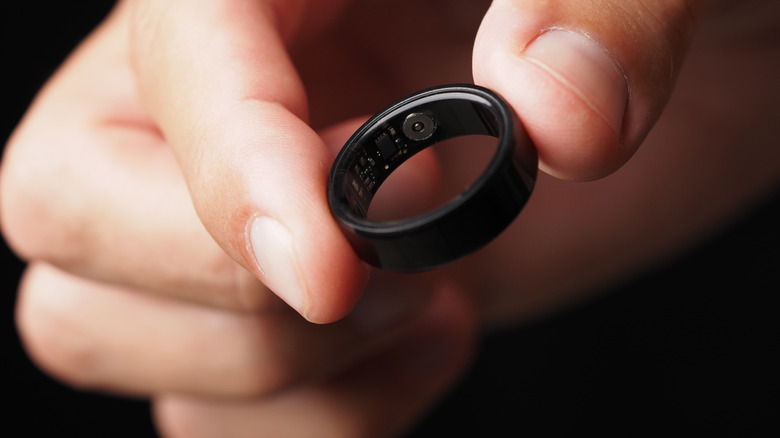
Smartwatches remain popular, but there's a new wearable sheriff in town in the form of a smart ring. These rings are worn around your finger (index, middle, or ring) for accurate measurements and use PPG sensors on the underside to capture vitals, movement, sleep, and more. They can virtually do everything a smartwatch can do passively, with all the data logged in a companion app you can reference for updates.
Some people find that a smart ring is sufficient for their needs and have foregone a smartwatch or fitness tracker altogether in favor of this trending technology. Others like wearing both a smart ring and a smartwatch to compare and contrast. Why have an Oura Ring if you buy a smartwatch? Because you can use the former, from Oura or other alternative brands, as a backup if the latter's battery dies. But there are some things smart rings can do that smartwatches can't, or rather, advantages with them that you don't get with a smartwatch.
Distraction-free tracking
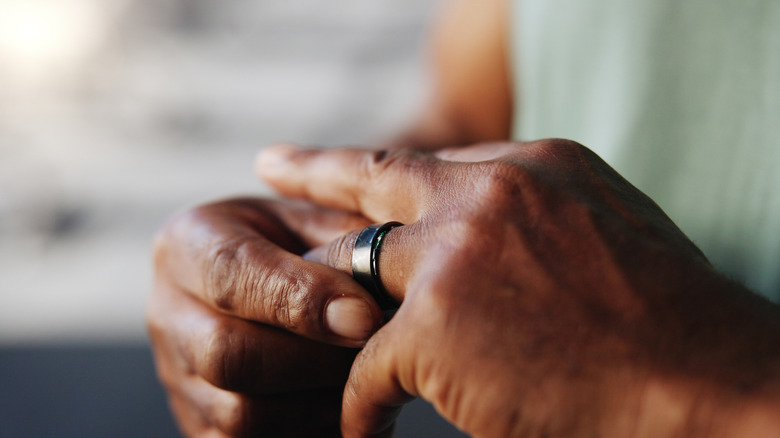
The main benefit of a smart ring is that it offers a completely passive experience. If you didn't know any better, or didn't notice the lights illuminating from the underside from time to time, you'd think it was just a stylish ring. While it captures data, there's no way to access this data without opening the companion app. Most don't do anything but slide on your finger. There are some smart rings like the RingConn Gen 3 that offer haptics, slight vibrations to advise you of a notification or alarm. But that's the extent of it.
This is a welcome benefit for those looking to disconnect from our ever-connected society. It's the same reason devices like wired earbuds are trending, too. Aside from initiating a workout, unless the smart ring auto-tracks it based on movement, you can let it do its thing in the background and check in on your stats at the end of the day, or only a few times a day. There's no screen for visual access to apps, notifications, or anything else to distract you.
Battery life is longer than most smartwatches
Generally, smart rings last for at least four days, some like the Oura Ring 4 last up to a week per charge, and a few even longer. This is even when they're capturing continuous 24/7 data like heart rate or frequent ones like Sp02. That's because they don't have a screen eating up battery power and generally use low-power technology. While there are smartwatches that can last as long, like the OnePlus Watch 3, battery life is usually drastically decreased when you aren't using a low-power mode, or using features like an always-on display, or other functions like GPS to track a walk or run.
Smart rings, on the other hand, last for several days at least. Many of the latest models, like the Renpho Lynx and the upcoming Ultrahuman Ring Pro, come with a charging case that works similarly to charging cases with wireless earbuds. Pop the ring inside and boost the battery even when you're on the go. That isn't so easy with a smartwatch that's about to die.
They don't get in the way of sleep, everyday activities

Some people find smartwatches too bulky to sleep with, getting in the way as you toss and turn, or feeling too clunky or heavy on the wrist. For ones that don't last more than a day, you might choose to charge them at night, which means you can't benefit from useful sleep tracking. Smart rings, on the other hand, fit securely to your finger — it's easy to forget you're even wearing one. For this reason, many people prefer them to smartwatches for overnight sleep tracking.
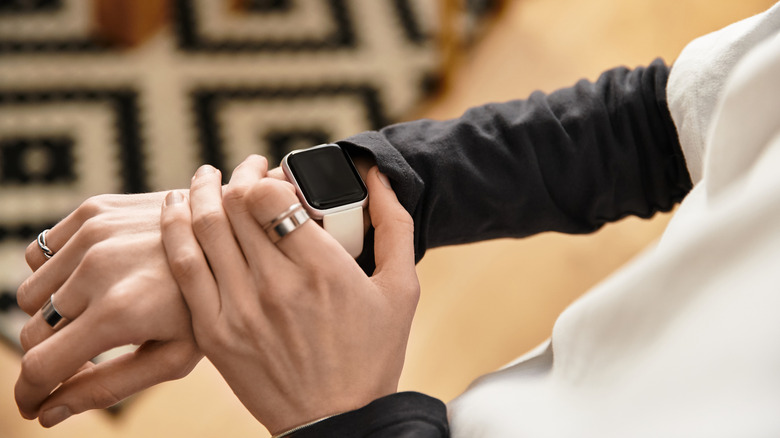
They also don't get in the way of other aspects of your day. If you have a nice wristwatch you want to wear, you don't have to tuck it away in favor of a smartwatch, or wear it on the opposite wrist, which can look odd. You can wear a smart ring for health tracking and a wristwatch for fashion. You also don't have to worry as much about irritation on your wrist or about removing and cleaning the strap periodically.
Works with any phone

You'd be hard-pressed to find a smart ring that doesn't work with both Android and iPhone, except for the Samsung Galaxy Ring. These wearables are, by and large, device-agnostic, with companion apps for both platforms. There are no special features with either, so you get a seamless and simple process without worrying that it won't work if you decide to switch phones. The same can be said for some smartwatch brands like Garmin and Amazfit. But others, like Samsung Galaxy, Google Pixel, and OnePlus, either only work with Android or provide limited features when used with an iPhone.
Most smart ring apps, it should be noted, are also nicely laid out with a logical arrangement of data, lots of details, and even AI features like AI assistants to which you can ask questions about your health, wellness, and even personal data. Many also integrate with other health apps, like Apple Health or MyFitnessPal, so you can view all your relevant data in one place. This means they can effectively work together with smartwatches if you decide to get both. I'd recommend doing so, as I have done for the last several years. You get a more holistic picture of your health, and have a backup to ensure consistent tracking, day and night.