

The British Sci-Fi Cop Show With A 100% Rating Hollywood Failed To Remake
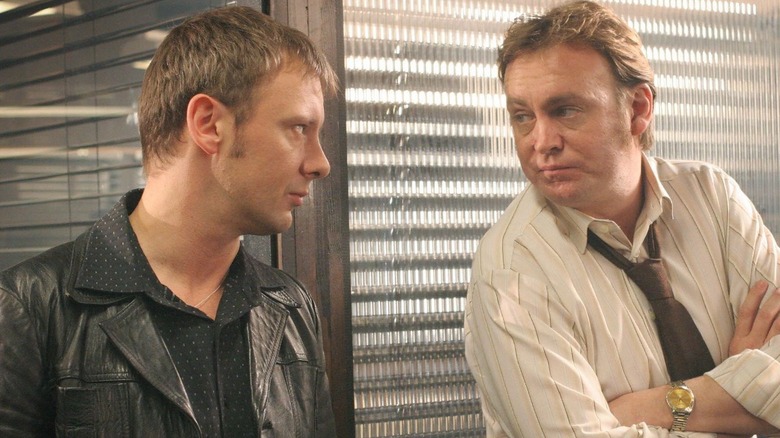
American TV is filled with award-winning gems that wouldn't be as great without talented creators from across the pond. "Shameless," "The Office," and "Veep" all owe their roots to British predecessors that may not have lasted as long as their successors, but still made a lasting impact. However, for every popular remake, there are those that didn't even make it past season one. One such show that suffered this fate was "Life on Mars," which had all the ingredients to succeed, but didn't.
Debuting on BBC One in 2006, the original "Life on Mars" follows police officer DCI Sam Tyler (John Simm), who's transported from the present day to 1973 via a car accident rather than a time machine. It combines elements of "Quantum Leap" and "CSI," as Tyler, still a law enforcement officer in a different era, must rely on modern techniques in a world that hasn't yet discovered them.
The show became a major hit in the U.K., and earned 100% on Rotten Tomatoes before being adapted into an American version, which didn't last as long as the original series and ended in a way that disappointed the original co-creator of "Life on Mars," who didn't hesitate to share his frustrations with tweaking a perfectly laid out blueprint. While the British version of "Life on Mars" took a spiritual route, the American iteration took its title quite literally, ending on a facepalm-worthy cliffhanger.
The American Life on Mars went out of this world
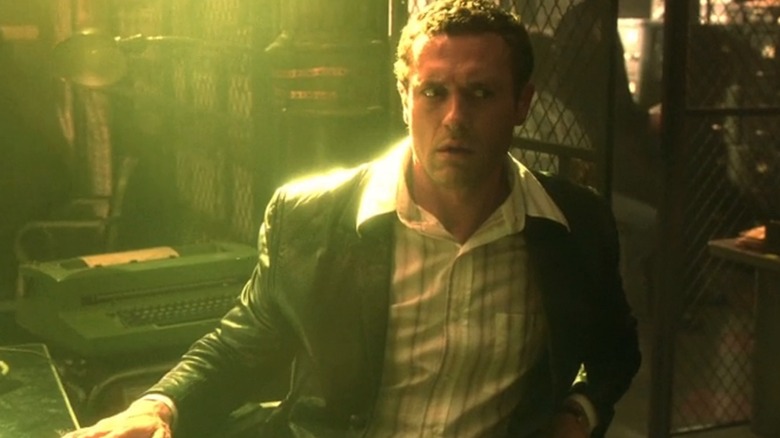
Like many British greats, the original "Life on Mars" only aired for two seasons, ending in 2007 with a conclusion that many fans had predicted — Sam Tyler was in a kind of limbo of the afterlife following the initial crash. This was further confirmed in the show's spinoff, "Ashes to Ashes." Ending on a limbo-like note before "Lost" did, it was a perfect ending for a show that had gained a huge following, and rightfully so. However, the American version wasn't renewed for a second season, and wrapped up in a way that highlighted everything it got wrong in its translation of the original.
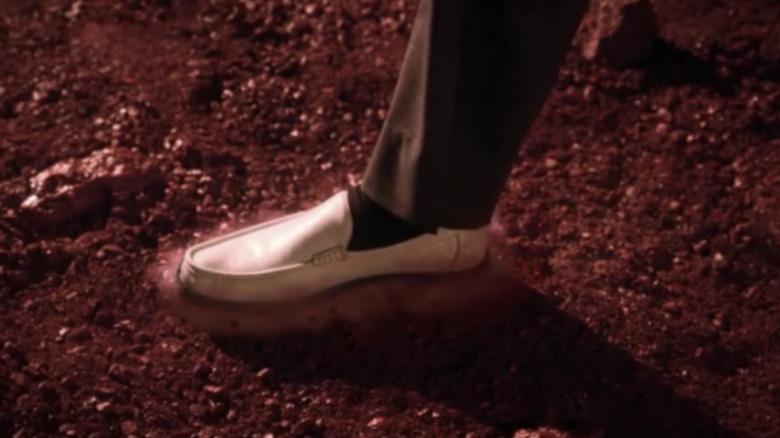
Led by Jason O'Mara ("Terra Nova") in place of Simm and co-starring "The Sopranos" actor Michael Imperioli, the American "Life on Mars" went for a more science-based spin. It turned out that the whole ordeal was the creation of a spaceship's onboard computer, made to occupy astronauts' minds while they were in suspended animation during 2035's first manned mission to Mars. From there, Tyler takes one small step that reveals a '70s shoe instead of a moon boot, because why not?
Admittedly, veering away from the ending of the original show "Life on Mars" had spawned from seemed like a smart play, especially given that the U.S. creators knew their story was coming to an end. Even so, that didn't stop Sam Tyler's co-creator from speaking up about what he saw.
Life on Mars' creator believed the US version's ending was 'strange and unsatisfying'
Even after being gifted a series finale, the American "Life on Mars" didn't meet the expectations of the original's co-creator, Matthew Graham. Speaking to SFX, he was asked about the fan theories surrounding his ending, and pointed out that the goal was never to go big, because that's not always the right approach, as the remake proved.
"It sounds patronizing, but to those people, I would tend to say, 'You don't know what's good for you. You think you want something that extreme, but I don't think you do, because when it arrives, it would seem very strange and unsatisfying.' An example would be the end of the U.S. 'Life on Mars.'" Admittedly, Graham had much more time to work within the universe he helped create, not only through two seasons of "Life on Mars" but also "Ashes To Ashes," which reaffirmed that this bygone era people were finding themselves in was a waiting room for the recently passed. It was this route that Graham had left breadcrumbs for, unlike the version with O'Mara and Imperioli.
"If you don't [see the ending coming}, that's fine, but it's not out of nowhere — everything is building to this, rather than us coming up with something and going 'Hey-hey, you never knew this, but Gene is a Martian!'," explained Graham. "And that was their mistake, I think." Ultimately, when discovering "Life on Mars," it's clear that in Hollywood's case, something got lost in translation.