

You Really Should Replace These Popular GPUs In 2026
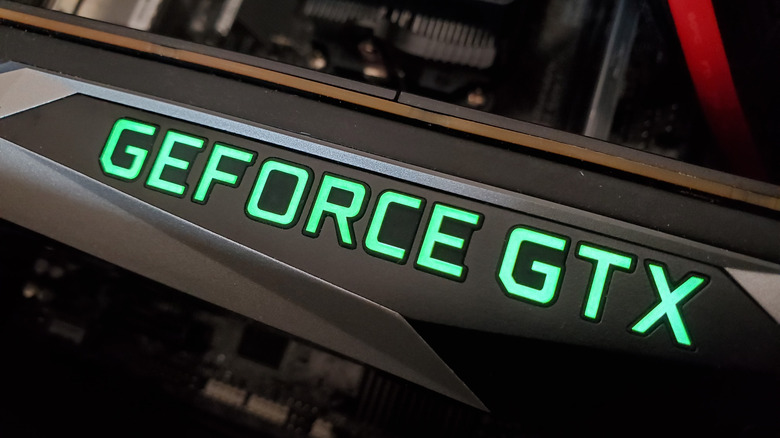
PC Graphics cards are going through a bit of a market shift. Nvidia, which dominates the market with a 95% share of the pie, announced in 2025 that the lifespan of several of its lines are ending. After the 580 driver update cycle closed, GTX 700, 900, and 10-series graphics cards (GPUs) were given the end-of-life treatment, with only security updates being provided until 2028.
The graphics cards in question were released in 2012, 2014, and 2016, becoming exceptionally popular among PC gaming enthusiasts. With the 700 and 900 series cards, Nvidia cemented its dominance over the market, bringing in software like ShadowPlay (now rebranded as the Share Overlay) that allowed players to record gameplay without any additional software. Cost and performance were also key during this era, as the top end of the 900 series, like the 970 and 980, brought exceptional 1080p gaming for under $600.
This was then superseded by the much-loved GTX 10-series, which saw Nvidia build upon what it introduced with the previous generation, but with added power. To this day, the GTX 1070 and 1080 (as well as Ti models) still linger on the Steam Hardware Survey, despite launching in 2016. These cards provided a significant upgrade over the previous generation at a non-eye-watering cost. Where the 10-series faltered was during the small cryptocurrency bubble, where the hardware sold out due to its mining capabilities. Nvidia's next home run was with the RTX 30-series, which was also impacted by external factors, such as the pandemic and cryptocurrency.
Nvidia updates kill legacy cards
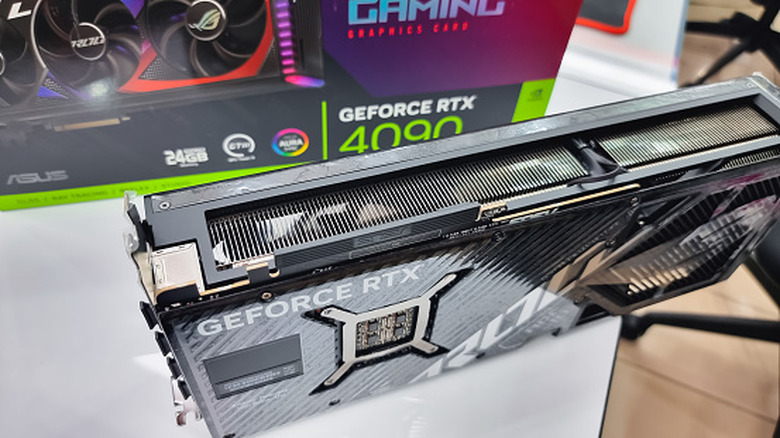
Before launching the rebranded GeForce cards as RTX, it also launched the 16-series cards, which were marginally improved versions of the 10-series. These haven't been culled from Nvidia's list of supported hardware just yet. However, as they're getting up there in age, it's anticipated that they will be next. No RTX cards have been seen end-of-life as of right now.
Nvidia has recently begun the 595 cycle of drivers, with 580 ending in December, 2025, as the 590 branch of drivers launched. Currently, the GPU maker has finalized its 595 drivers, which brought big fixes to the growing contingent of Linux players. These included solving the problem of the game looking as if it were about to explode. However, more work still needs to be done on the general performance issues with Nvidia cards on Linux, which CachyOS, a gaming centric Linux distribution built atop of Arch, has already implemented. Other distros that wait on updates will follow.
Those who are still on older cards can either remain on the 580 drivers, or should probably consider upgrading at this point. Older titles and games with lower requirements should still play fine, but these cards are now a decade or older in some cases. Modern features, like Nvidia's DLSS upscaling or frame generation, which can assist weaker PCs with performing better, aren't available to the hardware. Further, it'll get harder to run newer games once the architecture is completely outdated.
AMD, Intel, and upgrading
The same goes for AMD cards, and the first generation line of Intel Arc cards. AMD has put the RDNA 1 and 2 era of its hardware in its own contained silo, splitting it from the current RDNA 3 and 4 architectures. While cards from the RX 5000 and 6000 ranges will still receive game optimization and day-one support, AMD is not putting in the same elbow grease that it once did. Intel's Alchemist series is still in the game, but the cards were a first generational attempt to meet players in the middle. It's now recommended to seek out one of the B580 cards for a decent mid-tier gaming PC.
Upgrading right now, though, might be a bit fool hardy if you don't already have a PC of which to slot in the new card. Prices have skyrocketed thanks to Nvidia's new primary business, artificial intelligence, with AI data centers hoovering up mass quantities of RAM, processors, and storage. If you have a system that's only being bottlenecked by the GPU, prices have surprisingly stayed mostly level despite the ongoing hardware shortages. Whether or not the DRAM situation will further impact graphics cards has yet to be seen, but prices seem stable as of this writing.
If you are shopping for a graphics card, keep your eyes peeled for prebuilt PCs as well, like at Costco. Some that were already stocked prior to the shortage haven't seen that big of a price jump, and can sometimes be found for around the price of a top tier GPU. That's a complete PC that you might need to tinker with once the prices settle, for the price of a 5090. Of course, we recommend you avoid the 13th and 14th generation Intel powered PCs, as these had significant issues that even updates couldn't fix entirely.