

Why You Can't Just Buy A Petabyte Hard Drive
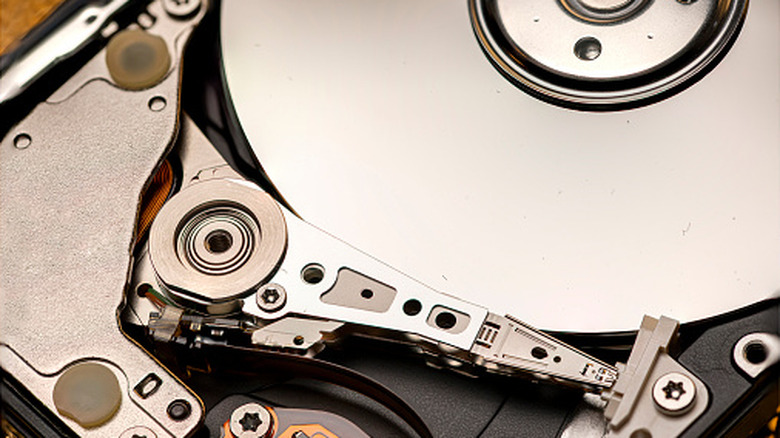
In recent years, the capacity of hard drives has increased significantly. We now have hard drives with over 40TB of storage. The Western Digital UltraSMR ePMR HDD has a capacity of 40TB, while Seagate's Mozaic 4+ offers 44TB, all in a single drive.
While this is a massive feat, users have long wondered how far away we are from the petabyte (PB) mark and whether that's realistically achievable. For context, 1PB equals 1000TB. At present, there are no 1PB drives in circulation, and none have been announced either.
Right now, companies are focused on reaching 100TB storage in a single drive, which they expect to achieve by 2029. Apart from that, they are optimizing drives for performance and power consumption. As for 1PB hard drives, there's no clear timeline yet, and that's due to how hard drives actually work and the limitations faced by manufacturers.
Why scaling to 1PB isn't as simple as it sounds
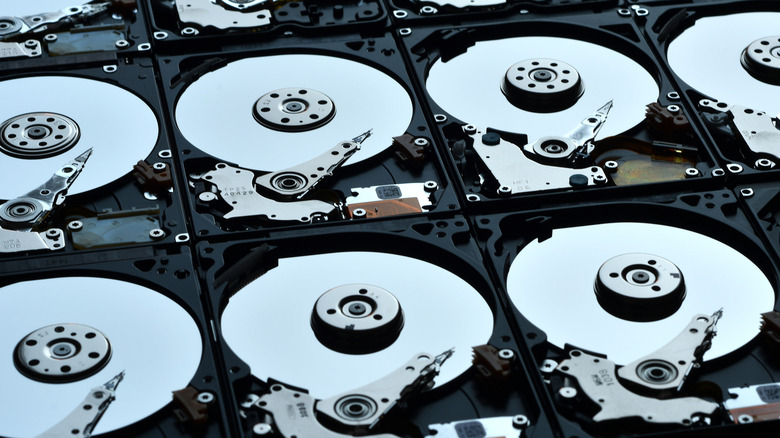
Hard drives store data on magnetic platters. To increase the capacity, manufacturers have two options: either increase the storage capacity of each platter or add more platters to the drive. Both approaches have limits.
While technologies like Heat-Assisted Magnetic Recording (HAMR) are allowing companies to increase storage capacity of individual platters without affecting performance and reliability of hard drives, the progress is gradual. If companies were to add a very high number of platters to hard drives, that would lead to higher costs, more heat generation, and affect the form factor.
So, while 1PB hard drives are theoretically possible, we're nowhere close to them. Even places that deal with data on a petabyte scale use a series of drives that have storage capacity in TBs. That's the most practical and achievable solution right now.
Do you really need a petabyte drive?
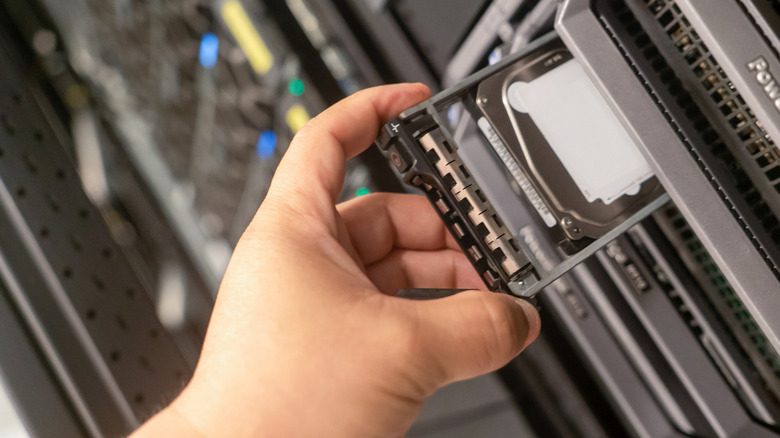
Now that we've established that a petabyte hard drive is still many years away, it's time to ask the more obvious question. Is it useful to regular users? Even if you're really into backups, like you create multiple backups of each file, 1PB is still too much. To better understand the scale of it, 1PB can hold over 250 million audio tracks or around 500 billion text pages. That much storage isn't practical for home use of hard drives, at least right now. And with the cost factor, it isn't financially viable either.
When we talk of storage in petabytes, it's usually for institutions and companies that hold large volumes of data, and of course the often-criticized AI data centers. Given these applications, manufacturers are prioritizing speed and performance in hard drives alongside storage volume, because storage alone isn't enough. Drives also need to be fast enough to make their application practical. We now have drives with "High Bandwidth Drive Technology" that doubles the bandwidth by allowing reading and writing operations from multiple heads in different tracks at the same time.
So, if you're looking for a petabyte hard drive, you'll have to wait. For now, the focus is on achieving the 100TB mark by 2029, which is the current projection. Scaling storage beyond that will take time.