

What Is A 3D Printing Filament Dryer And Why Would You Need One?
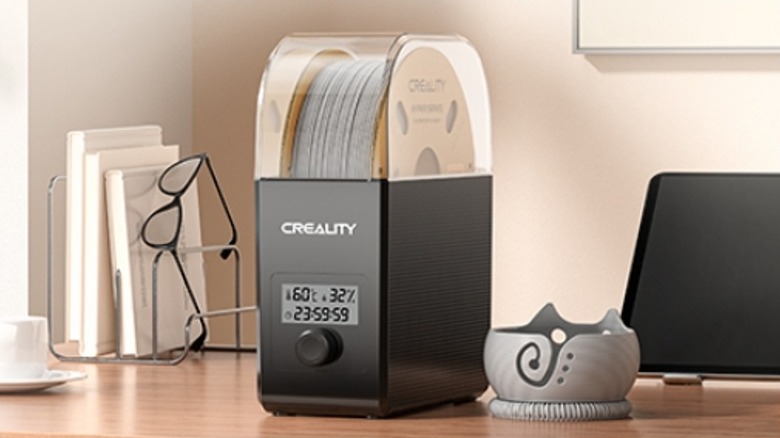
While 3D printers are easier to use than ever before, the process is far from foolproof. You can effortlessly ruin projects in a multitude of ways, be it by ignoring safety practices or improperly storing your printing materials. However, if you use a filament-based printer, you can prevent some of these issues with a dryer.
No, not the kind that dries clothes. Filament dryers, also known as filament dry boxes, are specialized containers meant for the long-term storage of 3D printing filaments. You place the filament spool in the device, and it uses a temperature controller and a humidity sensor to remove any moisture and maintain a controlled environment. Depending on the model, a filament dryer might even use filtration systems to make the storage cavity even more sterile (in a good way).
On the surface, filament dryers sound like a must-buy item, especially if you use multi-color printers like the Elegoo Centauri Carbon 2. However, these dryers are often large and expensive devices, doubly or even triply so if you go for the models with more features or storage space. A smaller, simpler model like the Sovol SH01 will set you back $59, whereas more advanced versions such as the SUNLU FilaDryer E2 cost a dizzying $399.99. Still, while some printer filament brands and materials are more moisture-resistant than others, purchasing a dryer might be a worthwhile investment.
Moisture ruins just about everything
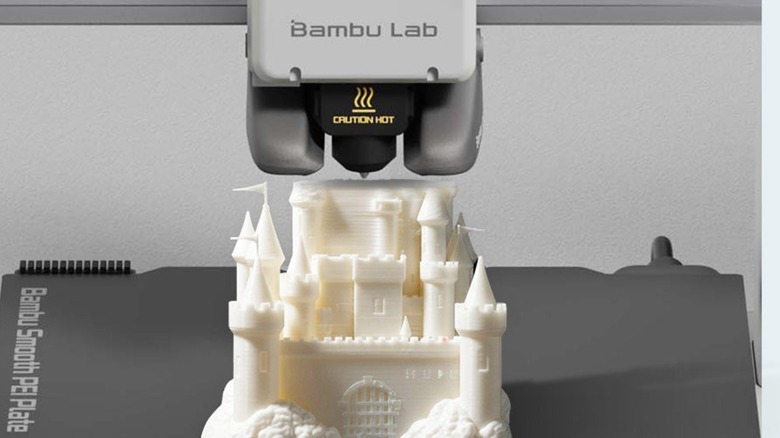
You're probably wondering what the big deal is about moisture in your filament. Don't 3D printers build items by depositing thin, molten layers of material that accumulate over time? Isn't the defining feature of a molten anything that it is basically liquid? Well, yes, but you must keep in mind how dilution works.
When a filament is exposed to any amount of moisture, that water becomes part of the 3D print. Suddenly, you're not just printing with pure PLA; your print becomes a mix of PLA and H20. This dilution results in poor print quality. Surfaces can become rough; layers might not bond properly, and the overall print turns out weak and fragile. But the damage doesn't just stop with prints. Moisture in a filament can also clog the extruder, ruining prints even more.
If you store your spools in climate-controlled filament dryers, the devices will keep your materials drier than normal, thus protecting your prints from moisture-related issues and failures. Ovens, food dehydrators, and rice with desiccant packs can work in a pinch, but they just don't offer the same minute control as filament dryers.