

4 Reasons Audiophiles Choose Wired Headphones Over Bluetooth

Audiophiles are people who care about creating the most immersive listening experience possible. They want to enjoy the audio in the way the artist or sound engineers intended, picking up on subtle details that non-audiophiles would miss. They usually use high-end audio equipment, such as external digital-to-analog converters (DACs), to fine-tune the sonic experience and make details even more pronounced. Even the headphones they use matter a great deal, because the wrong kind could ruin it for them. This is why audiophiles usually go with wired headphones over their Bluetooth counterparts, because they're better for the audio quality they seek.
The biggest thing Bluetooth headphones have going for them is their convenience. They can easily be connected to any smartphone, tablet, or computer via Bluetooth without worrying about tangled wires. Since they're not tethered to the audio source, they allow for great freedom of movement — Bluetooth has a range of about 33 feet. On the other hand, wired headphones are the only way to experience true lossless audio at the moment. This is the biggest reason audiophiles choose them, on top of being more reliable and virtually lag-free.
No lossy compression
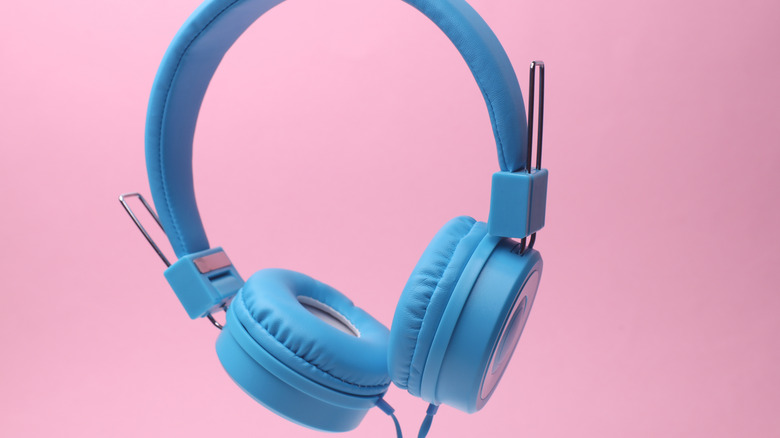
When you jack in wired headsets and play the audio, you hear the sound in all its analog glory. For example, if you're playing high-resolution audio, such as 24-bit/96kHz FLAC (about 4600 Kbps or more), the device you're playing from converts that into an analog format and transmits the full waveform through the wire. Nothing gets compressed, which goes a long way toward preserving the audio quality.
While Bluetooth has theoretical speeds of between 2 Mbps and 3 Mbps, the narrow bandwidth problem is one of the biggest reasons why wireless headphones will never sound better than wired headsets. This issue arises from Bluetooth operating in the crowded, low-powered 2.4 GHz frequency band, forcing the need for lossy compression to minimize interference and conserve power. Before transmitting the audio, the device you're playing from will compress it using Bluetooth codecs, with one of the best codecs from Sony, LDAC, only reaching up to 990 Kbps.
Bluetooth's current maximum throughput for audio streams is a fraction of what wired headsets can achieve. While this might not make a difference to the average listener, because the maximum that the LDAC codec outputs is still quite good, it matters to an audiophile who wants the highest fidelity possible.
Wired headphones are more reliable
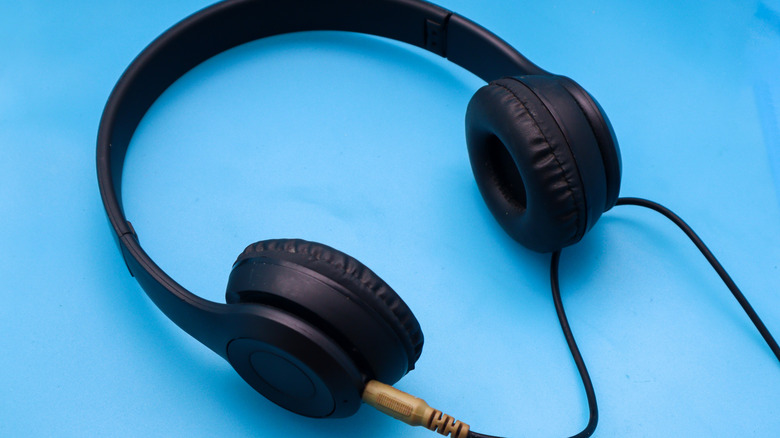
A wired connection, especially if it's a high-quality cable, makes sound more stable by shielding it from electromagnetic interference (EMI). Bluetooth is susceptible to EMI from other signal-emitting devices that operate on the same 2.4 GHz frequency band, including the Wi-Fi router, microwave, baby monitor, and even your smartphone. This can introduce static and noise in the audio at best, but it could also cause dropouts and disconnections if the congestion gets too bad.
Also, the lack of a battery is another thing that makes wired headphones better than Bluetooth options in terms of reliability. The beep that wireless headphones make when the battery is about to die can be immersion-breaking. Wired headphones use the playback device as a power source. They don't need to be recharged, making them ideal for longer listening sessions.
Because they don't have a battery, wired headphones usually last longer as well since there's no battery degradation to worry about. If taken care of, these headphones can last as long as a decade. Battery-powered Bluetooth headphones, on the other hand, will often give out after two to three years of use.
Negligible latency when transmitting audio
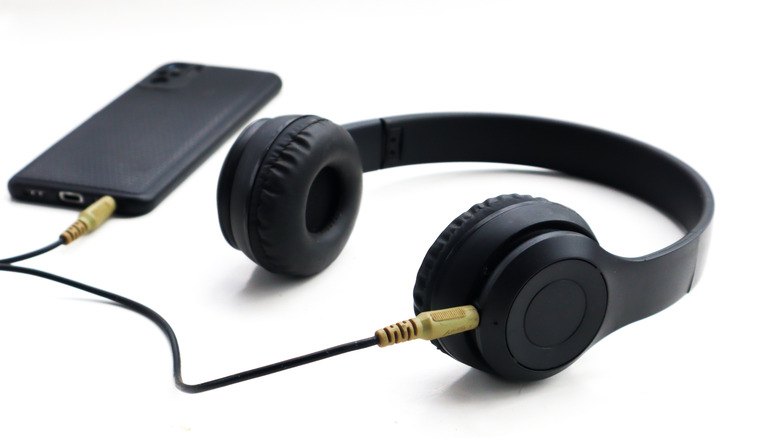
Some audiophiles do things that require real-time audio processing, such as gaming, streaming, and music production. This is where latency comes into play, which, in this context, is the speed at which the sound travels from the playback device to the headphones. The lower the latency, measured in milliseconds (ms), the faster you can hear the audio. With wired headphones, the latency is lower because they have a direct link to the source. This bypasses things that cause lag in Bluetooth headsets, such as audio compression and signal interference.
The latency of a wired headset is usually between 5 ms and 10 ms. This is in the realm of what is considered imperceptible to the human ear because the brain compensates for that delay — it's practically instantaneous. Bluetooth headsets have noticeably higher latency, with the audio processing that is done by the codecs contributing to much of it. For instance, the LDAC codec has a latency between 200 ms and 300 ms, while the aptX codec's latency is lower at between 50 ms and 150 ms.
With 10 ms being the upper limit of when lag starts to become noticeable, you can imagine how immersion-breaking it would be for an audiophile to have something happen in a game only to hear the sound 100 ms later. When streaming, noticeable lag can lead to audio and video sync issues that can make the dialogue feel unnatural. Wired headphones eliminate these issues.
Works well with external DACs
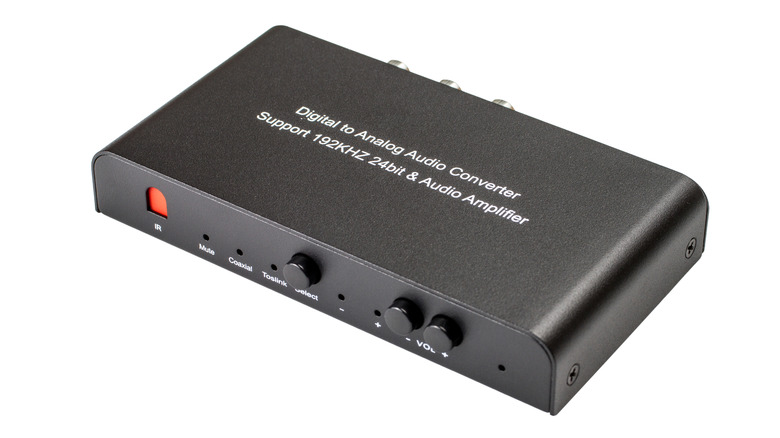
Just because most everyday playback devices we use have built-in DACs, it doesn't mean they all do a good job of converting the audio from digital to analog. Some can introduce noise and distortion if their circuitry is poorly designed or cheap, leading to a noticeable degradation in the sound quality. Even if the sound output is acceptable to an audiophile's ears, they might still need to upgrade it as their tastes change. This is where high-quality external DACs can help, allowing the playback device to offload the conversion process to them for better audio quality.
External DACs are particularly good for listening to streaming services with high-resolution audio like Tidal and Apple Music. This is especially true for devices that have ditched the audio jack, such as modern smartphones. For this particular scenario, there are several portable DACs available, but they all need the same thing — wired headphones. Even if you could use the DACs with Bluetooth headphones, the lossy compression would not go away unless you switched to wired mode. However, not all Bluetooth headphones support this.