

US Space Force's Broken OCX GPS Faces Cancellation After 16 Years And $8 Billion Of Investment
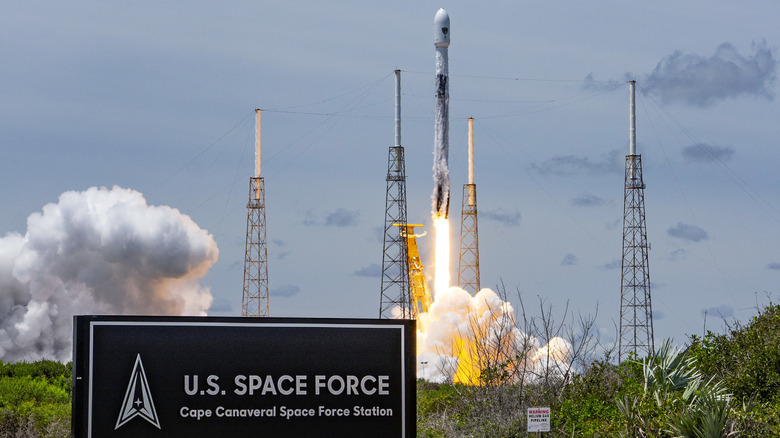
One of the Space Force's most controversial programs may be coming to an end. According to an exclusive by Air & Space Forces Magazine, the Space Force's Next Generation Operational Control Segment, a GPS known as OCX, may be shuttering after costing the Pentagon $8 billion. The RTC Corporation, formerly Raytheon, initially won the contract to build the OCX in 2010, proposing a 6 year, $3.7 billion development pipeline. However, following a troubled production timeline, the Space Force didn't take control of the GPS until July 2025, when it began its government-driven testing phase. Since then, technical issues, including a potentially costly software defect, have put the program's future in jeopardy.
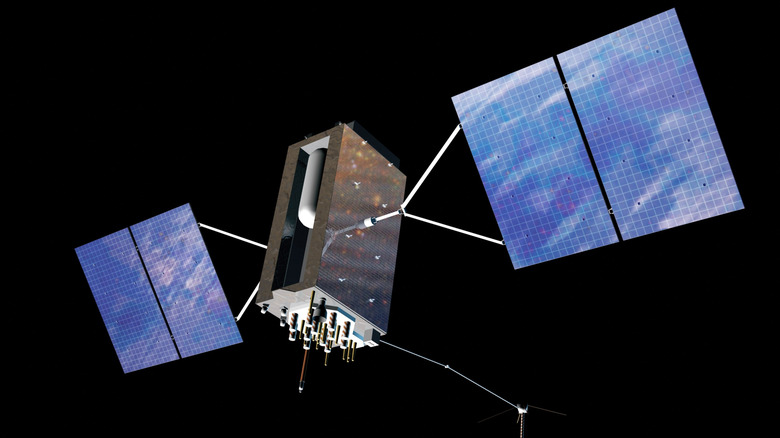
Raytheon's OCX program was part of an effort to modernize the ground control segment of the military's GPS satellite constellations. The United States' GPS consists of space constellation and its earth-bound control centers. The GPS OCX was intended to modernize these systems, upping the Space Force's software package in order to operate its latest line of next generation satellites, dubbed the GPS III. This new line of satellites, which began launching in 2018, offers greater accuracy and jam resistance capabilities. The OCX, in theory, would increase this systems' accuracy, while allowing the branch to operate roughly twice as many satellites. The ground control segment would include two master stations, hardware upgrades, and bolstered local control stations.
Now the program's future is in jeopardy just a few months after its delivery. According to the Air & Space Force Magazine, the potential cancellation comes after a series of tests revealed a software defect that would take "substantially more time than planned to resolve." How the Space Force proceeds will have a major impact as the international competition over global navigation and satellite operations continues to skyrocket.
A troubled system
When the Pentagon selected Raytheon in 2010, the company projected that its new GPS OCX system could be delivered by 2016. At the time, the cost of the program was expected to be just $3.7 billion, less than half of its eventual price tag. Costly delays caused Raytheon to miss its original deadline and budget projections, triggering a dreaded Nunn-McCurdy protocol's congressional oversight. The result of the review was a somewhat tepid endorsement, with Defense Department officials stating that the program was "essential to national security" and that no less costly alternative existed (via Defense News). In deciding to continue with the project, however, Pentagon officials were forced to refigure legacy GPS networks to accommodate the new GPS III satellites. A year later, RTX delivered Block 0, a baseline capability allowing the military to launch but not operate its latest satellites. In the meantime, GPS III satellites were operated by the updated legacy satellite ground system, known as the Architecture Evolution Plan (AEP). Such capabilities, dubbed Blocks 1 and 2, were delivered in 2025, and are still undergoing tests.
Problems with Raytheon's OCX system have arisen during the testing of these later segments, which consist of the OCX's command and control systems. As Thomas Ainsworth, the Air Force's assistant secretary of space acquisition and integration, told Congress, the Pentagon's testing thus far has found "extensive system issues across all subsystems, many of which have not been resolved." (via Ars Technica) According to Ainsworth, RTX isn't wholly responsible for the program's mishaps. As the assistant secretary told the House Armed Services strategic forces subcommittee, "it's been problems in program management, problems with contractor performance, problems in system engineering, both on the government and on the contractor side" (via Air & Space Forces Magazine).
The future of GPS

According to Space Force officials, these issues prompted the department to orchestrate a "lengthy analysis" of the system, which they submitted to the Pentagon's acquisition chief, Michael Duffey (via Air & Space Forces Magazine). Duffey, who is the "milestone decision authority" for the new GPS program, will evaluate the Space Force's findings and determine whether to cancel the project. Notably, RTX is also contracted for the OCX 3F, which builds upon the OCX's software. Although scheduled to be operational in 2028, Pentagon officials worry that delays in the OCX's delivery will similarly affect its follow-up program.
Should the GPS OCX meet the chopping block, the Pentagon will likely opt to modernize the Architecture Evolution Plan. According to a Space Force spokesperson, the cancellation "will not impact users," since the AEP is the current command and control system for the Space Force's 32 GPS satellites. Nine are of the GPS III variant. Lockheed Martin, the company in charge of upgrading the AEP system, has already upgraded the system to use the GPS III's encrypted M-Code signals. However, if OCX is canceled, further upgrades will be needed to leverage the new satellites' L5 civilian signal.
What direction the Pentagon decides to take its GPS command system is essential to harnessing the increased capabilities of both the GPS III and its imminent successor, the GPS IIIF. As it stands, Lockheed Martin expects to deliver 22 of the satellites by 2027. Deploying a satellite system for these more advanced GPS satellites is a strategic necessity for the U.S. military, as their encrypted M-Code signals can better fend off jamming and spoofing attacks. In this modern era of warfare dominated by remotely-operated drones and anti-UAV systems, countering electronic warfare is more important than ever.