

A Powerful Supercomputer Found A Flaw In A Decades-Old Theory About Sun-Like Stars
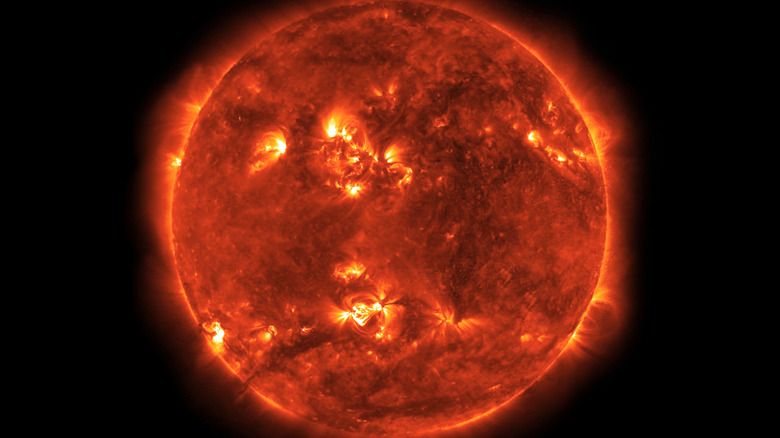
All stars slow down their rotations as they age, losing mass and angular momentum in the form of stellar winds that escape into the cosmos. For the past half a century, scientists have believed that once a gaseous body slows down enough, its poles start moving faster than its equator. However, high-resolution simulations show that this is likely not the case. These findings were published in Nature Astronomy this February by Hideyuki Hotta and Yoshiki Hatta – the same month the journal featured a study changing everything we knew about Jupiter.
The phenomenon of different parts of a star moving at different speeds is called differential rotation. This rotation is usually solar-like, where the equator moves faster than the poles. Our understanding of differential rotations for the past few decades had been that when a star is slowed beyond a certain threshold, the relationship between its equator and its pole shifts, and its differential rotation goes from solar-like to anti-solar.
This assumption was based on speculation and theoretical calculations; there weren't many observations that showed this in stars that we observed in space. While the future of space exploration seems bright and spacecraft like the Parker Solar Probe have brought us closer to the sun than ever, humanity is still ages away from directly observing stars in person. This is why we need to rely on simulations to do a lot of heavy lifting.
How high-resolution magnetic simulations disproved anti-solar differential rotation
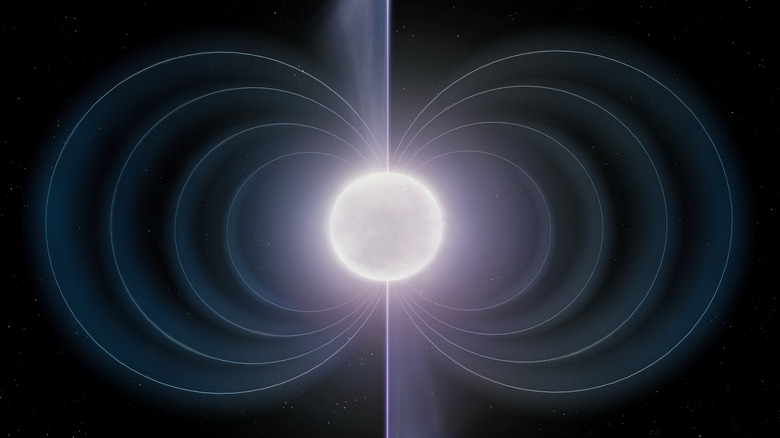
To put this theory to the test, the astronomers behind the paper used the Fugaku supercomputer, one of the fastest computers in the world, to go through simulations of sun-like stars. This supercomputer calculated the stars' rotations as they slowed down, as well as their magnetic fields.
In earlier simulations that backed up the theory of anti-solar differential rotations, a set amount of grid points were used to track the changes within each area. In the latest simulation done at Fugaku, the scientists exponentially increased the number of grid cells to 5.4 billion grid points in each simulated star in order to better and more clearly observe minute changes in the magnetism and movement in different parts of it.
With the new studies, we find out that fewer grid cells in past simulations caused the magnetic fields in the star to weaken artificially, something that doesn't fully reflect reality. Instead, in these more accurate simulations, the magnetic fields stayed more consistent and stable. Professor Hotta, one of the researchers behind the recently published paper, sums it up nicely: "So even though stars do slow down, the switch doesn't happen because magnetic fields, which previous simulations missed, prevent it."