

Aliens From A Classic Twilight Zone Episode Were Inspired By A Real World Company Mascot
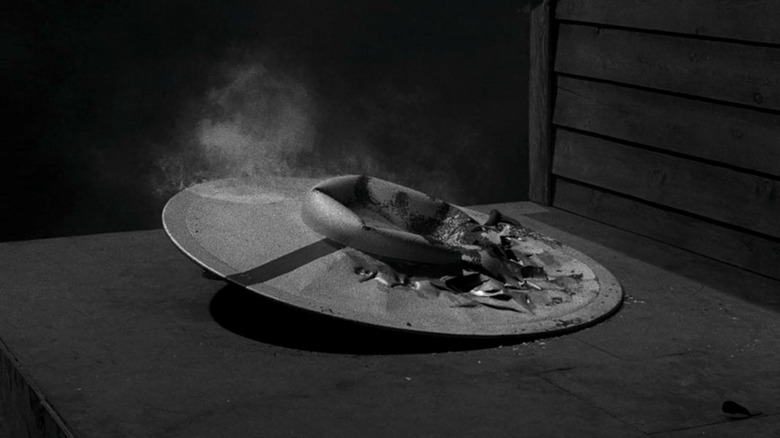
Rod Serling's legendary TV show, "The Twilight Zone" — which ran for five seasons between 1959 and 1964 — was famous for its inventive, uncanny, and thought-provoking ideas. And even if some of those feel a little silly and outdated in retrospect, they definitely offer some intriguing bits of trivia about the inspirations the writers and creators pulled from back in those relatively early days of television. Season 2's 15th episode, "The Invaders," is a prime example.
Directed by Douglas Heyes and written by Richard Matheson (who also penned the episode that inspired a real-world airplane feature), the episode tells the story of a woman (played by Agnes Moorehead) living alone in a rural farmhouse with no modern facilities as she is intruded upon by some eerie, tiny figures wearing strange and rotund spacesuits. Although it's assumed they might be aliens, by the end of the episode, it's revealed that they're actually humans sent to another planet by the U.S. Air Force.
As Heyes said in Steven Jay Rubin's 2017 non-fiction book, "The Twilight Zone Encyclopedia," the plump gear the astronauts "wore" was designed after the famous Michelin Man mascot (via Syfy). "The whole idea was to make the spacesuits grotesque enough to disguise their humanity and yet to be able to say afterwards, 'Well, they were human.' I had to make them look as if we didn't know they were earthmen, so I said, 'Let's give them a shapeless kind of look.' That led to the idea of the inflated spacesuit. I got the idea from the little Michelin Tire Man." At the end of the episode, we learn that the earthmen actually encountered a woman who was a giant, native to a different planet.
The small humans were physical props for a reason
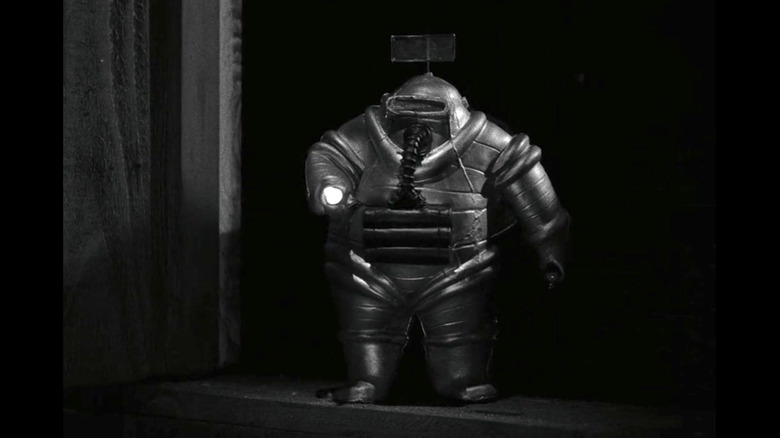
In the episode, the globular mini astronauts attack the woman several times, initially using tiny guns and her own kitchen knives at one point — which somewhat looks and feels like something taken out of the brilliantly grotesque indie horror game, "Little Nightmares." In order to make these scenes possible, director Heyes had to make sure to use actual miniature props. As he recalled, "In having the little characters play in the scene with her [Moorehead], she could actually grab hold of them, throw 'em in the fireplace, see one up on the window ledge, and give it a hit, and so forth. It was better than cutting away or doing it with trick photography."
While the clever practical effects certainly deserve kudos alongside the writing of the episode, which barely included any dialogue (apart from Serling's usual narration), it's nigh-impossible to take them seriously today. In retrospect, they come across as rather cute and goofy — unlike the creepy episode that inspired Michael B. Jordan's "Sinners" — and that wasn't the main approach and goal whatsoever in 1961. Its writer, Richard Matheson, even criticized how ridiculous those "little dolls" looked in Marc Scott Zicree's book, "The Twilight Zone Companion," instead of being ghastly and frightening as originally intended.
Well, it's hardly a surprise that most films and TV shows that featured something resembling the Michelin Man's design (like Ghostbusters' giant Marshmallow Man) usually opted for generating a laugh or a foolish moment rather than terror and dread.