

Why The Wires On Landline Phones Were Coiled Instead Of Straight

We may receive a commission on purchases made from links.
For those too young to remember, the idea of a corded phone of any kind must sound strange. After all, most of us use smartphones these days. And even modern landline phones mostly use cordless handsets, for the few who still use such old-school gadgets. However, there was a time when every landline handset was connected via wire, and a notably coiled one at that. Besides giving phones a distinctive visual identity, these coiled wires made it easier to carry the handset around with you, expanding and contracting without getting tangled up.
Modern phones, even landlines, don't bother with coiled wires anymore. If you're taking a call with a cordless handset, you're free to walk around the room at your leisure, without thinking about the physical phone jack. Back in the day though, people were restricted to where their phones were located while taking calls, with that coiled cord stretching out behind them. It's thanks to those coils that you generally didn't need to worry about accidentally ripping your phone out of the wall, and you can actually still use them today for various devices if you're worried about tangles.
Coiled wires can stretch and contract without getting tangled
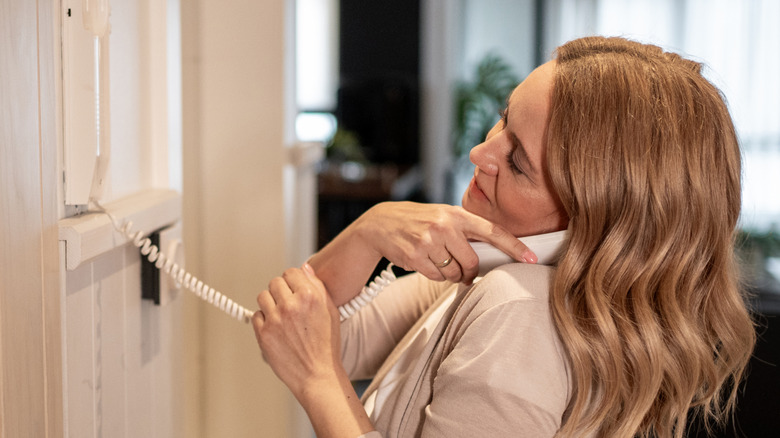
When you took a call on an older landline, the handset was physically connected to the phone. Of course, this didn't stop people from moving around the room while talking. But if the handset were connected via a straight cord, it could end up trailing on the ground behind you, which would create a tripping hazard and the risk of it getting tangled up.
Using a coiled wire solved this problem rather succinctly. The tightly packed coil allowed for easy expansion and contraction, keeping into from tangling and dropping on the floor. The curly design also helped protect the phone wire from fraying and tearing, which ensured your landline lasted as long as possible, possibly longer than the 5-year lifespan of some smartphones.
As phones mostly use wireless handsets today, the need for coiled wires has decreased. That said, you can still get these type of wires for use with other devices. For example, you can get a USB-C coiled wire on Amazon to connect things like a PC mouse or keyboard if you're worried about fraying and tangling, and prefer to avoid dealing with Dollar Tree hacks for managing cable clutter.