

Nvidia's Newest GPUs Are Costing 1,000% More In Warranty Claims - Here's What We Know

Nvidia ranks as one of the top 100 U.S.-based warranty providers, based on the amount of product warranty claims paid in 2025. This isn't exactly a proud achievement for the company, though, because Nvidia's warranty claim expenses increased by 1,000% compared to 2024.
As reported by Warranty Week, Nvidia's warranty claim rate for discrete GPUs increased ninefold from the fourth quarter of 2024 to the fourth quarter of 2025. The company ended the year with a claim rate of 0.90%. To put it another way, Nvidia paid out a warranty claim for nearly one out of every hundred discrete GPUs sold. The company paid a total of $894 million in warranty claims for 2025, up 1,000% from just $81 million in 2024.
Nvidia is the top U.S. semiconductor company. The company sells discrete GPUs that are used to power high-end gaming PCs, develop artificial intelligence, and render professional graphics. Nvidia is not globally dominant in the semiconductor industry, though; over half of all computer chips are produced in another country. Even so, Nvidia has money to spare. The company ended 2025 with $8.22 billion set aside in its warranty reserve balance, signaling that it's prepared for claim costs to increase again.
How Nvidia's warranty expenses might affect consumers
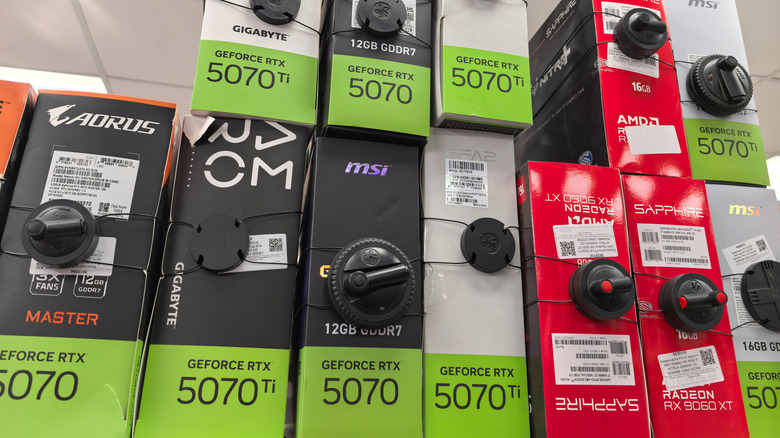
Warranty service experts explain that increased warranty costs stem from frequent defects, poor quality control, and rising costs for both parts and labor. Nvidia's high warranty expense for discrete GPUs could be an indication that consumers are experiencing product failure more often. It also means that the company has to pay much more to repair or replace the affected products, which comes as little surprise considering that GPUs are one of the gadgets jumping in price due to RAM shortages.
Interestingly, approximately 20% of today's GPU deployments are used for developing or training AI models. When used in a large-scale data center to power business functions or generate profit, this could be interpreted as an example of "commercial use" that may void the product warranty. Either way, fewer of Nvidia's products are going to consumers, and more are going to commercial uses — but Nvidia's warranty claim costs are still rising exponentially.
What this all means is that Nvidia is on a path that could see it become a less consumer-friendly company. On one hand, ranking as a top warranty provider means that you can count on the company to replace your product when a problem occurs. On the other hand, those problems are becoming far more common. High warranty costs also correlate with high price tags when you're shopping for a new GPU. In the face of soaring costs, Nvidia flagship GPUs are not worth it compared to cheaper options.