

For All Mankind Didn't Make Real Historical Figures Main Characters For A Good Reason
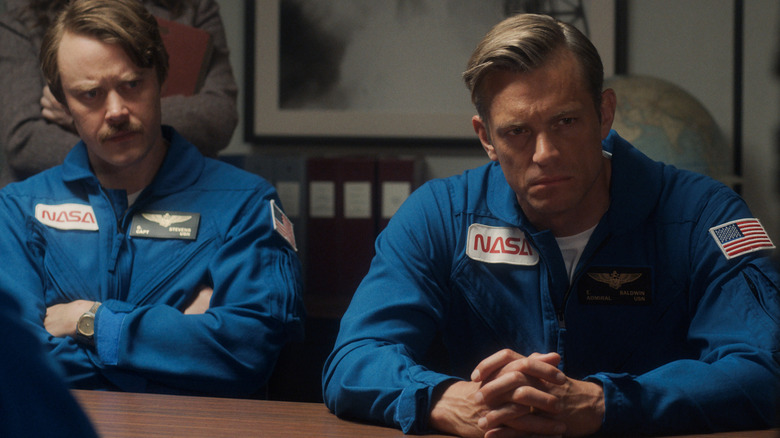
"For All Mankind" has been called a modern sci-fi classic by fans of the popular Apple TV show, now in its fifth season. It's an alternate history set in a world where the USSR put a cosmonaut on the moon before NASA, resulting in a continuation of the Space Race that extends into the 21st century. The show raises interesting questions about humanity and how a single moment can change the trajectory of history.
As a show inspired by actual history and science, "For All Mankind" tries its best to be accurate and factual. That doesn't mean it doesn't take liberties. Some details are intentionally inaccurate to fulfill audience expectations and the show's creative vision, while others, like using a modified NASA logo, are done out of respect. It's for both of those reasons that, while the show has depicted historical figures like Neil Armstrong and Sally Ride, they have played supporting roles or made cameos rather than being at the center of the action.
Including some familiar names and others connected to space exploration helps ground the world in reality, even as the story gets further from actual events. However, by focusing on original characters, "For All Mankind" can tell the stories it wants to tell without completely rewriting the lives of actual people, many of whom have since died. As series co-creator Ronald D. Moore said in an interview with the "Liftoff" podcast, "if you're doing wild and radical things with characters or making them alcoholics or whatever for story purposes, you don't really want to do that to someone who's real."
For All Mankind focuses on fictional characters out of respect for real people
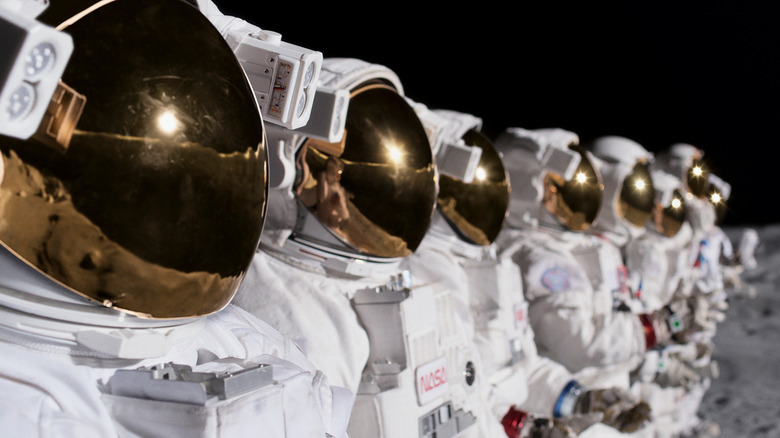
Moore also expressed a desire to depict historical figures in a way that "honors them and who they were." That said, the show is willing to deviate for the sake of the narrative. As the show branches further and further from reality, it takes more liberties. For example, in the world of "For All Mankind," the continuation of the Space Race sped up civil rights progress, meaning there were female astronauts far earlier than 1983.
Still, Sally Ride plays a recurring role in Season 2 and, without spoiling things, has a big moment in the finale that makes her important even without her main claim to fame. It's also a likely nod to the real Ride's role as a whistleblower in the investigation into the Challenger disaster and an acknowledgement that she was more than just the first American woman in space.
As an alternate history show that depicts real people through actor portrayals and archival footage, "For All Mankind" has to balance storytelling with respect for those whose stories are being reimagined. By nature of what it is, the show has to make some changes if it wants to include historical figures at all. For that reason, it makes sense to focus the plot and drama on original characters as much as possible.