

4 Nostalgic Gadgets Every Boomer Will Remember Using

Baby boomers, the generation born between 1946 and 1964, didn't grow up with modern tech, but they were alive as it was being established. Innovation was on the rise, and so were gadgets. After World War II, tech went through a revolution, especially as a lot of companies reverted back from making weaponry to what they were originally built for. It just didn't make sense for IBM to carry on making the M1 Carbine when it could instead reinvest in its computing roots.
The boomer era of gadgets wasn't quite like the consumer electronics phase we're in now. For one thing, there was a lot of focus placed on making the kitchen more convenient when boomers were coming of age. Technology wasn't being designed to take work away — unless you were in a factory — but to assist around the house. Sounds similar to the current situation with generative AI, doesn't it? The difference being, a new countertop oven helped the cook instead of eating the cookbook.
While it'd be great to talk about technologies like the VCR or other '80s gadgets that everyone loves, today we're going a little further back. No pagers or clappers, this is about those gadgets that were everywhere in the '60s or '70s. Wood grain, "o-matics," and obsolete doodads are the focus today.
1. Adding machines
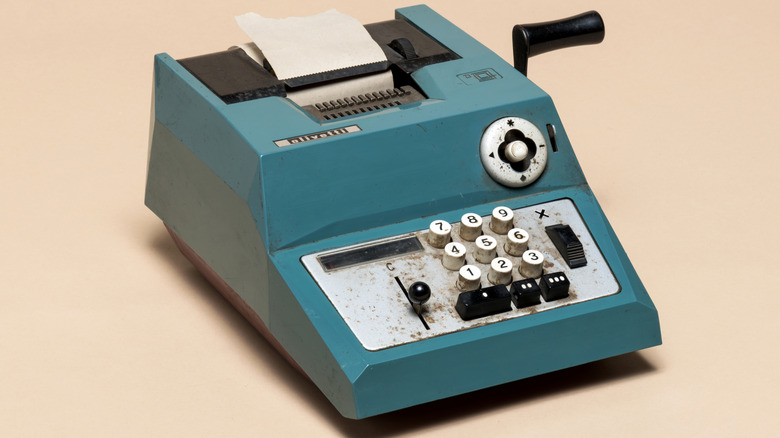
The adding machine, the precursor to the electronic calculator, was all the rage for accountants and offices. Boomers would see these phased out not long after the computer became the norm, taking with it a lot of the original mechanical calculators, like the "pocket-sized" Curta. Adding machines were invented in the 19th century, eventually becoming a staple for those involved in fields around mathematics.
These were cumbersome, loud machines in some cases, whirring away as they got your results. For younger generations, videos online will show you the methods of how they operated, including the sequence of keys you'd need to input to other sums outside of addition. Most models could handle division and multiplication, too. Seeing an ancient machine try to contend with dividing by zero and entering an infinite loop is something you should consider turning your volume down for.
Eventually, screens were implemented on later models. Facit, for example, used a tube-type display that was made in Japan. This provided users with a backlit display that could be viewed even in the dark. Other revisions to the overall design, such as the comptometer, would even remove parts of the mechanism, like the lever, replacing it entirely with a button layout for input.
2. 8 mm cameras
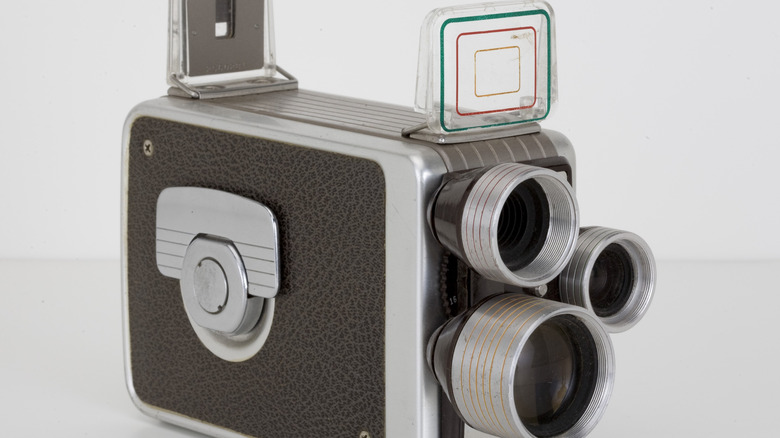
Have you ever sat down to watch old recordings of your family on 8 mm film? It's bizarre, especially when you notice a parent as a child or a relative you never met. The 8 mm camera was a popular choice for families to capture footage at home since it came without the massive expense these devices usually carried at the time.
As the name implies, these cameras shot on 8 mm film, which could then be played back with a projector for everyone to see. These days, it's probably best to hire someone to transfer it to digital, unless of course you wind up with a boatload of it. Depending on the type of camera you had — 8 mm or Super 8 — how long you could shoot for would vary. Super 8 would have about three minutes, and regular 8 mm could be found up to 5 minutes.
As with a lot of old video tech, this was supplanted by more convenient and capable gadgets later down the line. Once videotape became the staple of the 1980s and digital took over in the 2000s, much like a lot of the era's tech, 8 mm film was quickly forgotten about. However, there's nothing quite like seeing footage at 15 to 18 frames per second that's been digitized; everyone looks like they're hurrying through the day once it's brought up to modern standards like 24 fps.
3. Slide projector
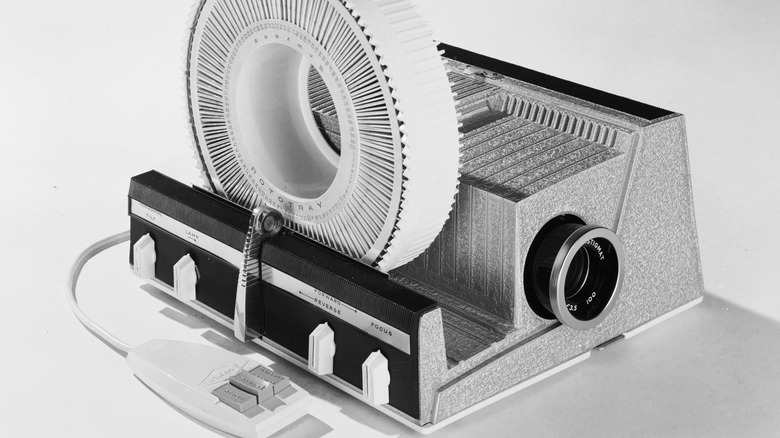
Photos used to not be something that you'd share with the entire world, if you can believe it. Sometimes, family moments or even just random shots were kept and developed into slides, which would then be shared with those you knew. Slide projectors would beam light through a transparent picture, which would then be blown up through the lenses embedded within the device.
It wasn't just for boring kids with what their aunts did on vacation — this gadget was also ubiquitous in educational environments. A spin on this was the overhead projector, which used a similar system of transparent materials being beamed to show the entire class. Using a big mirror, it beamed a reverse image into another, which would then display it against whatever the projector was pointed at. It saved teachers from having to create multiple copies of certain educational materials.
Slide projectors also had a few accessories that could be purchased separately. It's not uncommon to find a slide collection neatly stored in an organized tray or something similar. There were also personal, non-projector slide viewers that let you view slides through a magnified and sometimes lit view port. Handheld models, like the View-Master Model E, let viewers hold a binocular-like device to their eyes to see those classic moments.
4. Cigarette vending machines
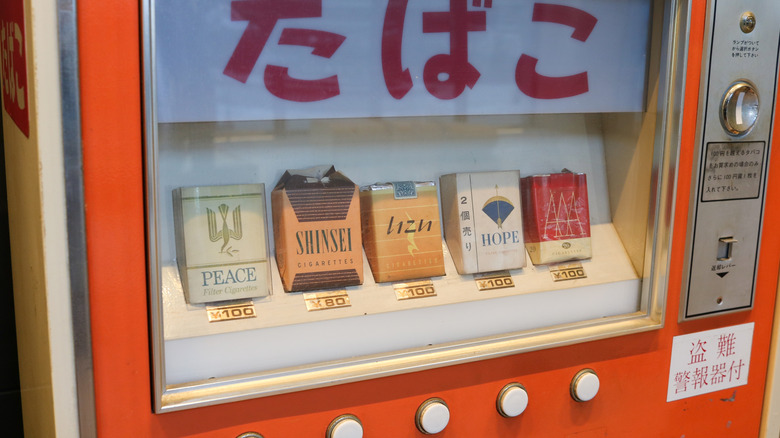
Some dive bars and areas still clinging to the past might have these around, but when it was common to smoke, cigarette machines were a dime a dozen. These bulky devices would dispense a variety of death sticks with just the pull of a lever or the press of a button. Quite a few places have banned these since the discovery of the harms of smoking, with the UK banning them in 2011 and parts of Europe and Asia also following suit. This came after years of evidence that cigarettes were riddled with cancer-causing chemicals.
In countries where smoking cigarettes is still relatively common, like in Japan, vending machines weren't phased out. Instead, they were issued a directive to install age verification, which is done through a "Taspo Card." While smoking is falling in Japan in recent years, it's not uncommon to find a cigarette dispenser somewhere in the urban sprawl. They did catch the attention of the World Health Organization (WHO), which created the Framework Convention on Tobacco Control in 2003 and eventually put it into action in 2005.
Machines that have been thrown out or taken out of service are actively sought after by zine group Distroboto. The project began in 2001, aiming to recycle the old machines in favor of dispensing independent creations, like zines, and use its position as a non-profit to divert all earnings to the artists. On its website, Distroboto lists three in active use, based in Montreal.