

The US Is Paying $190M For Mach 5 Rockets That Will Never Reach Space - Here's Why
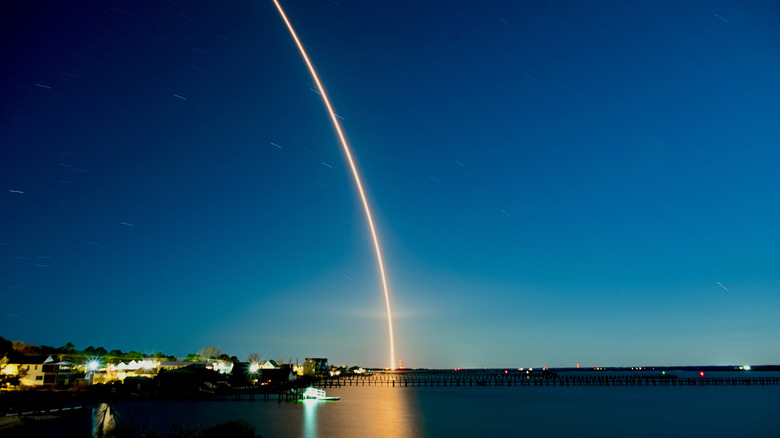
The U.S. Department of Defense has invested $190 million in Rocket Lab's innovative HASTE launch vehicle — HASTE stands for Hypersonic Accelerator Suborbital Test Electron — but what's interesting is that it won't be going into deep space. Instead, it's a low-atmosphere rocket based on Rocket Lab's Electron Rocket, designed for hypersonic test flights. A suborbital rocket, if you weren't aware, never reaches orbital velocity speeds, so it falls back to Earth without completing any outer space orbits. It's very different than the company's hypersonic rocket that could actually compete with SpaceX.
A suborbital trip allows for a low-gravity experience and suborbital research to conduct a wide variety of experiments and technology testing. That's precisely what Rocket Lab's HASTE launch vehicle and its subsequent program offer. With the DOD, Rocket Labs will "rapidly accelerate hypersonic flight tests and advanced aerospace technologies shaping the future of defense missions." The aforementioned program is a joint venture between the DOD and the Naval Surface Warfare Center Crane Division. It's called TRMC MACH-TB, or the Test Resource Management Center Multi-Service Advanced Capability Hypersonic Test Bed 2.0. Wow, that's a mouthful.
Ultimately, this multi-million dollar contract orders 20 hypersonic test flights with Rocket Lab's vehicle over the course of four years. The first of that series of launches is purportedly going to take place "within months" of the contract signing, so soon.
What kind of research can be completed during a suborbital flight?
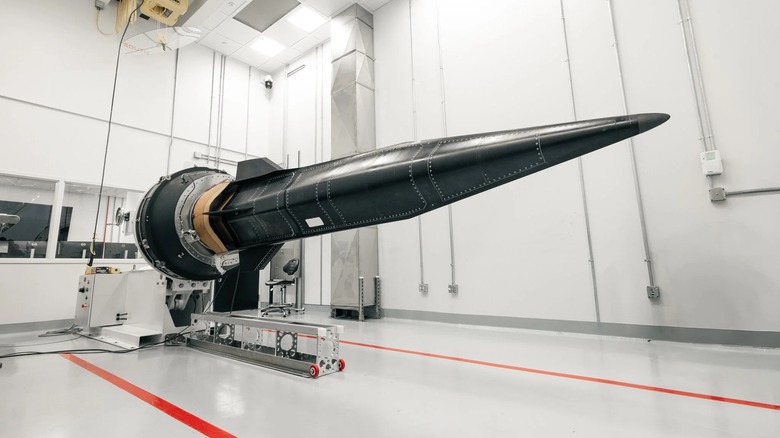
Some of the most historic U.S. space missions that weren't led by NASA include suborbital launches, like the U.S. Space Force's X-37B orbital test vehicle. According to NASA, which also conducts separate suborbital research, there are lots of things you can do during these test flights, from Earth science and geospace experiments, to biological tests, robotic tests, and recreating in-space experiences. Rockets and flight vehicles aren't the only way to reach suborbital elevation. Research balloons are also used, like the one the size of a car that landed on a Texan farm.
But what Rocket Lab says about HASTE is that it's "tailored specifically for technology demonstration missions," and designed to help accelerate related hypersonic research while reducing associated costs and increasing launch availability and frequency. That matters because traditional hypersonic testing methods are expensive and slow to launch by comparison.
The current lineup of 20 HASTE missions will also be focused on "delivering high-cadence hypersonic capabilities at scale for the warfighter," building innovation for the armed forces and America's national security. Most other details remain classified, but the research will help the armed forces in a big way. Notably, the Mach 5 speeds HASTE can achieve pose unique considerations for ground control. Were it to be a more dangerous, missile-based deployment, the speed is too fast to make tracking and targeting a sure thing. It also forces decision times to be faster, since they move faster. It's a "critical technology area" that will provide "the greatest impact, fastest results, and most decisive advantage."