

3 Ways Smart Lights Can Change Your Home Security

Making the switch to smart light bulbs is wise for many reasons. With smart lighting, you have the convenience of being able to turn lights on and off remotely via an app, ensuring you don't have to worry about skyrocketing energy bills if you accidentally leave the lights on when heading out on a trip. Smart light bulbs also allow for automated dimming and motion detection, which can further reduce your electricity usage. In addition, there are various ways you could use smart lighting to boost your home's overall security.
In a study published in the academic journal Crime Science, researchers found that security measures like indoor lights that are set on timers and outdoor lights that are connected to sensors can help keep homes safe from burglars. Luckily, smart lighting offers features that allow homeowners to take maximum advantage of this principle. While smart lighting's primary draw may be convenience and savings, you should also consider how you can use this innovation to protect your property.
Making it look like you're home when you're not
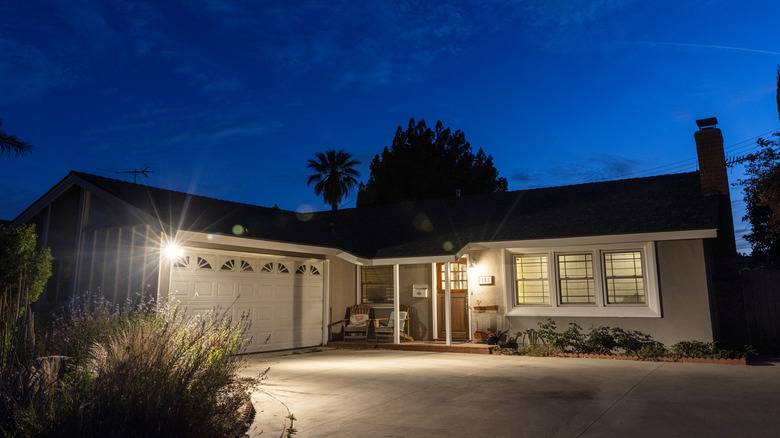
The specific features of various smart light bulbs may vary somewhat from one model to another. It's important to research your options to ensure you're investing in a smart lighting system that serves your needs. That said, most types of smart light bulbs allow you to set schedules so that the lights automatically turn on and off at certain times. If you want to scare off potential intruders while you're away, you can schedule your lighting so it turns on at key times when your home otherwise might be vulnerable.
That's just one basic function of smart lighting. With some smart light bulbs, you can even program the lights to turn on and off in different rooms of the house at random times or intervals. This can create the illusion that you're home and moving from room to room. A potential thief might know you could automate your home lighting to turn on when you're away — nevertheless, they may choose not to target your house if they see the lights going on and off in various rooms, as this suggests someone is occupying the home.
Using smart lighting in conjunction with other smart home security features
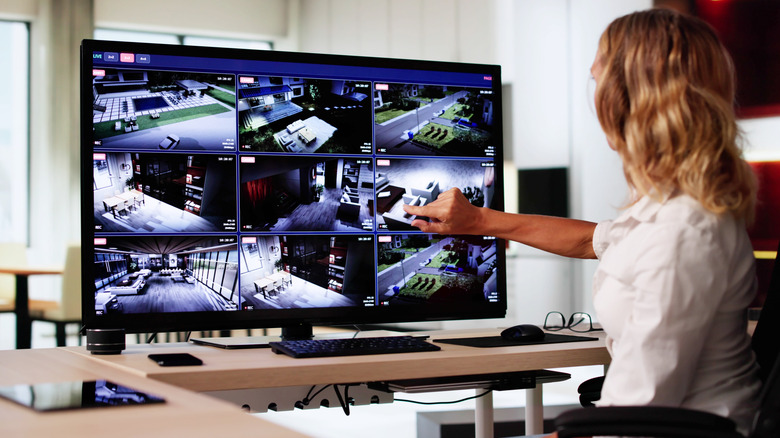
Installing smart light bulbs is just one way to add smart tech to your home. You might also invest in various smart home security gadgets, leveraging the collective functionality of all these devices and features to ward off intruders. For example, perhaps you're away when your smart home security camera sends an alert letting you know someone is at the door. You can use your smart lighting app to remotely turn on the lights, hopefully scaring off anyone who might be looking to break in while you're out of the house.
Again, smart lighting can also be linked to motion sensors. That means if an intruder triggers any of these sensors, the lights can turn on automatically. A wrongdoer who didn't expect to be exposed in this way might take off when the lights turn on, instead of waiting around to find out if anyone is actually home. Even if they still suspect you're not home, they might not feel comfortable prowling through a house knowing the lights will essentially follow them throughout the property, turning on any time they trip a motion sensor.
Installing smart lighting in the outdoor sections of your property
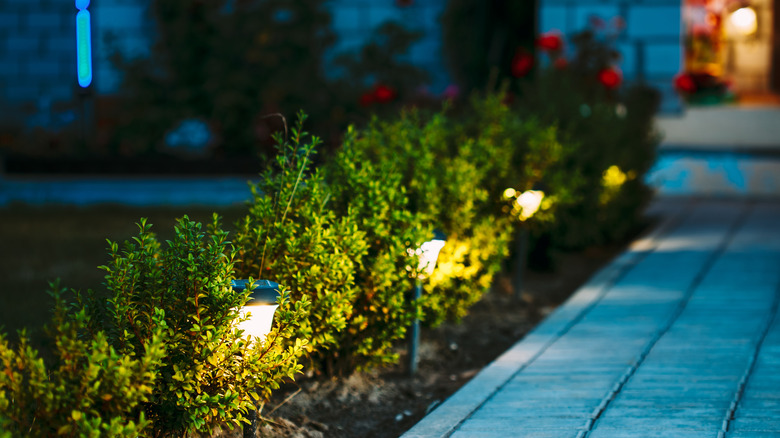
You might naturally be inclined to prioritize installing smart light bulbs in the interior sections of your home. However, it's worth keeping in mind that you can also install smart lighting in various outdoor areas, including walkways leading up to your front door. Automating the lighting to turn on when you're away or to turn on when a smart motion sensor detects movement can theoretically scare off a prowler before they even reach the front door.
One of the main points to keep in mind when installing smart lighting is that this type of security feature is often most effective when combined with related security measures. In the study linked to at the beginning of this article, researchers pointed out that a collection of security devices working together is typically more effective than any one security device alone. By applying the tips here and adopting similar smart home tech, you can be confident you're taking smart (sorry) steps to keep your home safe.