

Why Gene Roddenberry Didn't Care About Creating 'New Civilizations' For Star Trek
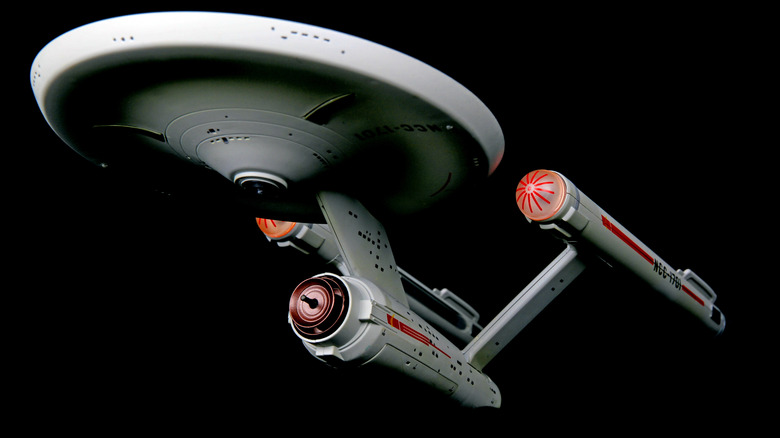
"Star Trek" is a franchise based in large part on exploring the universe and encountering its varied and fascinating inhabitants (and often blatantly violating the Prime Directive by interfering in their development). It may come as a surprise to many Trekkies, then, that the series' legendary creator, Gene Roddenberry (one legend whose ashes are now in space), discouraged the show's writers from creating new civilizations.
This is particularly shocking if you consider how many Star Trek episodes and narrative arcs revolve around new civilizations, especially in the original series. While they may not be galaxy-spanning like the Federation or the Klingon Empire, there are new civilizations all over the original series: consider Balok and the First Federation from "The Corbomite Maneuver," the Eminian Union from "A Taste of Armageddon," or the infamous Nazi planet from "Patterns of Force." The list is extensive, and that's just accounting for the three seasons from TOS.
But according to story editor D.C. Fontana, for Roddenberry, the stories were about people, not civilizations. Roddenberry considered the important world-building done; he'd already created enough civilizations to fuel his vision of "Wagon Train to the stars," the framework he used to originally pitch the series. Instead, he encouraged writers to focus on the effects the events of the narrative would have on the crew of the Enterprise and their consequences.
Who are the people? What is the story about?
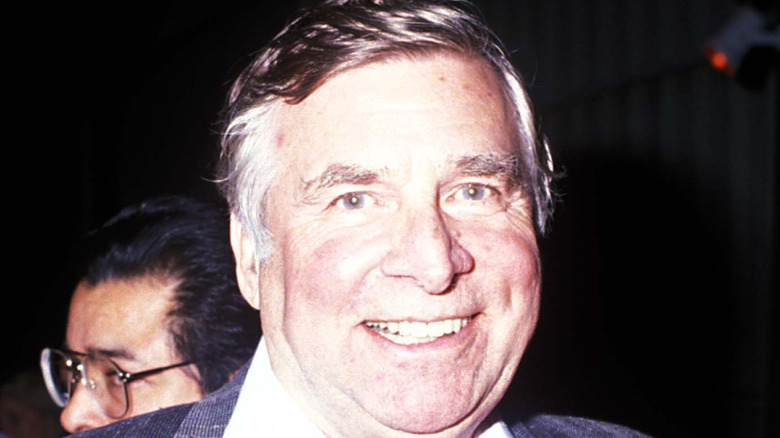
Fontana first encountered Roddenberry when she was working as a secretary at Desilu Productions. She became his assistant, and Roddenberry encouraged her to write. She went on to produce a number of scripts for "Star Trek" before being promoted to overseeing story for the entire series. In Tom Stempel's "Storytellers to the Nation," a book that traces the history of American television writing, Fontana says writers would approach her with grand ideas about new civilizations, but executing those ideas was challenging because of the limitations of television budgets in the 60s and because of Roddenberry's vision for the show. Roddenberry was more interested in the human side of the series.
"Who are the people?" Fontana recalls Roddenberry asking. "What is the story about? Who is the story about? Is it about our ship, our people? Is it a problem that is brought aboard the ship and creates a problem? Is it one they go to and become involved in? What is the story about in terms of people?" That approach should come as little surprise to those familiar with Roddenberry's storytelling philosophy, even if you look at one of the best science fiction shows of the 2000s.
He told The Humanist in a 1991 interview that for him, science fiction was a vehicle for exploring humanity's nature, beliefs, and frailties. "I've been sure from the first that the job of Star Trek was to use drama and adventure as a way of portraying humanity in its various guises and beliefs," Roddenberry said. "The result was that Star Trek — in the original series but even more powerfully in the second series — is an expression of my own beliefs using my characters to act out human problems and equations."
A dual-axis narrative with characters as the scaffolds
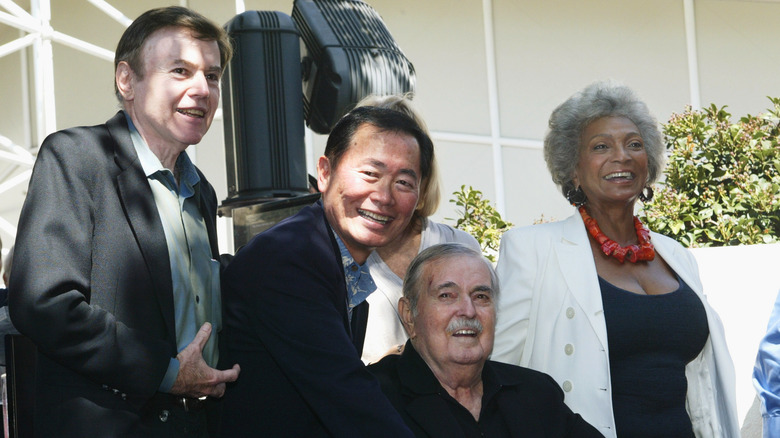
Where "Star Trek" differed from Wagon Train was in its story structure. According to Fontana, most episodes attempted to support two stories simultaneously. The main story would typically involve Kirk, Spock, and Dr. McCoy wrestling with the major issue and themes of the episode. At the same time, a B plot involving secondary characters like Chekov, Scotty, Uhuru, Nurse Chapel, and the rest of the crew would be playing out, typically attached in some way or in support of the main story.
The key was that the focus remained on the characters and story, that the plot wasn't just an excuse to get specific actors on screen or fulfill the whims of a writer. In the same way that Roddenberry discouraged the invention of brand new civilizations because they could distract from that intimate human element, Fontana would also have to divert writers from becoming overly fascinated with technology.
Some writers, she told Stempel, would get "overly involved in the technology and they wound up telling stories about the technology, rather than about the people, and that would almost never work." It's one of the ever-present dangers of a story set against the fantastic background of bizarre alien species and futuristic wonders. As Roddenberry told The Humanist, "To do a science fiction series and have the characters come anywhere near human is an accomplishment."