

RAM Prices Are Getting Too High In 2026, So This YouTuber Is Making His Own
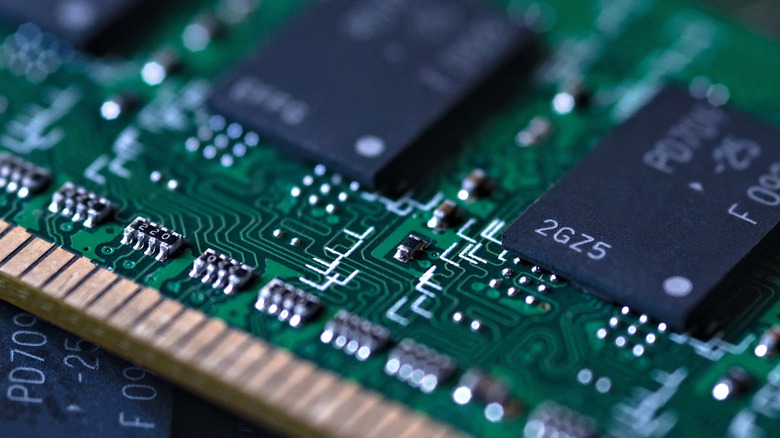
The ongoing RAM crisis has been driving up prices for nearly all modern tech in recent months, and YouTuber Dr. Semiconductor has had enough. He's decided the solution is to build his own class 100 semiconductor cleanroom in a shed on his property and take the power (or in this case, memory) back from the big three manufacturers by building RAM himself.
Those aforementioned big three, Micron Technology, Samsung, and SK Hynix, account for a whopping 95% of RAM production across the globe. As demand has spiked, driven in large part by tech firms looking to fuel their expansive AI projects, price has risen accordingly, shooting up by hundreds of percent in some cases.
With recent forecasts that prices won't normalize until at least 2028, DIYers have begun seizing the means of production themselves to try to stave off RAMaggeddon. It's a rather serious crisis to get YouTubers to fight back with a healthy — and impressive — dose of DIY innovation.
The roots of the RAM crisis
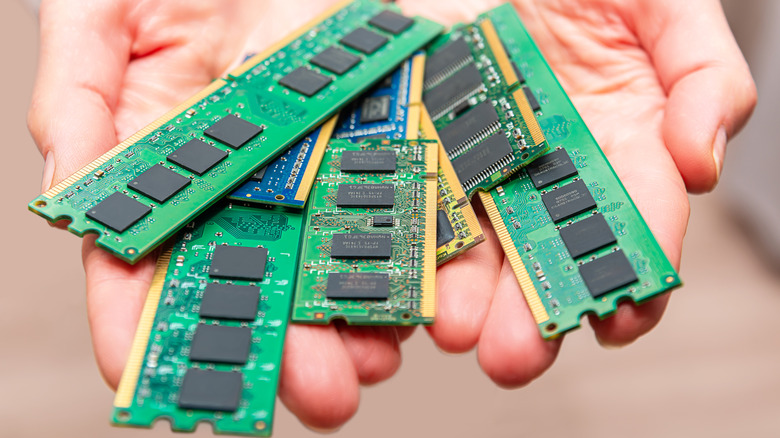
The main driver of the current RAM shortage is a massive increase in demand from companies like OpenAI, Microsoft, and Google (which is simultaneously trying to find ways to decrease RAM prices). They're three of the largest investors in AI technology, which is notoriously resource hungry, and one of the primary resources its slavering maw demands is RAM. RAM is critical for AI for a number of reasons.
For one, it's where a model, especially LLMs like those fueling modern chatbots, stores the billions or trillions of weights that define its knowledge and shape its responses. Weights are parameters used throughout a model's training and beyond that reward "good" or accurate responses and penalize inaccurate or "bad" responses. RAM also serves as a model's short-term memory, where it can stash recent interactions so it can build on them appropriately over the course of an interaction. Additionally, to process all of those interactions and weights requires GPUs, which themselves rely on RAM. Even outside of the context of user interactions, training these AI models involves massive datasets totaling petabytes of data and further increases RAM usage, as does handling multiple simultaneous queries in data centers.
This means huge demand from RAM manufacturers' richest customers, depleting stocks, and leaving supply low for individual consumers. This means punishingly high prices and critical shortages, not just for raw RAM chips themselves but for devices that rely on RAM to function. Laptops, smartphones, and even Raspberry Pis aren't safe from the RAM crisis.
Combatting the oligopoly with DIY ingenuity
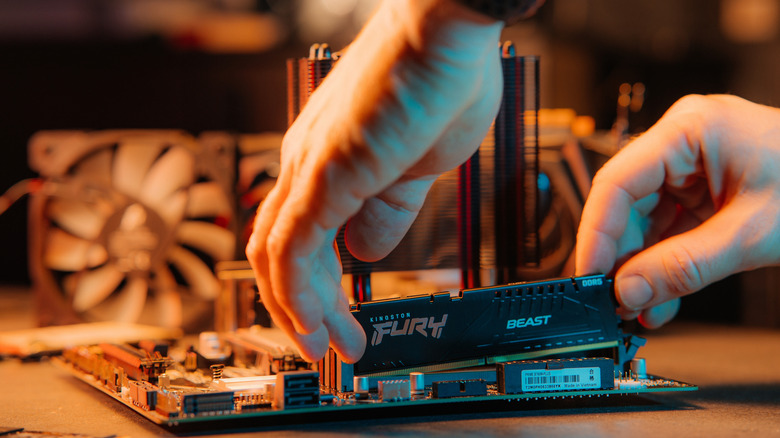
As is often the case with modern crises in capitalism, the solution may have to come not from corporate overlords but from resourceful individuals. Dr. Semiconductor is leading the charge on the RAM tip from the confines of his semiconductor shed. In the video chronicling his experiment, the good doctor begins by discussing how DRAM functions, explaining that it's a series of matrices of tiny capacitors and transistors. The transistors act as a switch, and the capacitors act as batteries storing data.
Flip the switch and the data can either be extracted or stored. Though, after it's been extracted for use, it has to be refreshed before it can be read again. He then moves into building the homebrew DRAM itself. The process involves snipping chips of silicon and precisely etching them so that aluminum can be sprayed on with a stencil. He then tests the finished chips by precisely placing micromanipulator probes, as the DRAM cells he's created are too small to be tested with wires like traditional memory.
Ultimately, he's mostly satisfied with the results. The capacitors can be charged rapidly, though he notes that his homebrew DRAM can't hold a charge without being refreshed for as long as commercial RAM. The next step is stitching a huge number of cells of the size he created together so that they can be hooked up to a PC for real-world testing. While it's an early step, his progress is vital if a real cottage industry for RAM production is ever going to become a reality.