

Why Almost No One Needs An RFID Blocking Wallet Anymore
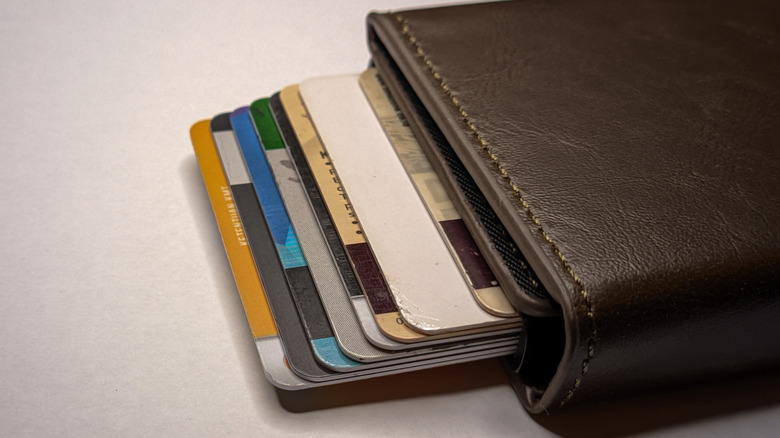
Radio Frequency Identification (RFID) is the technology that lets your credit card transmit payment data just by tapping or hovering over a sale terminal. With the rise of RFID cards came the fear of RFID skimming: the malicious act of intercepting these radio frequencies to steal credit card information. An RFID-blocking wallet uses materials that block electromagnetic signals, preventing other devices from accessing its data. The surprising reality is that there's no need for RFID-blocking wallets, especially since no one really needs physical credit cards anymore, either.
If you do still use a physical card instead of a digital wallet, don't worry. RFID skimming is mostly a myth. Experts have described it as "theoretical fraud," which is very unlikely to actually occur in real life. RFID cards have built-in encryption that makes it impractical for fraudsters to extract any sensitive information on the fly without actually having your card in their hands. Most RFID-enabled U.S. passports also include built-in identity theft protection.
This isn't to say that contactless payment fraud isn't a problem. In fact, there was a reported £34.9 million (approximately $47.2 million USD) lost to contactless payment fraud in the U.K. in 2022. However, reports have shown that instances of "contactless-related" fraud almost always occur because a card was physically stolen. There is simply no concrete evidence showing that criminals can use an RFID scanner to steal encrypted data from a distance.
Who actually needs an RFID blocking wallet?
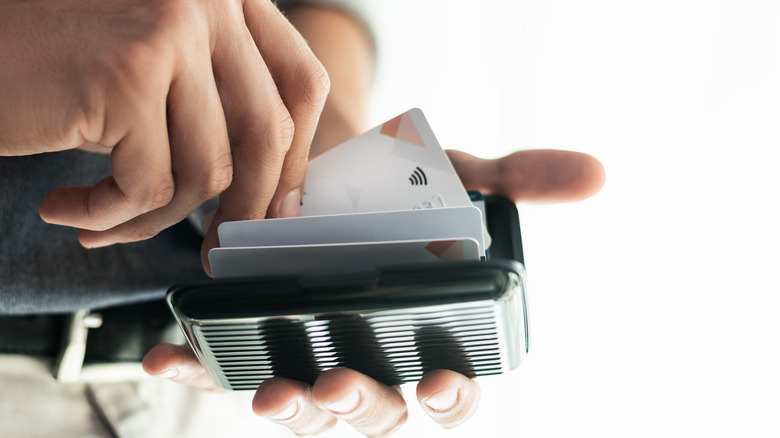
The business administration experts at American Military University still recommend using an RFID-blocking wallet to protect against skimming attacks during contactless payments. Many of these wallets let you use your card by protruding it only partway, exposing it to the payment terminal but shielding it from nearby skimmers. However, using an RFID-blocking wallet in this way is an extreme safety measure — almost no one actually needs this level of protection.
The time when an RFID blocking wallet can be most impactful, though, is when you're traveling or commuting. While RFID skimming is rarely successful, if ever, fraudsters are more likely to attempt it if they feel like they can blend into the crowd at an airport or train station. You can also mitigate the risk of theft by consolidating your cards and IDs into a single smartphone app. Credit and debit cards are just a couple of the essential things you can store in an Apple Wallet or other digital wallets.
Ultimately, RFID blocking wallets are for people who value maximum security. You need a wallet anyway, so there's no harm in choosing one with extra safety measures. If you want the peace of mind that comes from added protection, make sure to buy from one of the most reliable RFID wallet brands. These brands produce wallets that are safe, stylish, and made from premium materials, making you proud to whip out an actual credit card.