

The Reason Why Nintendo Switch 2 SD Cards Are So Expensive
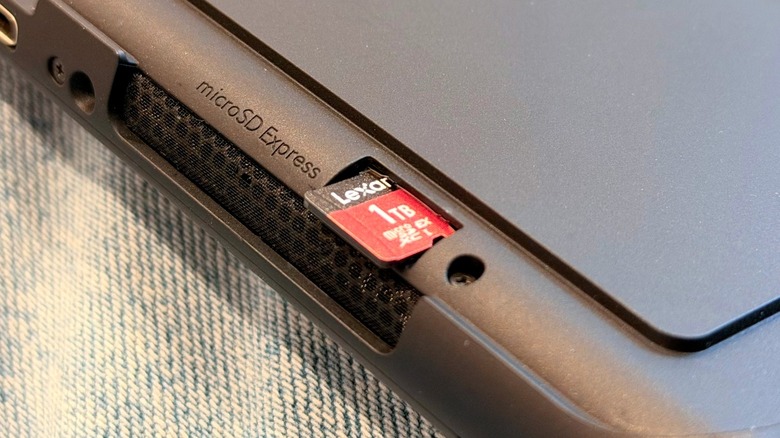
If you're in the market for a Nintendo Switch 2 or just got one, you probably realize that the microSD card you've been using on your original Nintendo Switch is no use in the Switch 2. This is because Nintendo requires users to buy a microSD Express, a faster SD card that uses PCIe and NVMe interfaces, which are also found in the latest SSD cards. However, when you compare prices for regular microSD cards with microSD Express cards, you quickly see that they're much more expensive; this is because they use new technologies that achieve faster speeds and there still aren't many companies that sell them.
For example, if you look across brands like Samsung, SanDisk, and Lexar, you'll see that a 256GB microSD card costs around $75, while a microSD Express card runs about $100. The values just get higher as you increase the storage, as a 1TB version costs around $240 for microSD, while the microSD Express equivalent can run up to $350.
While prices for regular SD cards are at an all-time high due to the ongoing memory shortage, the industry is also pushing this new microSD Express technology, which delivers fast reading and writing speeds. While not everybody needs it, if you want or have a Nintendo Switch 2, then you have no way out of investing in microSD Express. And from personal experience, you should definitely get something with at least 512GB of storage.
microSD Express cards on Nintendo Switch 2 explained
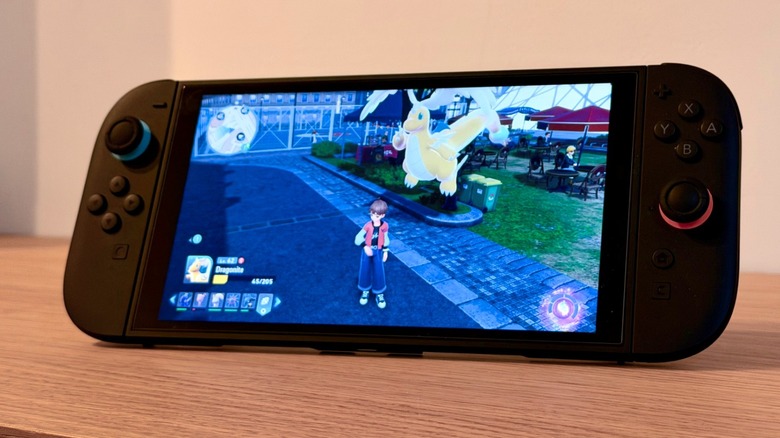
microSD cards have long been a popular technology for cameras and to increase storage in Android phones. Currently, users can expect speeds up to 104Mb/s for UHS-I cards, 312MB/s for UHS-II options, and 624MB/s for UHS-III versions. However, when you go with a microSD Express card, you can get reading and writing speeds of up to 985MB/s. For a console like the Nintendo Switch 2, which has faster SSD storage than the original Switch, using a faster microSD card ensures the gameplay experience will be as fast and reliable as if you're storing all your games locally.
While Nintendo upgraded the internal storage from the original Switch from 32GB to 256GB on the Nintendo Switch 2, this is not enough for those with big game libraries. Additionally, games on Switch 2 occupy more space, and can now output at up to 4K resolution and 120 fps. With that, the Switch 2 requires better technology.
Otherwise, everything on a slow microSD card would take forever to load on your Switch 2, and you'd be frustrated by the poor experience. That said, microSD Express cards are responsible for making downloads faster, gameplay smoother, and it feel like everything is running from your Switch 2 storage. I have Lexar's 1TB Play Pro microSD Express, and after a few months of use, I've never had any issues.
Will microSD Express cards ever get cheaper?
Usually, when companies introduce new technologies, the current one gets cheaper, which is what's happening with regular microSD cards. The same is true with different display technologies, processors, cellular connectivity, and so on. Lexar tells BGR that the price trajectory for microSD Express depends on two factors: mainstream device adoption and NAND flash market conditions.
According to Lexar, if more devices like Nintendo Switch 2 and cameras start to support the spec, scale will drive costs down as more people need the technology, and new players will join the market. However, with raw material pricing in the storage industry being volatile due to RAM shortages and a focus on business consumers instead of regular ones, this also can impact the prices users are paying.
Lexar says it doesn't have a specific timeline as to when microSD Express cards will start to get cheaper, as it depends on other players and also how the industry will respond to the current crisis; still, since this is a recent technology, users will have to pay a lot more for it in the coming months than when the Nintendo Switch 2 and other products have been available for longer. This is why you should be smart about what you store on your console. Meanwhile, Nintendo recently made a big change to its digital and physical game pricing.