

This Iconic '80s Gadget Is Considered A 'Buy It For Life' Item - Here's Why
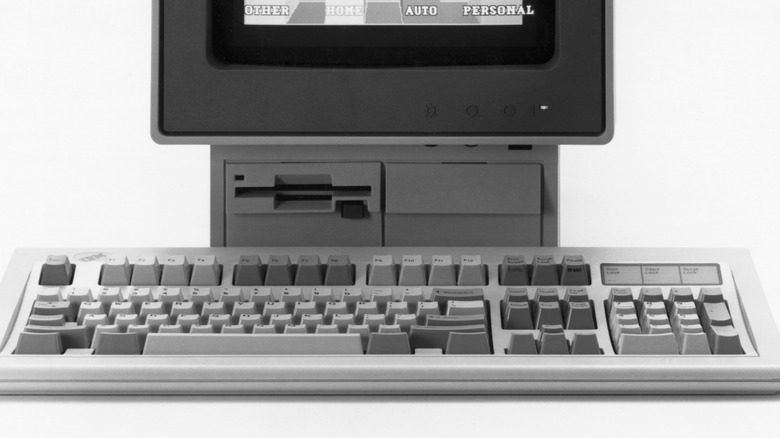
Back in the early 1980s, before home computing became anywhere near as common and accessible as it has in the 2020s, various electronics brands were making dedicated terminals for businesses and hobbyists. One of the most prominent brands, and the one that would inadvertently spark the home PC revolution, was IBM. While IBM knew how to put a decent computer together, it was also a surprisingly capable hand when it came to peripherals. Nowhere is this clearer than in the IBM Model M keyboard, which remains just as efficient today as it did all those years ago.
The IBM Model M keyboard wasn't the first interface peripheral the company ever put out, nor was it the last. It wasn't even the keyboard that accompanied the release of the original IBM PC. It instead came bundled with one of IBM's professional-grade work terminals. Even so, thanks to an incredibly robust design and a wholly unique approach to the concept of mechanical key switches, the IBM Model M may well have been the very first "buy it for life" gadget. If you've still got an original model, it could work just as well, if not better, than any modern mechanical keyboard.
The Model M accompanied the IBM 3161 Terminal
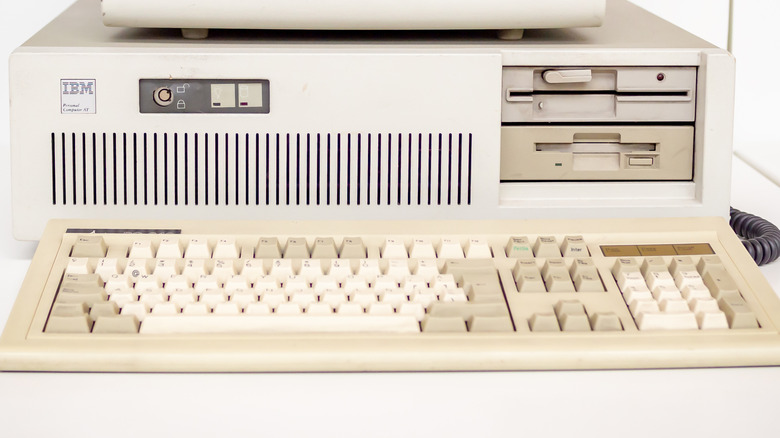
The IBM Model M, also known as the IBM Enhanced Keyboard, was the keyboard that came bundled with the IBM 3161 Terminal, originally released in 1985. By this point, the original IBM PC had already been released in 1981, alongside its companion Model F keyboard. The Model F became the standard for both IBM PCs and work terminals for a period, but eventually, it became a little too expensive for IBM to keep producing in bulk.
It's just as well, as this keyboard had a bit of an awkward layout, with a scrunched-up numpad on the side and an odd column of function keys to the left of the main keys. The Model M was the Model F's direct successor, becoming standard on all IBM PCs and terminals starting with the 3161. The Model M keyboard added numerous tweaks, bringing the overall framework of computer keyboards more in line with what everyone knows today.
This included spacing out the numpad from the main keys, adding a bank of additional keys like "Insert" and "Delete" between them, placing the directional keys beneath them, and making the function keys a horizontal row above the main bank. It was also the first keyboard to move the Control key down to the bottom-left and bottom-right of the main bank.
The Model M uses unique buckling spring key switches
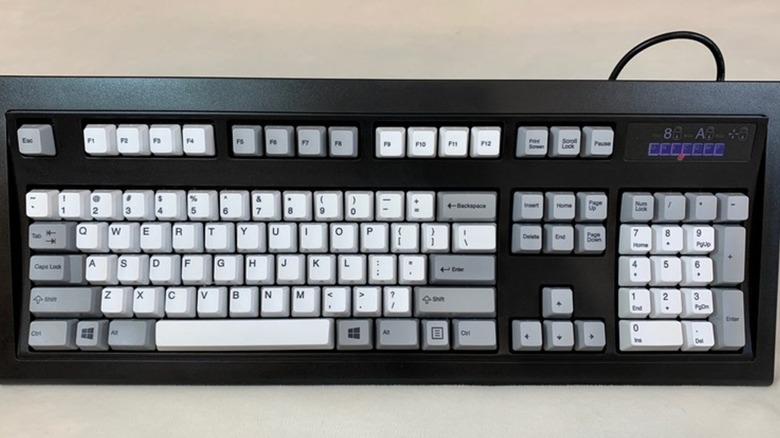
The Model M doesn't have nearly as many bells and whistles as modern keyboards, like RGB lighting or programmable switches. What it does have, however, is one of the most robust designs ever made, with the secret sauce being its particular approach to key switches. Rather than the membrane keys or simple spring-loaded mechanical switches of current keyboards, the Model M uses a unique approach based on buckling springs.
A buckling spring switch places a coil between the keycap and a pivoting hammer. When the key is pressed in, the hammer collapses, providing very tactile, not to mention audible, feedback. It's everything enthusiasts love about mechanical keyboards with an even more stimulating design. This reduced-part, wholly mechanical approach means that an original Model M keyboard, with proper care, could last more or less indefinitely, as opposed to the rubber switches on a membrane keyboard, which can wear out with time.
Of course, IBM doesn't make Model M keyboards anymore, but another brand, Unicomp, makes its own keyboards in their image: the New Model M. These keyboards are slightly more compact in their design, but are otherwise identical to the original Modern M, right down to their buckling spring switches.