

What Happened To IBM PCs? Why The Company Stopped Making Them
IBM is an exceptionally old company, having originated in 1911, when it sold some of the earliest data tabulating machines, as well as the original punch-card data format. IBM was always quietly pushing the computing power forward, upgrading to massive mainframes used by businesses and agencies like NASA. In the modern day, the consumer-grade personal computer sector is remarkably diverse, with brands and manufacturers offering devices across a spectrum of prices and functions all over the world.
However, back in the 1980s, computers were mostly just tools for commercial enterprise and hobbyists, rather than something an average person would use at home. The company that ultimately changed that was IBM, but its success in the sector would ultimately be short-lived as it was muscled out of the very sector it invigorated.
While IBM became the face of the PC revolution and made quite a lot of money in the process, its explosive success inadvertently set the bar too high for a follow-up act. Following the launch of the IBM PC, all of the industry's attention focused on IBM's PC developments, with its other business arms, like mainframes and microcomputers, fading into the background. All the while, its competitors stole the scene, creating conditions that eventually led to Lenovo purchasing IBM.
IBM's first consumer-grade PC was a game-changer
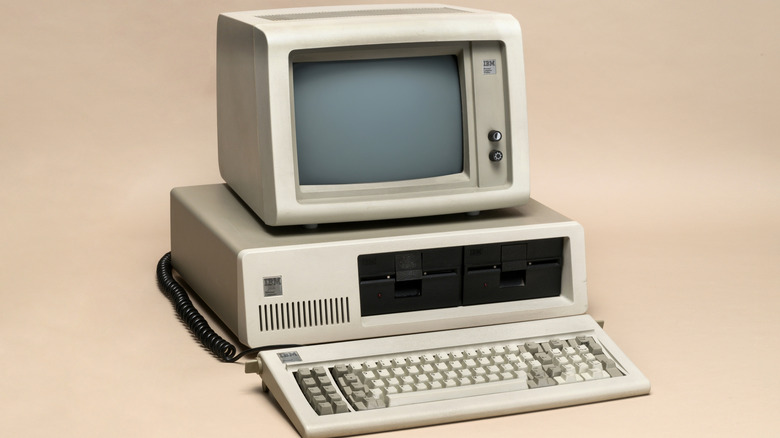
IBM's original PC set the stage for the digital age. By the late '70s, computing had started to reach a point where compact, end-user devices were becoming feasible, with major tech brands like Apple, Commodore, and Tandy trying to get their foot in the door. Their early computers were well-liked by enthusiasts, but were still a little too niche to appeal to the broader public. It was at this point, specifically in 1981, that IBM decided to throw a haymaker: the original IBM PC. The initial reception was about as lukewarm as that of other computing devices, but where IBM differentiated itself was a combination of smart advertising and more overt user-friendliness.
The device was promoted through a multitude of print and television ads, and came bundled with all kinds of software, from business-aiding spreadsheet-makers to games like the original Microsoft Adventure. It was a computer for everyone, including average folks, hobbyists, and corporate power-players. Once the word got out that this wasn't just another confusing gadget for tech enthusiasts, the money started pouring in, with sales of the IBM PC bringing in over $1 billion in its first year alone. The IBM PC became one of the most dominant office machines of the 80s.
IBM was muscled out by its competitors
In an effort to stay in the game, IBM developed its next consumer-grade PC, the IBM PCjr. Unfortunately, after the IBM PC juiced the market, every other computer manufacturer followed its example, offering more varied systems at gradually more approachable prices. The IBM PCjr was simply too expensive for what it was offering, with consumers preferring something like the Commodore 64 for things like gaming and clerical work.
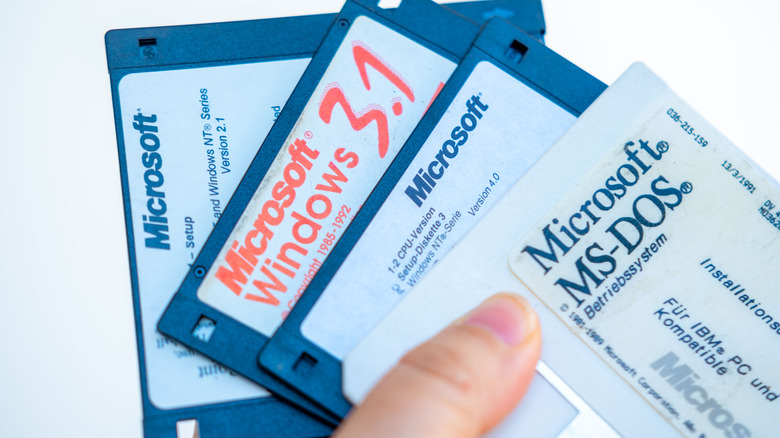
IBM's next move was to attempt to revamp its operating system, releasing the OS/2 in 1987, but once again, it missed the boat; two years prior, Microsoft had released the original Windows operating system, which was both cheaper and more accessible. It seemed that, no matter which avenue IBM attempted to tackle, someone else had already beaten them to the punch.
IBM's PC division floundered for years and was ultimately bought out by Lenovo in 2004. Lenovo would put this division to work getting it a foothold in the Western market, while IBM at large moved on from the PC scene, with most of its modern-day endeavors focusing on AI development. The only place you'll still find an IBM PC these days is in the back end of a Costco warehouse. Even if IBM is a shadow of its former self today, it wouldn't be unreasonable to say that everyone has it to thank for the current paradigm of user-friendly PCs.