

5 Reasons Why Enthusiasts Choose Mechanical Keyboards
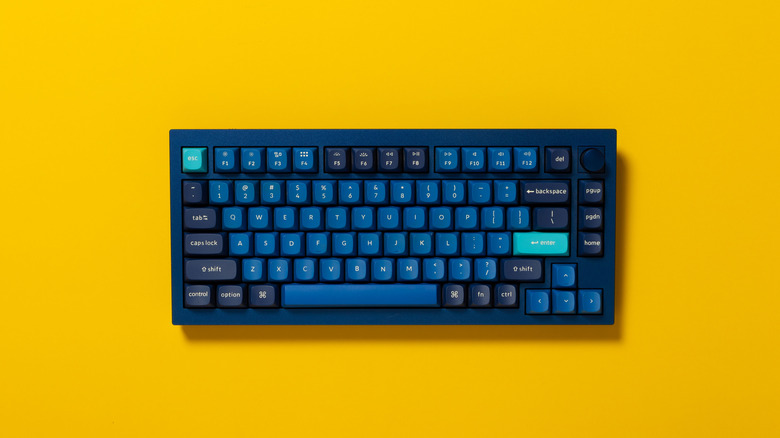
You may have heard some chatter about how great mechanical keyboards (sometimes called tactile keyboards) are and wondered what all the fuss is about. After all, many people interact with their keyboard in the same way they might interact with a light switch or the buttons on a microwave. It's simply a way to access other, more important things they need to interact with, such as productivity software and the daily musings of the internet. Keyboards aren't necessarily the kind of tech devices that are meant to inspire. Even the best desktop computers often come with a standard, run-of-the-mill keyboard, which has played a part in the normalization of keyboards becoming an overlooked aspect of the computing experience. The idea that a better keyboard could be something worth seeking out doesn't cross many people's minds.
But for many others, the keyboard is something worth investing in. Mechanical keyboards were once a nice preference for writers who type thousands of words per day, programmers who build codebases for hours at a time, and gamers whose reputations depend on precise and reliable keyboard input. The market has expanded over the years, though, with tactile keyboard options available at a number of price points. Those who have implemented one at their workspace likely already know what benefits it offers. For newcomers to the technology and anyone considering a mechanical keyboard for their desktop setup, let's take a look at some of the reasons enthusiasts have already made the leap.
Tactile feedback makes for an interactive experience
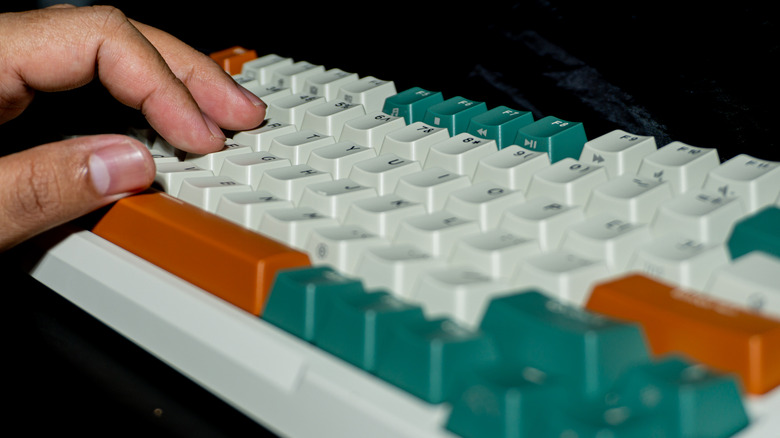
The kind of keyboards that are often paired with desktop computers and built into laptop models work by pressing each key all the way down, at which point the keystroke registers with the computer. This works, of course, but there's no real feedback involved. Nothing tells your fingers or your mind that a letter has been pressed other than the physical sensation of bottoming out on the keyboard itself. For users who have never known anything else, this will feel completely natural.
But mechanical keyboards change the relationship between the keys and your fingers. Each key on a mechanical keyboard has its own individual switch beneath it, and that switch registers the keystroke well before you press through to the bottom of the keyboard. The switch produces a physical sensation that can be felt with the fingers, and depending on the mechanical keyboard, can also produce an audible click sound. The result is a keyboard that actively communicates with the person using it.
Membrane keyboards are typically what you'll find alongside desktop computers and built into laptops. Because they're designed and shipped for the masses, most people are accustomed to typing without really feeling the experience. Much like typewriters before them, mechanical keyboards become a more interactive part of the typing process than their more standard counterparts, and because they work with a shorter throw to each keystroke, they can reduce typing fatigue over the course of a long day at the computer.
Mechanical keyboards perform better than membrane keyboards
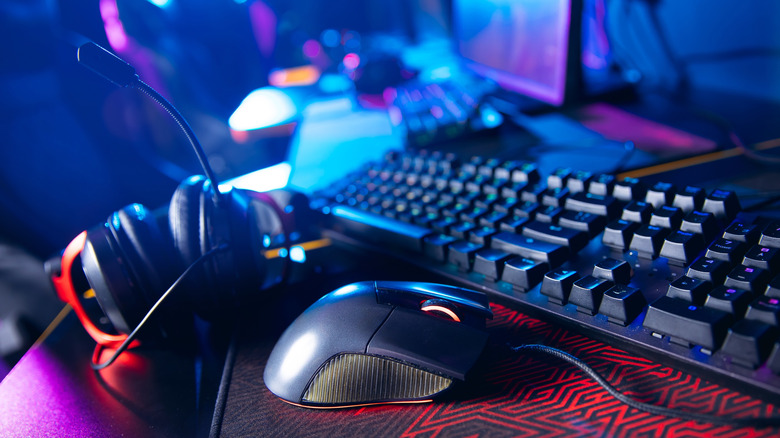
Membrane keyboards are adequate for most everyday tasks, but they do have limitations in regard to performance. When multiple keys are pressed at once, a membrane keyboard can struggle to register them correctly. Some keystrokes may not even register at all. For browsing the web or writing an email, this isn't likely to be an issue. But for gamers, it can mean the difference between winning and losing. For writers, it can mean the difference between a free-flowing writing experience and having to backtrack to fix typos.
On a mechanical keyboard, however, each key operates on its own independent circuit, which is what allows for more reliable keystrokes when several keys are pressed at once. Many mechanical keyboards also support N-Key rollover. This removes the limitations on how many keys can be pressed simultaneously while still being registered correctly. It's also why mechanical keyboards are a top consideration for those who prefer PC gaming over consoles, as well as why mechanical keyboards are among the best keyboards to pair with a Steam Deck.
But improved performance isn't just reserved for those who approach their keyboard with professional needs in mind. Anyone who types throughout the day, even if it's just an email or some social media posts, can tap into the same precision and keystroke reliability that makes mechanical keyboards popular among gamers. There is less potential for typos and inaccurate autocorrections, and thus less potential for frustration while typing.
Tactile keyboards are more comfortable for many users
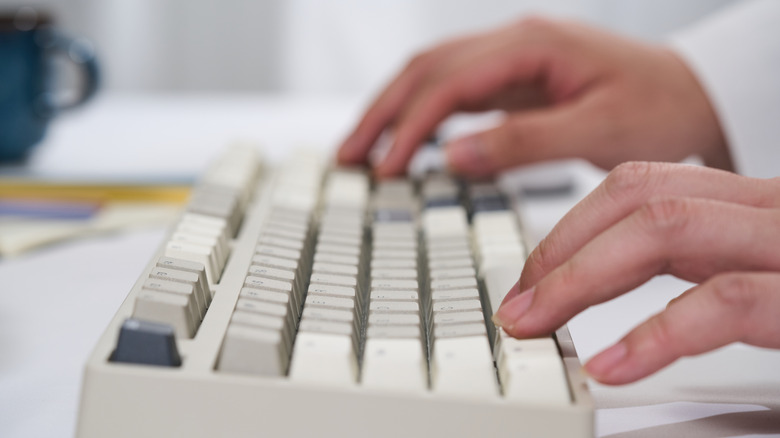
Over the years, standard keyboards have become sleek and minimalist, and while that can be pleasing from an aesthetic standpoint, such designs aren't always ideal when it comes to hand and body positioning. Ergonomic keyboards offer an alternative design, but they may not always deliver on their promise. For light, occasional use, the flat design of many standard keyboards may not pose any comfort issues. But the ergonomics and overall design of a mechanical keyboard can help with wrist and finger fatigue, as well as general discomfort.
Mechanical keyboards offer improved comfort in a number of ways. The tactile feedback built into the switches means fingers don't have to press all the way through every keystroke. This reduces the force required to type and lightens the workload on the fingers, hands, and wrists during extended typing sessions. The mechanical keyboard market also offers a wide range of form factors, which include keyboards with varying degrees of tilt and incline, and layouts that reduce the distance the fingers have to travel between keys.
It's also worth noting that a mechanical keyboard can become more comfortable as a user becomes more accustomed to it. The reduced keystroke force and tactile feedback allow for a lighter touch when typing. This is the opposite of what happens with a membrane keyboard, which can require more force to register a keystroke as the keyboard wears down over time. The lighter typing habit can benefit anyone who spends a significant portion of their day working at a keyboard.
You can customize mechanical keyboards to suit your needs
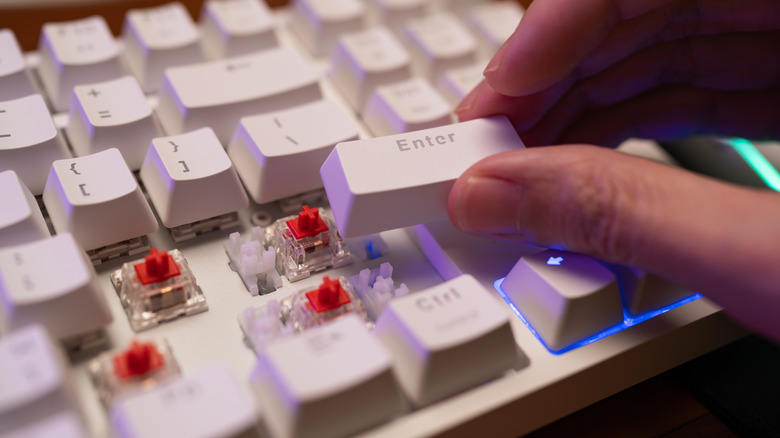
For the most part, when purchasing a standard keyboard, there's little to no room for customization. The color you choose is the color you get for life, the layout is fixed for life, and the user experience will be the same years later as it is on day one. This is also true of keyboards bundled with computer purchases, as manufacturers typically include a keyboard that's meant to work the same for a wide swath of the population. Often, you will have a choice of keyboard color, but that's generally where the personalization ends.
Mechanical keyboards sit at the opposite end of that spectrum. The switch beneath each key can be swapped out entirely on many models, allowing a user to change the feel of the keyboard across a number of different typing sensations. Keycaps can be replaced with sets that vary in material, design, and color, with an entire market of keycap sets available to those who want to take the aesthetics of their mechanical keyboard even further. The layout itself can even be customized, allowing the keyboard to be configured for specific software or workflows.
Customization is where users can really get geeked about a mechanical keyboard. Some enthusiasts build them from scratch, which involves selecting a case, a printed circuit board, switches, stabilizers, and keycaps to make a keyboard that's entirely their own. Whether the goal is a keyboard that stands out visually, feels more personal, or performs in a specific way, a mechanical keyboard offers far more options to do so than a standard membrane model.
Mechanical keyboards are more durable and can be repaired
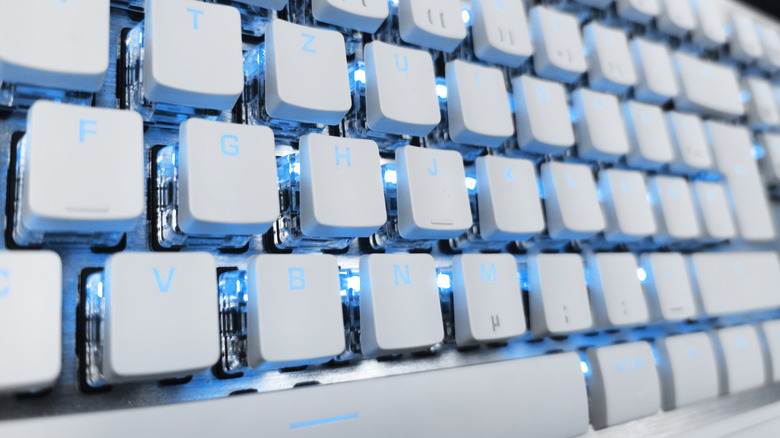
Most keyboards are designed to be accessible and to meet the basic needs of everyday users. All electronics eventually wear out, however, and a keyboard's lifespan is often shortened due to its frequent use. Keys that are used most frequently when typing will wear out faster than others, and the result will be a keyboard that starts to feel inconsistent over time. For most people, this happens gradually enough that it goes unnoticed until the keyboard suddenly seems well past its prime.
Mechanical keyboards, on the other hand, tend to be more durable. The internal hardware has more bulk to it, and components like switches can be rated for 50 to 100 million keystrokes. This amounts to about 10 to 15 years of use. By comparison, standard membrane keyboards are built to last around five million keystrokes, or one to two years of use. For users who type heavily every day, the lifespan can be even shorter.
Mechanical keyboards also offer greater longevity simply because the individual components can be replaced as they wear out. Keycaps can be swapped at any point, and so can the switches on mechanical keyboards that utilize hot-swappable switches (instead of soldered ones). Anyone who has quickly worked their way through the lifespan of a membrane keyboard may find more value in a mechanical keyboard, as its durability often makes up for the higher price (cost differences between the two types can range from less than $50 to more than $500).