

Laptop Vs Desktop PC: Which Is Better For Gaming?

The laptop-versus-desktop PC argument for gaming isn't an easy win once you begin to shed everything past the beat-for-beat performance argument. Which is better for gaming? It's always going to be the desktop PC. With conversations around portability and other laptop talking points not part of this article, there's no question about it: the full hardware will always best the cut-down fare that's found in gaming laptops.
Gaming laptops have certainly come a long way since companies began trying to cram in heavy-hitting parts in the tiny space. 2000s models were these gargantuan machines, with a huge price tag to boot. What we have now is a far cry from what gaming laptops used to be, but the devices on shelves are still lagging behind their desktop counterparts.
This is partly because hardware inside many gaming laptops is a cut-down variation of their desktop counterpart. If you see a laptop with an Intel Core Ultra 9 and Nvidia RTX 5080, it's not going to benchmark the same as the hardware on a desktop. Manufacturers have to cut down the laptop components, even if they're still overpowered, to keep things cool and to fit inside the laptop shell. Otherwise, the system could start throttling itself to avoid damage mid-match, which is the worst thing that could happen to a PC player.
Graphics cards on gaming laptops vs. desktops
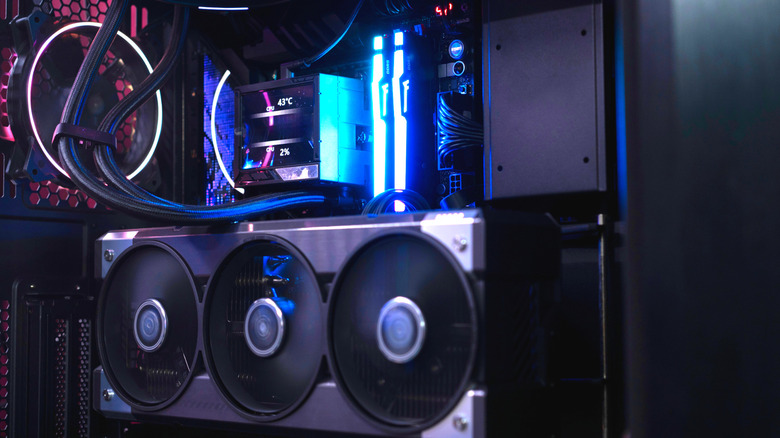
Looking at benchmarks across 3DMark and Geekbench, you can actually see the differences between the similarly branded components. While AMD and Intel flag when hardware is specifically for mobile devices, while Nvidia does not. It's in these benchmarks that you can begin to pull apart the GeForce lineup between the mobile and desktop variants. For instance, the RTX 5080 on desktop scored 35,816 with 3DMark, while the laptop version only scored 23,732 — higher means better performance. This persists across the entirety of Nvidia's output. Using the RTX 5070 as the next base, the desktop version scored 25,060, with the notebook version scoring 14,203.
AMD's integrated graphics processing units (GPUs) found in laptops and handhelds have become the norm since the advent of the Steam Deck, which popularized the company's mobile chips. Its latest and greatest, the 8060S, from the Ryzen AI Max 395+, is actually comparable to last-generation Nvidia chips. For gaming, it's more than capable of taking on even the most resource-intensive titles. On 3DMark, it scores 10,924, which is impressive when you consider Nvidia's RTX 4070 for laptops scored 12,051. The difference is that the 8060S is not a standalone component; it's bundled into the processor, showing that if you are considering moving to a laptop for gaming, you should keep expectations in check, but we're not far off from another major leap in technology. Similarly, Intel's Panther Lake refresh of its mobile chips is looking incredibly promising, with the company claiming it could beat AMD's top-end chips. These are set for launch later this year.
Gaming processors: Laptop or desktop?
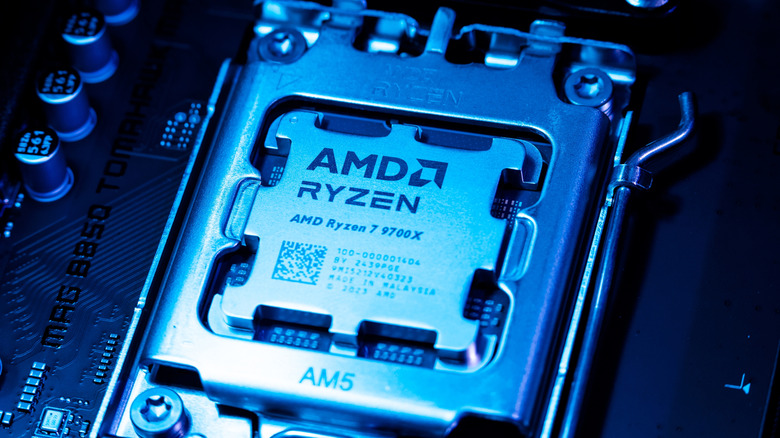
On the processor front, it's not as tricky to separate laptop or desktop chips. However, despite signalling this, Intel uses the same naming conventions for both. The Core Ultra 9 285K, going against the 285HX on laptops, shows the differences. The HX model scores 18,342 in multi-core tasks via Geekbench, while the full desktop version hits 22,534. Using the Thermal Design Power number (TDP), you can partly gauge how powerful a chip is, with the desktop managing to pump through 250W, while the laptop has a base of 55W that can extend to a total of 160W.
AMD's processors have completely ditched the naming conventions from the desktop components, instead opting for an AI branding. It currently has the Ryzen AI 400 series, which is a mild refresh of the 300 series that features similar performance. Again, you can see the differences between the two in terms of gaming power by simply comparing the two mobile lines, AI Max and AI 400, with the Ryzen 9000 family on desktop. The Ryzen AI 9 HX 475 comes in last with a multi-core score of 14,277; the AI Max 395+ is second with 17,594; and the desktop flagship, the 9950X3D, is a strong first with 22,247.
For the most out of your games, it's always best to stick with a desktop. However, laptop chips have gotten better in the last few years, with the handheld market assisting with developments on that front. With additional help from upscaling software like DLSS or frame generation, where algorithms help increase the overall performance of the game, it's still perfectly viable to go the laptop route if you ever need to. You should also find out which processor, Intel or AMD, is best for your next PC.