

Why There's Simply No Need For 2-In-1 Laptops Anymore
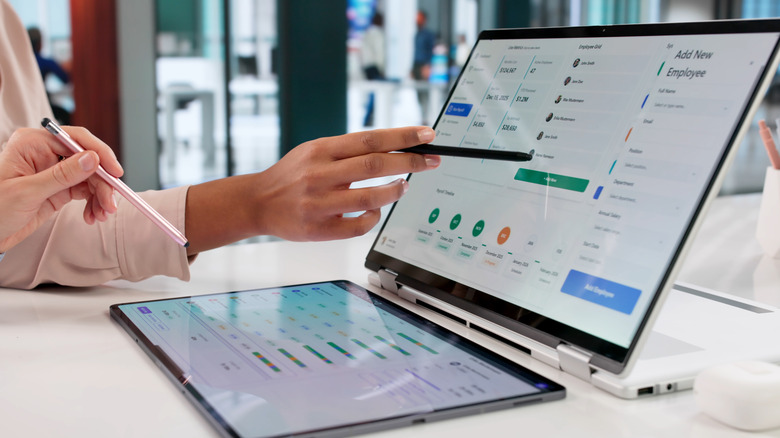
2-in-1 laptops, a hybrid of a laptop and a touchscreen tablet, have technically been around since the '90s, but they came into prominence in the early 2010s, particularly with the release of the 2-in-1-encouraging Windows 8. While the idea seemed novel and convenient at the time, the unfortunate reality is that the industry has largely moved away from the 2-in-1 format, due to tablets becoming cheaper on their own and PC apps remaining unoptimized for touchscreens.
While there are some appealing aspects of having a touchscreen on your laptop, such as quickly browsing documents, the cost of purchasing one today makes the idea far less appealing, especially compared to just buying a regular laptop and tablet separately. Even if a current laptop has a touchscreen, it's more just a neat extra feature rather than a central selling point. If you're currently shopping for your next laptop, you might want to filter out 2-in-1 models, since you'll be paying for features you'll likely never use.
Tablets are cheap, apps are unoptimized
The very first iPad tablet was released in 2010 and changed a lot of what we knew about on-the-go computing. The touchscreen made it easy to navigate certain kinds of apps and documents, in contrast to the occasionally iffy touchpads on laptops of the time. This sparked a major rush of tablet- and touchscreen-centric innovations in subsequent years; as we mentioned, Windows 8 was designed with touchscreens in mind, particularly the then-new Microsoft Surface.
However, in the decade since then, the novelty of tablets has largely worn off. Compared to when the iPad first launched, tablets are now available from a multitude of different brands and in a much wider price range. Where a 16GB iPad with 3G and Wi-Fi would cost you $629, you can now get a Samsung Galaxy tablet with better specs on Amazon for less than half that price. At these prices, paying an upcharge to get tablet-like functionality in a laptop is simply pointless.
Even if cost weren't a factor, current PC apps aren't designed for touchscreens anymore. Compared to Windows 8's enthusiasm for them, touchscreens are basically an afterthought for Windows 11, with even Windows tablets with removable keyboards having little in the way of touch-optimized interfaces. "Optimization" is a keyword here, as most current Windows applications aren't optimized for touchscreens, with touchpads or a USB mouse being much more comfortable options.
Granted, Apple's devices are a little more accommodating of hybrid interfaces than Windows. Even so, if you wanted all-encompassing device flexibility, you'd be more likely to get that from purchasing a MacBook Neo and an iPad Mini piecemeal than a device that tries and fails to serve both functions.