

The Next-Generation Of Nuclear Power Is About To Take A Big Step Forward
Nuclear power is a powerful method of producing electricity. The process is clean and green, at least until it's time to dispose of spent nuclear fuel — nuclear waste is extremely toxic and can last upwards of centuries. And don't even get us started on what happens if a reactor melts down. Nuclear power companies are always seeking new ways to make nuclear energy safer, and that often involves developing test reactors with novel cooling solutions.
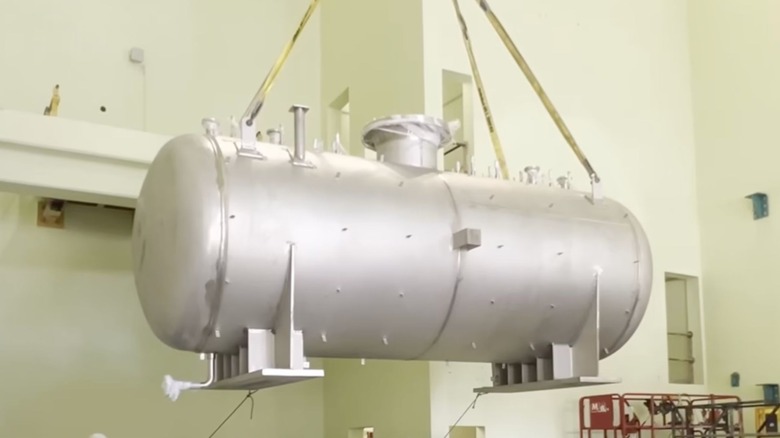
Recently, the company Newcleo began installing what it calls "PRECURSOR," the world's first true lead-cooled fast reactor (LFR) in a facility in Italy. Most nuclear reactors use fission to heat high-pressure water, which stays liquid without turning into steam. This water in turn heats a separate vessel filled with water at normal pressure, thus producing steam that spins a turbine to generate electricity. Comparatively, LFRs only require one source of coolant, specifically molten lead. This liquid lead can transfer the heat of the nuclear reactor to the turbine-driving water without the danger inherent in high-pressure water.
You might wonder what's wrong with good old pressurized water in traditional nuclear generators. Lead has several advantages over water. For starters, LFRs can store lead at lower pressures since the element has such a high natural boiling point — standard pressurized water reactors require their intense pressure to maintain a constant flow of coolant or risk melting down. Furthermore, LFRs are comparatively cheap to build and can run off smaller cores, and most important of all, lead reflects neutrons back into the core, preventing them from escaping while preserving their energy. This both improves energy conversion rates and lets nuclear cores last longer.
What PRECURSOR means for the future of nuclear reactors
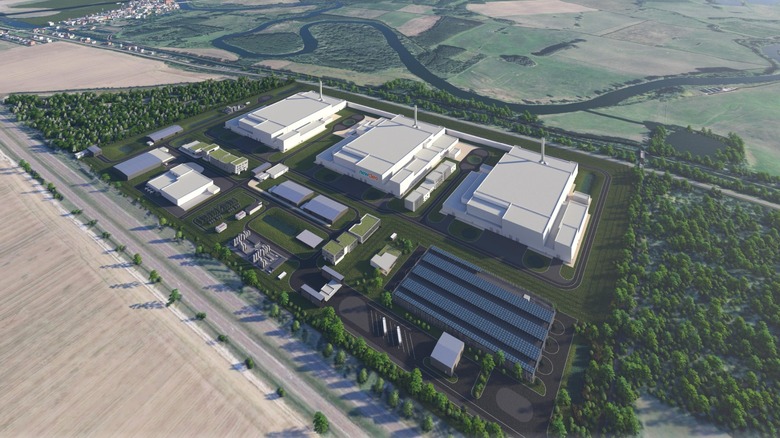
To be fair, PRECURSOR isn't an actual nuclear reactor; it is a small test reactor designed to simulate "complexity and thermal-hydraulic behavior" in full-scale LFR reactors To quote Ulisse Pasquali, CEO of SRS-Fucina group — a conglomeration of engineering and construction companies that are helping Newcleo with the reactor installation — PRECURSOR is a "proof of concept."
Researchers will use PRECURSOR to collect data on the "thermal cycles and hydraulic processes" they expect to find in full-scale LFRs. Then they will use that data to determine how best to build and deploy future LFRs and their facilities. This information will also provide blueprints on implementing working power generation cycles into these reactors.
While Newcleo isn't the only company working on new reactor projects, if all goes according to plan, the company will be able to start building a full-scale LFR and have it up and running in France by 2031. Perhaps NASA can borrow these designs to fuel its planned nuclear-powered trip to Mars?