

4 Meteor Myths You Need To Stop Believing
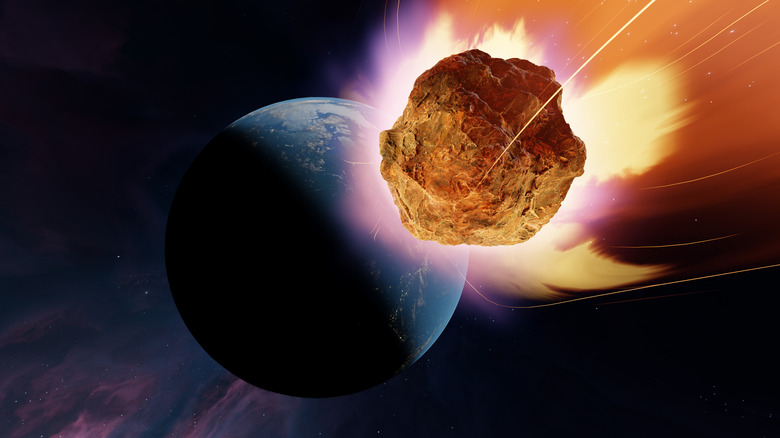
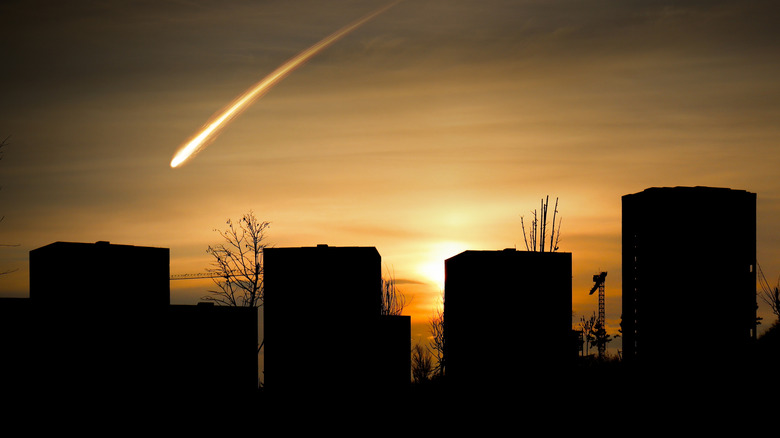
Residents of northeast Ohio experienced a shock on the morning of Tuesday, March 17, 2026 when a sonic boom rattled houses throughout Medina County and the surrounding areas, according to a report from News 5 Cleveland. Many residents even witnessed a fireball accompanying the sound as it streaked across the sky.
Both the National Weather Service and NASA confirmed that a meteor caused both the light in the sky and the boom. Bill Cooke, a NASA spokesperson who discussed the incident with News 5 Cleveland's reporter, stated the meteor was moving at about 45,000 mph when it flew across the Ohio sky. The spokesperson clarified that this speed is "slow for a meteor."
Waking up to a meteor streaking across the sky or exploding overhead isn't an everyday occurrence for, well, anyone. Meteors, like lava and quicksand, are a natural phenomena that most of us learn about via pop culture more than through direct experience. That's why so many myths about space rocks continue to persist. It's time to debunk some of the more stubborn of them once and for all.
Myth: Meteorites are hot when they land
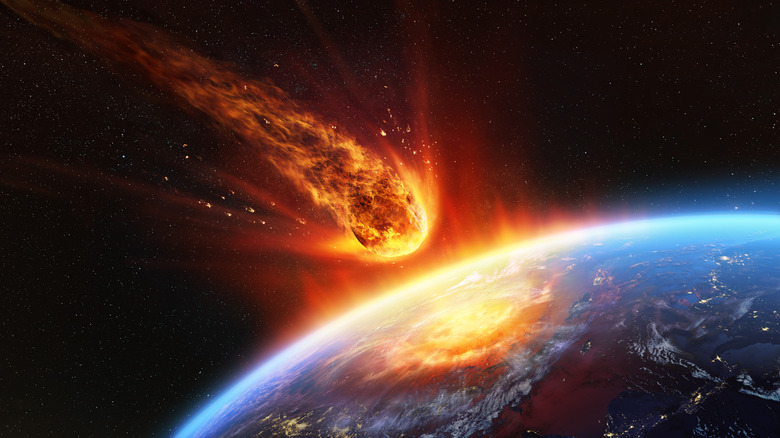
Meteors look like fireballs when they traverse the sky. That's because they essentially are. Meteors burn up when they enter the atmosphere, which is why space rocks can take the form of bright "shooting stars."
It's natural to assume a meteorite would be hot when it strikes the planet's surface. This is a common misconception. As NASA spokesperson Bill Cooke told News 5 Cleveland, "Meteorites, when they hit the ground, are quite cold. You can pick a meteorite up."
However, if you do find what you suspect to be a meteorite or its fragments, NASA discourages picking it up with your hands. Although touching a meteorite directly might not harm you, by handling the meteorite improperly, you could accidentally harm the specimen. This might happen by transferring oils and microbes from your hands onto the meteorite. To avoid damaging the find, NASA recommends handling it with tongs, aluminum foil, or gloves. You can wrap a meteorite specimen in foil and place it in a zip-lock bag to keep it dry. Although NASA currently isn't accepting meteorite specimens, they do point citizens in the direction of a list of agencies and groups that may be interested in the sample.
Myth: Meteorite strikes are rare
The average person may go their entire life without seeing (or even hearing) a dramatic meteor-related event like the kind Ohio residents experienced. This fact could cause most to assume that meteorite strikes are very rare occurrences. In fact, the opposite is true.
The truth is that thousands of meteorites strike the planet every year. However, the meteorites that reach the surface tend to be very small. That's because meteors lose most of their mass burning up in the atmosphere, with only a small fraction of the original meteor landing as a meteorite. Often, that doesn't happen at all, with the entire meteor burning up before an actual strike can happen.
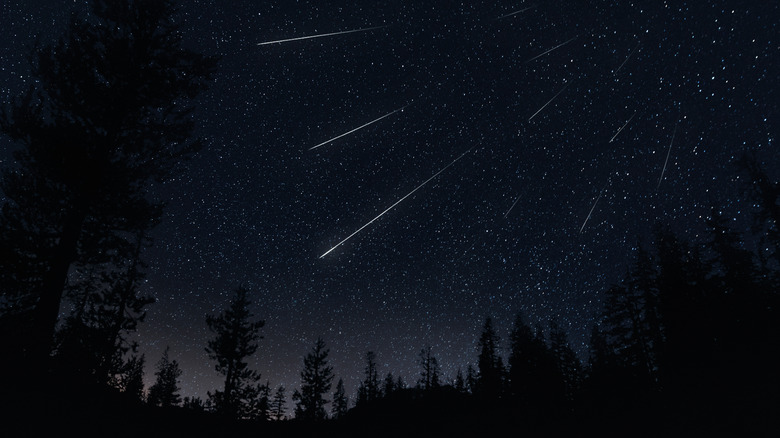
Those who want to see meteors as they make their way through the atmosphere can check to see when a meteor shower may be occurring (the Perseids are a popular one). It's typically best to look for meteors with the naked eye. Although you might assume that a telescope or binoculars will provide a better view of the spectacle, they're not useful in these circumstances. Telescopes and binoculars make it so that you can only observe a small fraction of the sky, which is impractical during a meteor shower, as you don't know precisely where a meteor will appear. You're better off finding a spot where you can lie on your back and keep your eyes peeled for a shooting star.
Myth: Meteor strikes usually cause craters
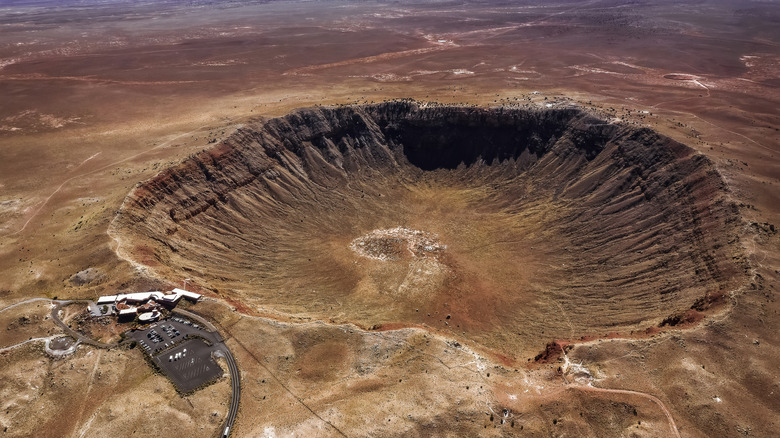
It's reasonable to think that a space rock colliding with the surface of the Earth will result in some sort of crater. After all, there are more than a handful of craters across the globe that remind us of impact events from Earth's past. However, most meteors that make it through the atmosphere with enough of their surface intact to strike the planet aren't large enough to leave behind craters.
Why, then, is the moon's surface so crater-filled it resembles a target in a cosmic shooting gallery? The disparity between the prevalence of craters on the moon and craters on Earth mainly has to do with the moon's lack of an atmosphere. Because there's no atmosphere for meteors to burn up in, the moon lacks a critical layer of protection that we enjoy. In addition, processes like erosion and other such geologic shifts and developments occur on Earth. These processes can result in craters disappearing or becoming hidden over time.
Myth: Meteors often cause injury
You're now aware that meteor strikes are more common than many assume. You could therefore conclude that meteors represent a significant hazard. Luckily, these fears are (mostly) unfounded. It's technically possible for a meteor to cause harm. After all, it wasn't that long ago (just over a hundred years) that an asteroid or large meteor exploded over a remote region of Siberia, resulting in an area of destruction approximately 830 square miles in size. Had the infamous Tunguska event occurred over a more populated region, the loss of life could have theoretically been dramatic.
Generally, though, injuries resulting from meteor strikes are rare. In fact, the first recorded case of someone being harmed by a meteor occurred in 1954, when a meteorite weighing eight pounds crashed through the roof of an Alabama woman's home and caused her to experience significant bruising. However, such cases are very uncommon and represent an extremely (EXTREMELY) small fraction of the meteor strikes that occur every year.
If most of your exposure to meteors comes in the form of disaster movies, it makes sense that you might fall prey to common misconceptions about these phenomena. That said, as is so often the case, it appears that reality and Michael Bay movies don't actually have that much in common.