

Birds Can't Tell The Difference Between Solar Farms And Lakes – And It's Disrupting Migration
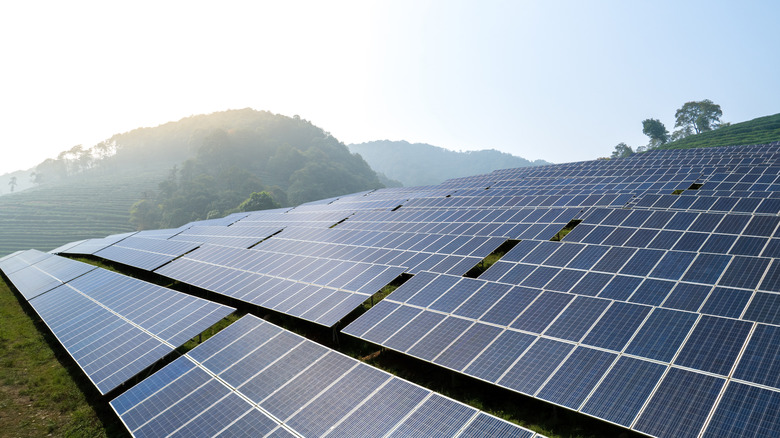
Solar energy is an important piece of the renewable-energy puzzle. Installing solar panels for your home is a great way to lower your carbon footprint while saving money in the long run. However, even though they are a great way to lower reliance on fossil fuels, solar farms are massive and impact the surrounding environment. According to a study published in Renewable and Sustainable Energy Reviews by Murdoch University researcher Patricia A. Fleming, birds and bats are particularly threatened by large-scale solar farms, as they can mistake the panels for bodies of water, a phenomenon called the Lake Effect.
Many animals, including birds, have polarization vision, which essentially means they can gain information from light and use it for things like navigation. As explained in the paper, the smooth, dark, and flat surfaces of solar panels "can mislead and lure animals to entrapment," and "have potentially lethal consequences for birds and bats." Not only does the Lake Effect cause birds to collide with and sustain burns from the panels, it also confuses migrating birds, who rely on the information they get from light as a compass.
More research is necessary to fully understand the impact of solar farms on wildlife, but the outcomes of this study are consistent with similar research published by the California Energy Commission in 2024. Both posit that solar panels polarize light similarly to water, pointing to the presence of aquatic birds near solar farms as support for the Lake Effect hypothesis.
Solar farms need to become more wildlife-friendly
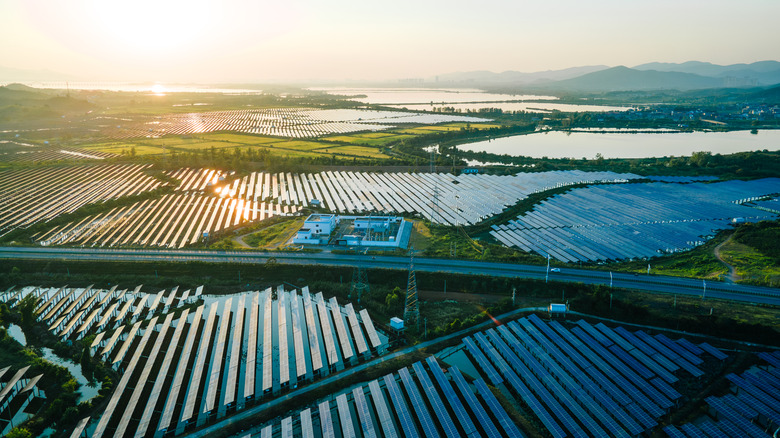
The Murdoch University study makes clear that more needs to be done to mitigate the impact of solar farms on the surrounding environment. In addition to the Lake Effect, animals can end up trapped in the fencing with no way to escape. Possible solutions include applying antireflective coatings to panels to prevent birds from mistaking them for water, new fencing design, and removing vegetation to make the area less appealing to birds and bats. More extreme is proposing facilities suspend operations during migration periods.
With all that in mind, not all of the environmental impacts of solar farms are necessarily bad. China's largest solar farm is changing the desert around it, allowing the soil to retain moisture and encouraging plant growth on previously barren land. Studies have also shown that solar panels are saving lives by reducing air pollution. Clean energy sources like solar are vital for addressing climate change, and the benefits of solar farms certainly outweigh the downsides. Still, the impact on birds and other wildlife is a reminder that renewable energy solutions can and should be more environmentally friendly.