

Infinix Note Edge Review: A Lot Of Phone At A Great Price
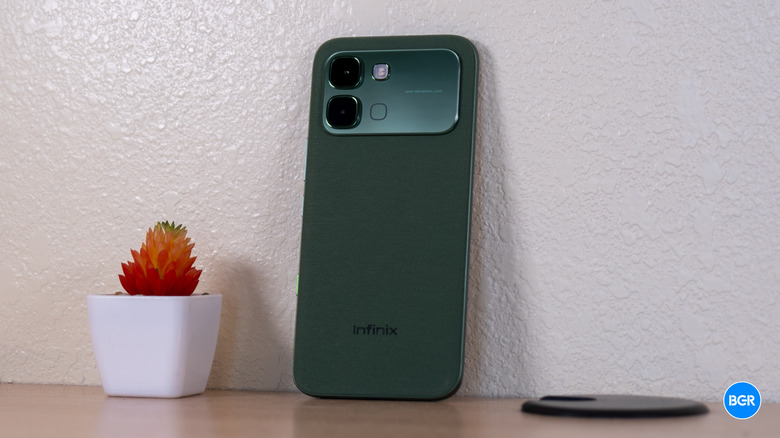
The budget phone market has gotten a lot more interesting over the past few years, and the Infinix Note Edge is the Chinese brand's latest attempt to carve out a space in it. Priced at around €170, the phone tries to punch above its weight with a few headline features, like a thin 7.2mm profile, a massive 6,500 mAh battery, and an AMOLED display that, at least on paper, looks like it belongs on a much more expensive device.
But the budget segment is more competitive than it's ever been, and "good on paper" doesn't always translate to a good experience. Does the Note Edge do enough to stand out? Or does it make too many compromises along the way?
Design
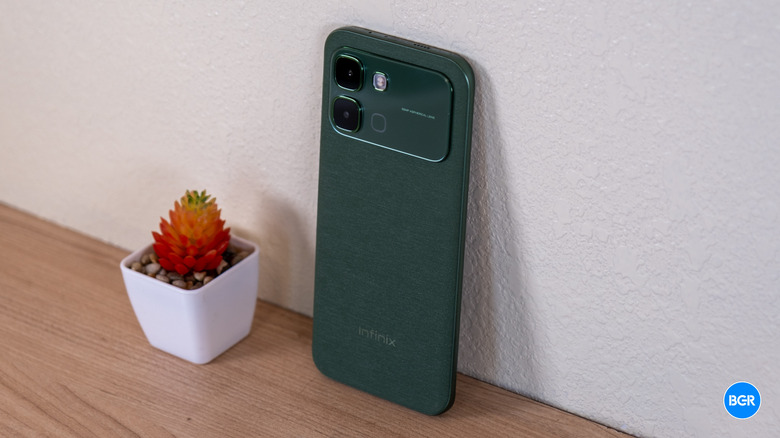
The Infinix Note Edge isn't a bad-looking device, and some aspects of it are actually quite nice. That said, overall, it does look and feel a little dated. One of the better things about its build is that it's reasonably thin, despite housing a large 6,500mAh battery. It's no iPhone Air, but for a phone in this price range, it is decently impressive.
On the front, you get Corning Gorilla Glass 7i, and the back features what Infinix calls a Pearl Light Ripple Design finish, which is really a textured plastic. There's also an IP65 rating for dust and water resistance — though keep in mind IP65 only covers low pressure water exposure, not full submersion.
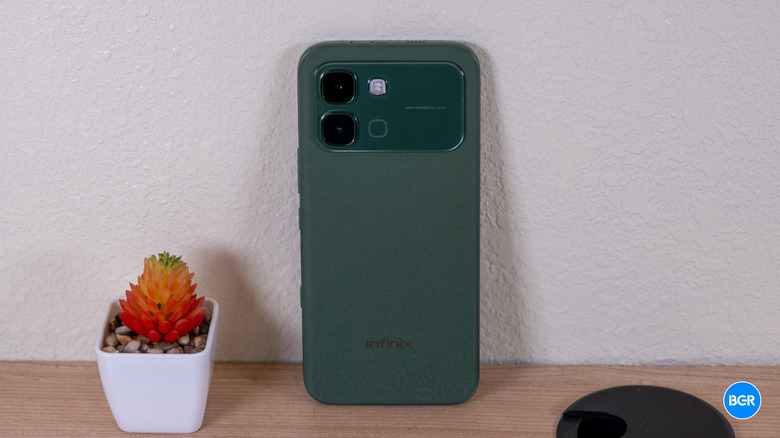
The phone comes in five colors: Lunar Titanium, Silk Green, Stellar Blue, Shadow Black, and Orange. That Orange option is a pretty clear attempt at emulating the iPhone 17 Pro Max, and your mileage will vary on whether that's a good thing. I'm reviewing the Silk Green model.
Infinix has gone with an edge-style design here, where the display curves slightly around the sides of the phone. There was a time when this look felt modern and sleek — but that time has passed. Most flagships have moved away from curved displays entirely, and seeing one here in 2026 feels a bit out of date. The textured back feels alright in the hand, but the overall build has a hint of cheapness. Neither of those things are a huge deal, of course, for a phone in this price range.
Most of the buttons and controls are where you'd expect them to be. The power button and volume rocker sit on the right side, and the USB-C port is on the bottom. There's also a customizable button on the lower right side of the phone. I don't love the placement — it makes it very difficult to use phone mounts without accidentally triggering the button.
There are some things I like about the customizable button though. It's actually more customizable than plenty of alternatives. You can set it to open Infinix's Folax AI, but also the camera, flashlight, or a custom app of your choice. That flexibility is nice to have.
It's a bit lazily implemented on the software side though. When you go to customize it, the button shown in the UI looks nothing like the actual side of the phone — it's clearly just a rip-off of Apple's customization screen for the iPhone's Action button. It's not even in the same location on the rendered phone. All said, the design of the Infinix Note Edge is perfectly fine, but not necessarily all that modern.
Display
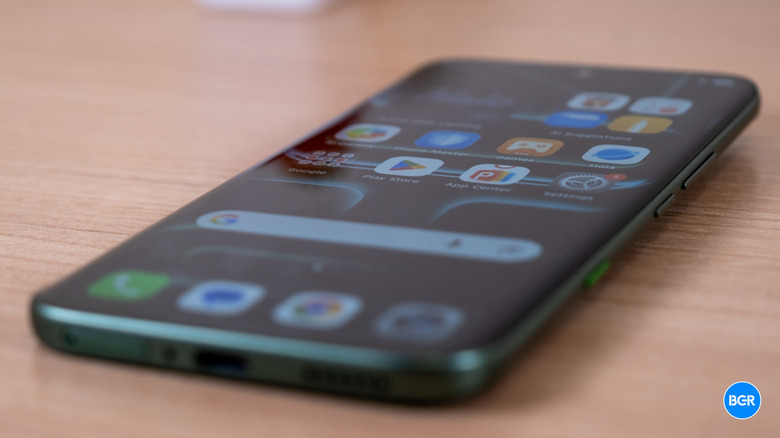
The display on the Infinix Note Edge is a 6.78-inch AMOLED panel with a 1.5K resolution (1208 x 2644 pixels) and a 19.5:9 aspect ratio. It refreshes at 120Hz, uses 2160Hz PWM dimming, and Infinix claims a peak brightness of 4,500 nits, with 1,600 nits in high brightness mode.
The display actually isn't bad at all. It does indeed get very bright — brighter than plenty of much more expensive phones. That 4,500 nit figure is designed for HDR highlights though, so while I confirmed that it hits that number at tiny window sizes, brightness drops off significantly as the bright area gets larger. Still, even at its dropped-off brightness, it's brighter than many phones in this price range, and that's what really matters.
It looks smooth thanks to the 120Hz refresh rate, and colors come through as vivid and punchy. It's not the most color-accurate display you'll find, but that won't matter to most people. It's smooth, bright, and vibrant, and for a €170 phone, that's a strong result.
Performance
Under the hood, the Note Edge runs on a MediaTek Dimensity 7100 processer built on a 6nm process, paired with 8GB of RAM as standard. You can also use Infinix's MemFusion feature to extend that with virtual RAM, though as always, take claims around virtual RAM with a grain of salt.
This is a budget phone, and it performs like one. That's not a dig, exactly — it's not terrible. In day-to-day use, it performs just fine. It can handle opening apps and moving around the interface without issue, and for things like social media, messaging, and web browsing, you're not going to have problems.
You'll start to hit a wall when you push it harder though. Heavy multitasking will cause it to hang up, and it's simply not designed for mobile gaming. If you want to play anything graphically demanding, this isn't the phone for you. Casual games will run fine, but anything beyond that and you'll start running into dropped frames and stuttering.
As long as you set your expectations going in, the Note Edge will perform just fine. It's a budget phone doing budget phone things, and there's nothing wrong with that — just know what you're getting.
Battery and charging
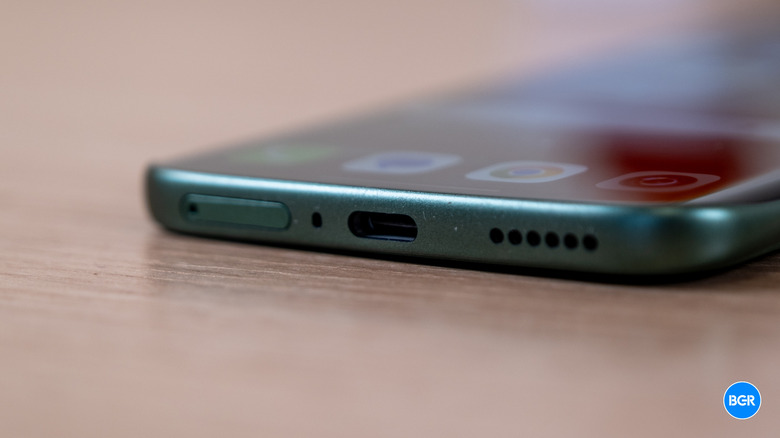
With a 6,500 mAh battery packed into a 7.2mm frame, you'd expect great battery life out of the Note Edge. Ultimately, it will offer a solid battery for most — but with some caveats.
Battery life wasn't bad, but it wasn't great either. In a local video playback test, the phone actually only lasted a little over 7 hours, which is surprisingly low — most phones last at least 20 hours in that kind of test, even on the low end. Part of this could be the chip struggling to decode the local video efficiently, but it's still a real use case.
For more typical use, like web browsing, social media, calls, and messaging, the Note Edge should get you through the day without much worry. 45W wired charging will get you to 50% in about 27 minutes (I hit 52% after 30 minutes), and there's also 10W reverse wired charging for topping up accessories. There's no wireless charging, which is unsurprising at this price.
Camera
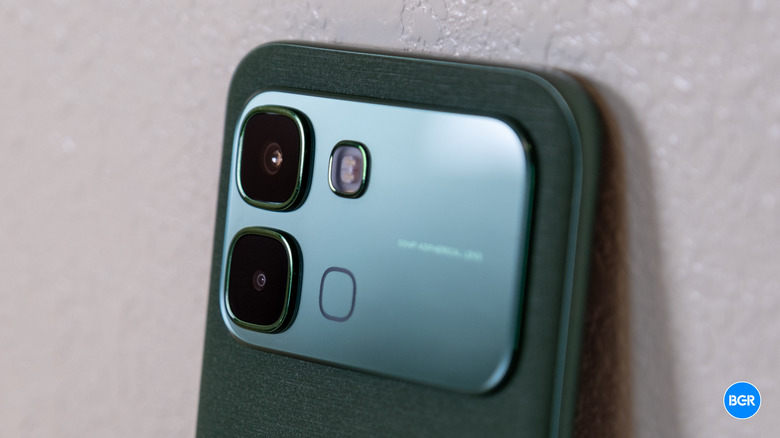
On the back, there's a single 50-megapixel main camera coupled with a second camera sensor for depth. On the front, you get a 13-megapixel wide-angle selfie camera. That's all you'll get as far as cameras go.
The midrange these days is seeing more phones with triple camera arrays, and even budget phones typically offer at least a dual camera setup. The Note Edge doesn't. That means no dedicated ultrawide or telephoto lens — everything comes from the main camera on the back.
The images the camera captures are fine, in fairness. They're actually decently color-accurate, though not all that vivid. The main issue is that they lose detail extremely quickly. If you zoom in to 3x or 4x, you're going to get images that simply don't look very good. It gets even worse in low light. At 1x, low-light shots aren't terrible, but by 2x, you're getting sub-par photos. Images are technically usable up to around 8x, but you wouldn't want to post them anywhere.
The front camera is actually not too bad, though. It takes solid images with decent color, better-than-expected dynamic range, and reasonably sharp detail. Again, not amazing, but better than you might expect at this price.
Overall, the camera system is one of the weakest parts of this phone. It'll do the job in good lighting if you stick to 1x, but zoom in or try to take photos in low light, and you'll struggle to get a good shot. If photography is important to you, this probably isn't the phone to buy.
Software
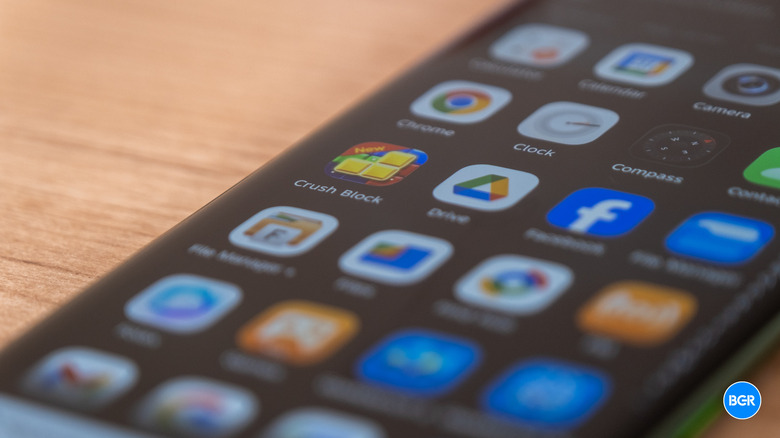
The Note Edge ships with Android 16 and Infinix's XOS 16 custom interface on top. Infinix is promising three major Android upgrades (up to Android 19) and 5 years of security patches, which is solid for a phone at this price.
The software experience is fine. It looks a bit dated, but it's not over the top with customizations, and anyone familiar with Android should be able to navigate the UI with ease. The bigger issue is bloat. There's a lot of it. The phone comes preloaded with extra apps that most users won't want or need, including games, shopping apps, and more. Some of it can be uninstalled, but some of it can't, and that's always a red flag.
Beyond the bloat, though, the software gets the job done. Infinix's Folax AI is there if you want it, and the customizable button gives you quick access to it. It's nothing groundbreaking, but it's serviceable.
Conclusions
The Infinix Note Edge has some clear weaknesses. The rear camera isn't great, the curved display design is a bit dated, the customizable button placement is frustrating, and the battery life isn't as great as you might expect given its size. But it's still a viable budget option. The display is quite good, the thin profile is impressive, and for €170, you're getting a decent device.
That said, it's worth considering other options before pulling the trigger. The budget segment is more competitive than ever, and there are alternatives that might serve you better depending on what you prioritize.
The competition
The single-camera setup is probably the biggest red flag here, especially when most competitors in this price range are offering dual or even triple camera arrays. I haven't personally tested it yet, but something like the Samsung Galaxy A17 is worth looking at as an alternative — you'll likely get a more versatile camera system and a software experience that feels a little more polished, even if you give up some of the Note Edge's design flair.
Should I buy the Infinix Note Edge 5G?
Maybe, but it's worth considering alternatives.