

4 Disadvantages Of Mini LED TVs You Should Know About
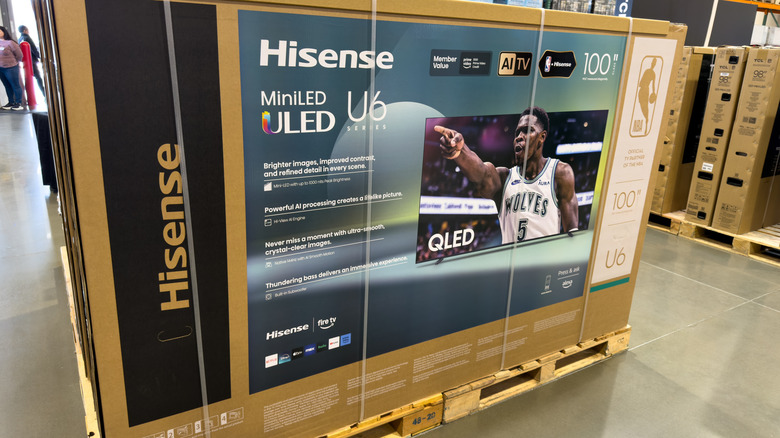
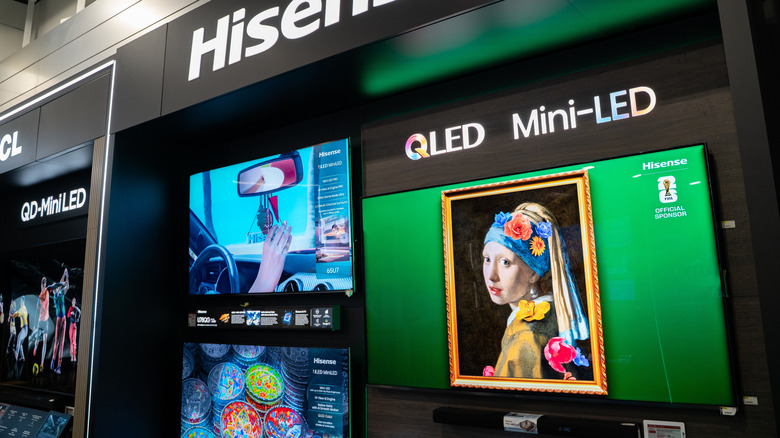
Mini-LED TVs have become a common sight in the television market over the last few years. All major smart TV manufacturers offer mini-LED TVs as part of their product portfolio, and the technology has trickled down to some of the most affordable TVs. If we zoom out and look at the overarching display types like LCD, OLED, and QLED, mini-LED TVs are very similar to modern LCDs. However, instead of relying on regular LEDs for backlight, they use even smaller LEDs, which gives them better localized dimming control and boosts their overall brightness. Some of the best mini-LEDs offer serious competition to their OLED counterparts, which are known for their impressive picture quality.
Despite the several benefits offered by mini-LED technology, mini-LED TVs aren't without notable disadvantages, such as narrower viewing angles and blooming, which can impact your overall visual experience. It's important to understand these drawbacks if you're shopping for a new smart TV and don't want a rude surprise once you unbox your brand-new television.
Blacks can appear gray
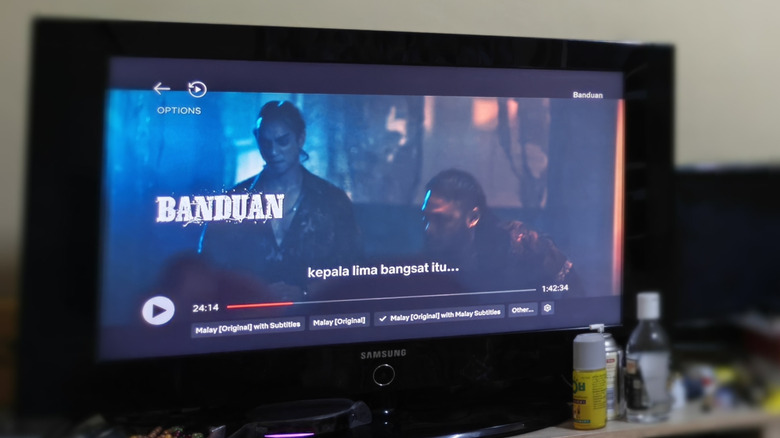
An inherent drawback of the mini-LED TVs (or any TV with an LED-based backlight system) is that they rely on LED backlighting to illuminate the visuals you see on the screen. The lack of self-emissive pixels, such as those found in OLED TVs, forces them to leverage local dimming to turn off the backlighting in parts of the screen to try to approximate true black. However, because even the most expensive mini-LED TVs have significantly fewer dimming zones than the available pixels, they are unable to offer pixel-perfect light control to produce the inky blacks you get with OLED panels. As a result, parts of a scene, which should be dark or pitch black, can often have a grayish tint.
More importantly, the quality of this black performance can vary depending on the number of dimming zones and a manufacturer's dimming algorithm. While the more expensive mini-LED TVs typically have thousands of dimming zones managed by superior algorithms, the budget models may only have a few dozen or a few hundred. Consequently, blacks will appear much deeper in more expensive mini-LED TVs than on their affordable counterparts. As the black performance is a primary driver of a TV's contrast ratio, the visual "pop" and color depth you experience will depend heavily on the local dimming zones in the TV you pick.
Blooming and black crush are notable concerns
Another mini-LED drawback that stems from the presence of a backlight is blooming. It's basically a display artifact in which the backlight shining on the back of the isolated bright objects "bleeds" into the surrounding darker areas. The reason for this is simple: because mini-LED TVs have a finite number of local dimming zones, they aren't able to precisely target light to an individual pixel without it spilling over to the darker surrounding areas. It's most noticeable with small, bright highlights in a scene, and also appears around subtitles, as those are often bright white against a black background.
The severity of blooming can vary depending on the number of dimming zones, with a higher number of zones resulting in tighter light control and less light bleed. While too much blooming can be distracting, you won't typically notice faint blooming when you are engrossed in a piece of content. By contrast, there is no blooming on OLED TVs, as they can precisely target illumination at a pixel level.
Moreover, some manufacturers, in an effort to curb blooming, sometimes aggressively turn off the backlight in some darker areas of a scene. While this reduces blooming and results in deeper blacks, it can cause some shadow details to become less visible as they don't get sufficient backlighting. This is referred to as black crush, and results in the loss of subtle textures in dark environments.
Poor viewing angles
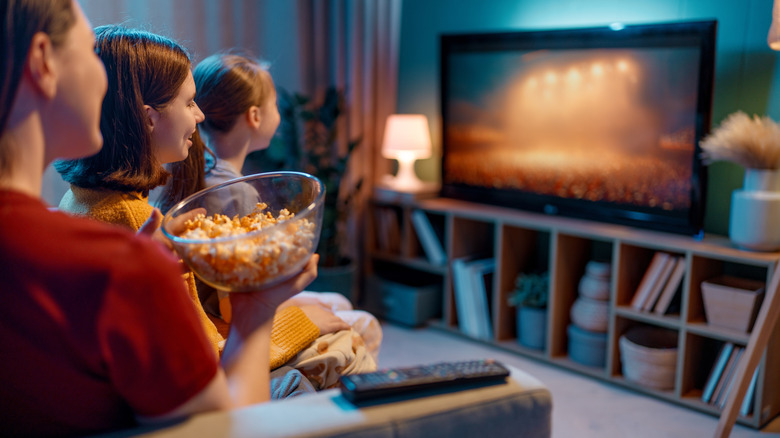
Most mini-LED TVs have VA (vertical alignment) type LCD panels, which are favored for their relatively high native contrast ratio but are notorious for poor off-axis viewing. Essentially, if you aren't looking at them head-on by sitting directly in front of the screen, colors can look washed out and contrast degrades. This makes mini-LED TVs with a VA panel less ideal for a group setting, as some members of the group or family seated at the ends of the sofa won't get the best visual experience. While some mini-LED TVs come with an IPS (in-plane switching) type panel, which offers superior viewing angles, these are relatively rare, as IPS panels have a lower native contrast ratio than their VA counterparts.
To alleviate this problem, some manufacturers — like Samsung — include a specialized wide-angle layer in their mini-LED TVs to improve the viewing angles of VA panels. However, even with this enhancement layer, they still can't match the impressive off-axis viewing of an OLED. If you are concerned about viewing angles because you often watch TV with friends or family and want the best experience, it's better to invest in a TV that either has a wide viewing angle layer or, better yet, an OLED panel. Keep in mind, however, that OLED TVs have their own disadvantages.
Slower response time while gaming
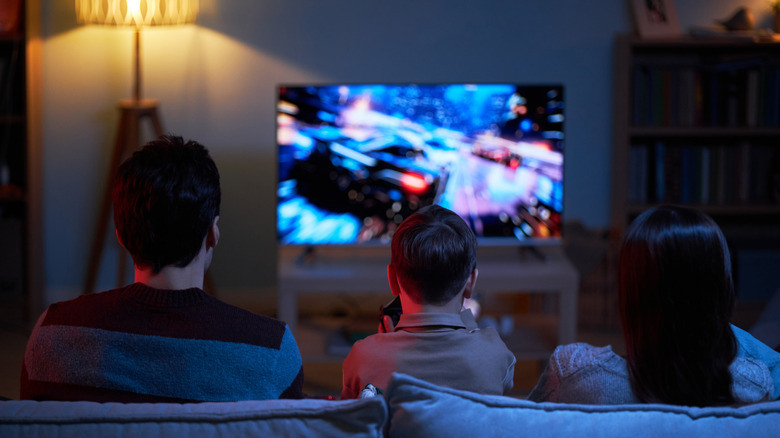
Although mini-LED TVs are generally a good choice for gaming because of their high peak brightness and low input lag, they can suffer from slower response times compared to OLED TVs. Because the liquid crystals in an LCD panel take time to physically shift and the backlighting needs to sync with the on-screen action, the transitions aren't always instantaneous. This can result in ghosting or smearing in extremely fast-paced games, like first-person shooters, racing titles, and multiplayer online battle arena (MOBA) games.
However, for most content, this is not a dealbreaker. In fact, this can actually be helpful and a hidden advantage while consuming certain types of content. Although the faster response time helps with the overall clarity of a scene, it can cause stutter in low-frame-rate content, such as movies, because each frame is so sharp and instant, the jump between them becomes noticeable and can be jarring for the viewer. In these cases, the blur caused by a mini-LED TV's slower response time can actually make the action in 24 fps content look smoother and more natural.