

New Google Smart Glasses Are Coming — Here's What We Know So Far

Google's interest in smart glasses is not a secret. The company unveiled the Android XR platform in December 2024, showing off smart glasses prototypes to a limited audience. A few months later, Google was ready for a more public demonstration of the Gemini features built into the Android XR platform, offering Google I/O 2025 attendees a longer demo of unreleased Google smart glasses. Then, in December 2025, Google hosted an event on YouTube where it talked about AI smart glasses, unveiling the most daring Android XR smart glasses yet, Xreal's Project Aura. The actual launch of Google smart glasses, which some Gemini fans may be waiting for, seems to be very close. Google I/O 2026 could be the place where Google launches the first models.
Google has been saying for nearly two years that smart glasses are part of its AI computing future, and AI has become central to Google's product strategy since ChatGPT took the world by storm in late 2022. Even if Google isn't ready for a commercial launch in May, it seems likely that Android XR will have a segment at I/O 2026, considering that the entire platform is built around Gemini. The main way to interact with Google glasses, much like Ray-Ban Meta smart glasses, is voice. Gemini can understand what the user says and see what they see. Gemini can interact with apps on the phone, to perform searches, translate languages and signs, read and send messages, start Google Maps navigation, and capture photos and videos. Android XR spatial computers like Galaxy XR and Project Aura can display a virtual desktop that supports Android apps, in addition to Gemini integration.
In case Google does not launch commercial products at I/O, a 2026 release still seems possible, considering Google's own announcements and recent rumors.
The Android XR smart glasses experiences
Google has been teasing various Android XR products since unveiling the Android XR platform. One of them is a full Apple Vision Pro rival that became available commercially in late 2025. The Galaxy XR spatial computer that Samsung launched in October 2025 is a headset that covers the eyes to project an augmented reality (AR) workspace on top of the user's field of view (as captured by outward-facing cameras). While Google provides the software for that product, Android XR, the company isn't making a perfect Galaxy XR rival of its own.
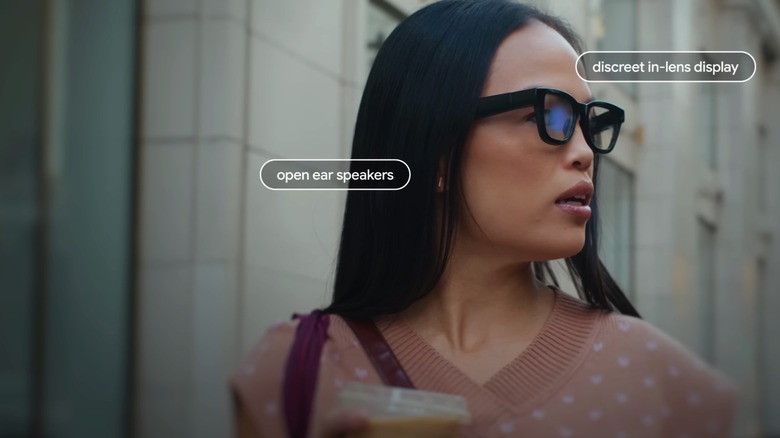
Google is interested in two types of simpler smart glasses experiences in the immediate future. The company has been demonstrating AI glasses that don't feature a built-in display and display AI glasses that have a screen in one of the lenses, which can display content from the connected smartphone. Google also has a bolder vision for wearable AI glasses that is reflected in Xreal's Project Aura glasses, which were also demoed last year. These smart glasses can offer an experience similar to the Galaxy XR headset, but they don't cover the eyes like Samsung's product.
Google has confirmed a number of partners for its AI glasses, including Warby Parker and Gentle Monster. Kering is the most recent eyewear brand associated with Google's Android XR glasses plans. According to a report from Reuters, Kering will manufacture luxury, Gucci-branded, Android XR glasses in 2027. Then there's Samsung, which may partner with Google on some of these devices, but also launch its own AI smart glasses running on the same platform. Android Headlines reported in late April that Samsung is developing two distinct devices: Jinju (AI smart glasses) and Haean (AI display smart glasses). The latter will reportedly launch in 2027.
How much will Google smart glasses cost?
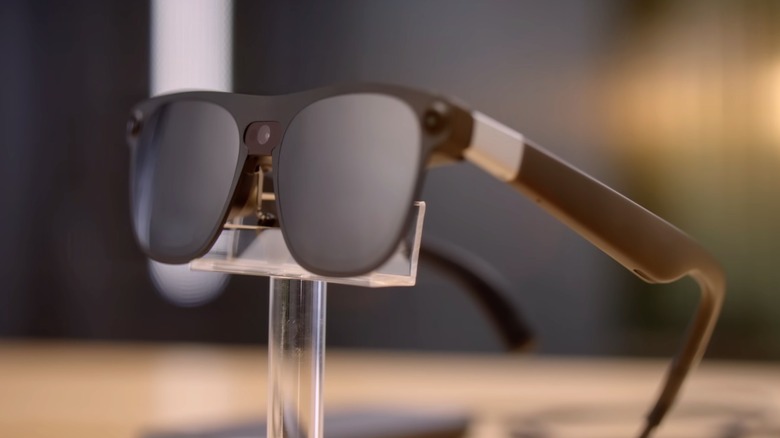
Prices and actual release dates have not been leaked for Google AI glasses. To put things in perspective, the Galaxy XR headset costs $1,799. That may be the ceiling for Android XR hardware for now. Xreal's Project Aura model will probably be cheaper than that, but it may still be expensive. The Project Aura glasses connect to a portable puck that's about as big as a smartphone, which runs the Android XR operating system. Rumors say that Samsung's Jinju may cost between $379 and $499, competing directly with Meta models. Jinju will reportedly feature a Snapdragon AR1 processor, 12-megapixel camera, and 155 mAh battery. The Haean model is expected to feature a display in one of the lenses and may be priced between $600 and $900.
While these price points aren't official as of this writing, it's likely that Google's own smart glasses will cost about as much as Samsung's models. After all, Google, Samsung, and Qualcomm partnered years ago to create the Android XR experience. The resulting devices may feature similar components and similar price points. That said, it's unclear how many distinct pairs of glasses Google will offer initially, considering it's working with various eyewear brands. Also, like Meta, Google may partner with other companies on different Android XR glasses in the future, in addition to the three brands mentioned previously. More details may be revealed in a few days at I/O 2026.
There's also the competition to consider, including Apple and OpenAI. Apple is reportedly working on its own smart glasses, which could be unveiled in late 2026. Separately, OpenAI is expected to launch a piece of ChatGPT hardware in early 2027, which would bring wearable AI experiences to users.