

The One Rule You Should Follow To Avoid Damaging Your PC
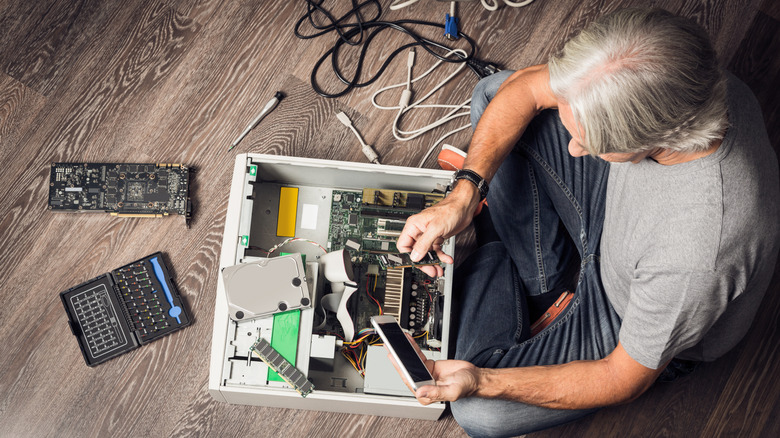
If you have a desktop, one of the most important things to know for its maintenance is to never place it directly on the floor. Although it might seem like an acceptable alternative for those who don't have enough space on their desks, you might be harming your computer's performance by doing so. This is because, being on the floor, it can overheat over time due to dust.
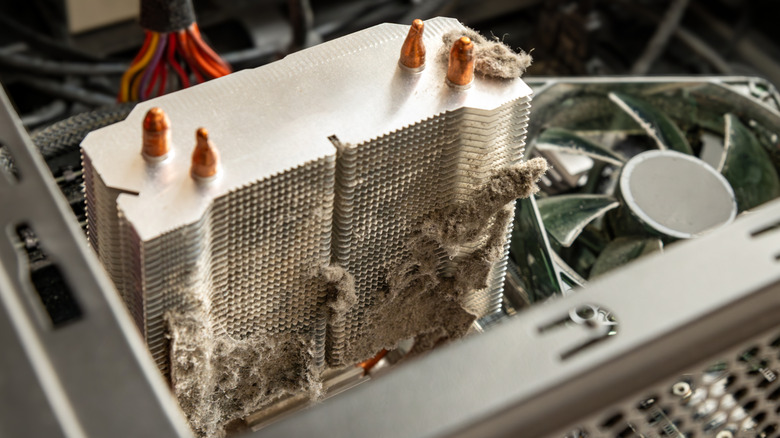
The problem is that, since it's far from your sight, it's easy to forget that this can happen. So, at first, your desktop might even turn on and run games normally for a while, but it will still be working harder due to dust buildup and compromised airflow. This overheating can, in fact, shorten the lifespan of several important components of your PC.
The good news is that if you want to extend the lifespan of your graphics card or processor, it's relatively simple. Even if you don't have extra space on your desk to leave the case there, there are some alternatives that don't cost that much.
Why the floor is the worst place for your PC's airflow
To maintain proper airflow for a desktop's internal components, most modern cases are designed with several air inlets and outlets that you can control with fans. One of these is located on the bottom, where the power supply normally sits. In addition, these cases also have small feet that allow air to pass underneath them.
When placed on the floor or a rug, the air intake on your case might become partially or totally blocked. This alone already makes the power supply work at higher temperatures, but you also create some other issues. Rugs and carpets generate static electricity, which attracts dust particles. The result is that this dust ends up being sucked in by your desktop's fans and going to the GPU or processor.
Even the floor itself collects a lot of dust, particularly if you own pets. At first, it may not seem like there is much dust around your PC, but it can build up over time, making it important to clean your computer regularly before it overheats. Not only that, but placing your machine on the floor leaves it prone to accidental kicks, which can dislodge cables or worse.
The safest alternatives for positioning your PC properly
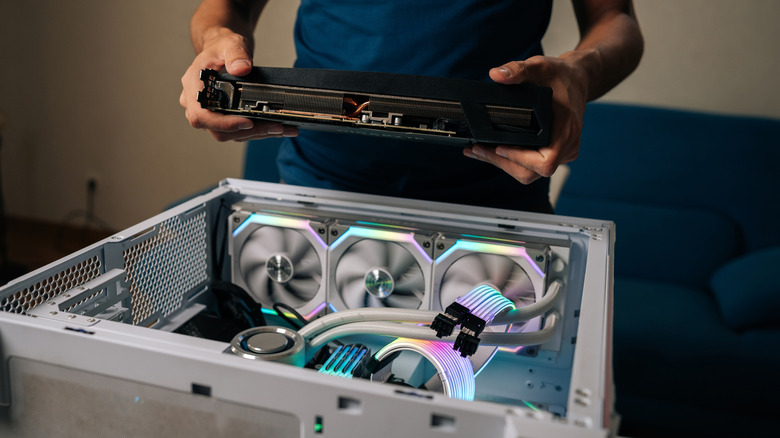
The ideal solution to avoid this problem is to place the PC on top of the desk where you use it. This way, the case no longer has direct contact with the floor, and it also makes it easier for you to visually inspect how dust is accumulating inside it.
However, not everyone has a large desk to support everything and the case at the same time. If you don't have any alternatives and need to leave your PC on the floor for this reason, you can use a stand. It's possible to find some alternatives with wheels that let you elevate the computer while also making it easier to move it when you need to clean the floor.
At the same time, keeping your PC above floor level with stands or in a desk doesn't entirely solve this problem. That's because dust will accumulate the same way over time, but not as fast as before. So it's also important to perform some maintenance on your PC every now and then to keep your hardware clean and working properly.