

Nothing Phone (4a) Review: Nothing Compares At The Price
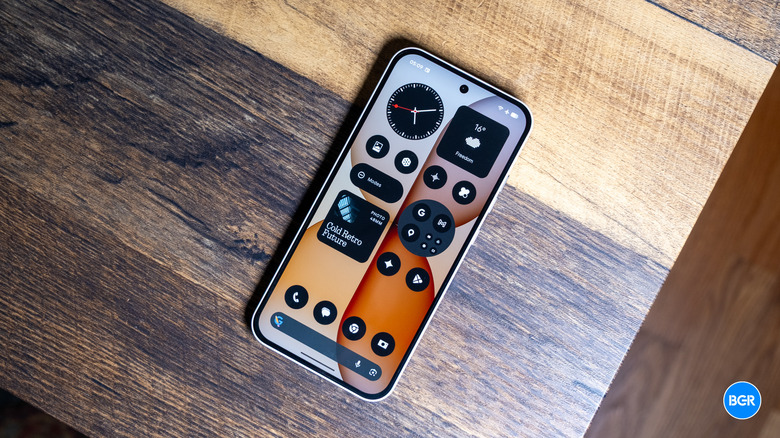
Nothing's is taking a slightly different approach to its phone releases in 2026. Over the past few years, it has released a few flagship devices, culminating with the most recent called the Nothing Phone (3). This year, however, it's focusing entirely on the mid-range and budget savings segments, headlined by the Nothing Phone (4a) Pro. Alongside that device, it has also released a standard Nothing Phone (4a), albeit only in certain regions.
But while the (4a) Pro gets an entirely new, more premium design, the standard Phone (4a) retains the same look as last year's Phone (3a). It's still a mid-range phone that prioritizes distinctive design, software customization, and a versatile camera system that includes a proper telephoto lens at a fraction of the cost of most other telephoto-equipped phones. That's a big deal in this price bracket.
So, is that telephoto enough to make the Nothing Phone (4a) a standout option? Are there better phones at this price? And honestly, should you just save up a little more and grab the (4a) Pro instead?
Design
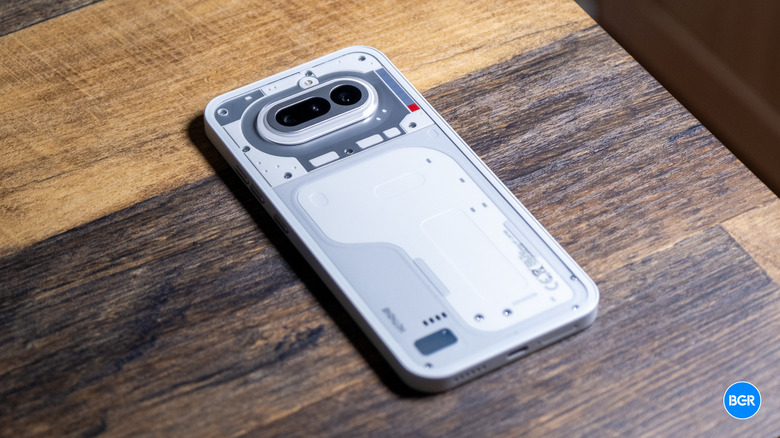
The Nothing Phone (4a) offers more or less the same design as the Nothing Phone (3a) from last year. The device still looks unique and interesting in a sea of monochrome phones, especially at this price point. It's a little larger and heavier than some of the compact phones you can get at the price too, though that's not necessarily a problem, and it means you get a bigger screen.
The overall look is classic Nothing. It has a transparent back that exposes design elements underneath, giving it a kind of retro-modern vibe. To be clear, you're not actually seeing the internal components of the phone. What you see through the transparent back is part of the actual design, but it's still unique and interesting.
I quite like the look and feel of the phone. It's different enough from the sea of glass slabs out there, and Nothing's design language continues to be one of the most recognizable in the industry. That said, having used the Phone (4a) Pro with its new metallic build, the standard (4a) can't help feeling a little cheap by comparison. The frame is plastic, and while it doesn't feel awful, it's clearly one area where Nothing is cutting costs.
The phone only has an IP64 rating, which means it'll survive some splashes and dust but isn't something you want to drop in a pool. That's fine for the price, but it's worth knowing and keeping in mind if you're used to more durable phones that can survive actually being dropped into water. There's an in-display fingerprint sensor on the front, which works as you'd expect — it's an optical sensor that worked fast enough in my use, though not as fast as some of the ultrasonic-equipped devices out there.
One area Nothing has updated is the Glyph system. The new Glyph Bar replaces the LED strips of the older Nothing phones with a simpler notification light that flashes differently depending on the type of notification. It's less of a statement than the original Glyph interface, but it's more practical.
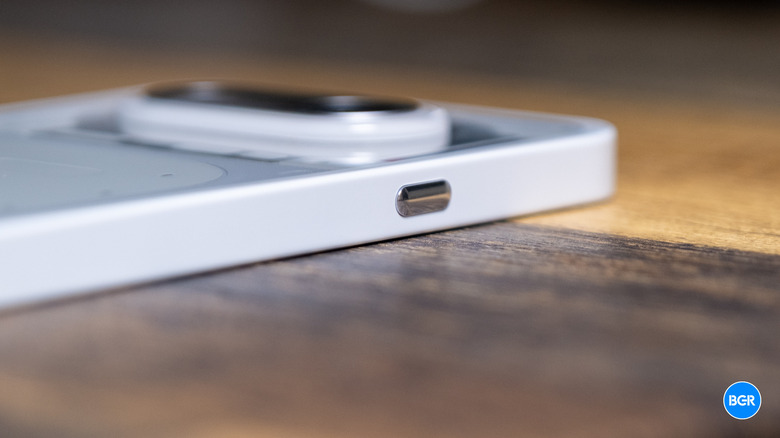
Color options include white, black, blue, and pink. I have the white model, which shows off the transparent design nicely. Volume and power buttons sit on the right side of the phone, while the left side features Nothing's Essential Key. I like where the button is placed — it's high enough on the phone to be easy to reach, and it doesn't get pressed when you clamp the device into a phone mount. We'll get into the actual usefulness of it in a bit.
Display
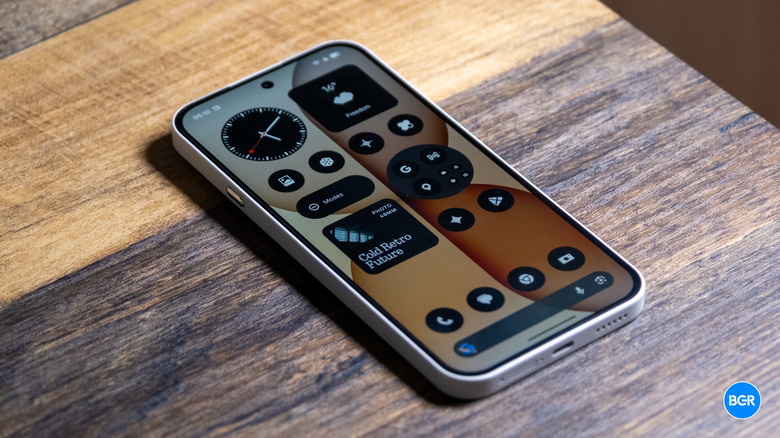
The Phone (4a) sports a 6.8-inch AMOLED display with a 120Hz refresh rate and Gorilla Glass 7i protection. On paper, Nothing advertises a peak brightness of 4,500 nits, though in real-world use, I wasn't able to get anywhere close to that. While I can usually get pretty close to a manufacturer's claimed peak brightness, the Nothing Phone (4a) only measured up to around 1,500 nits, and it didn't vary much between 2% and 100% window sizes. That's a little unusual, but regardless, while the phone's screen gets bright enough, it doesn't hit that manufacturer-claimed number.
In general, the display is quite good for a phone at this price. Colors look solid, it's decently bright for outdoor use, and the 120Hz refresh rate makes scrolling feel nice and smooth. It's reasonably crisp and responsive too. Importantly, it's similar to the screen on the more expensive Nothing Phone (4a) Pro. Even though the (4a) Pro has a higher refresh rate, they mostly look and feel the same.
Performance
The Nothing Phone (4a) is powered by a Qualcomm Snapdragon 7s Gen 4 processor, which is coupled with either 8GB or 12GB of RAM, and either 128GB or 256GB of storage. If you're looking for a phone that can handle heavier multitasking and productivity, it might be worth going for the 12GB model, though most users won't necessarily notice much of a difference.
In day-to-day use, performance is reasonably smooth, especially for the price. Social media, web browsing, email, messaging, and light gaming all run without issue. Multitasking is possible, and app-switching doesn't introduce any frustrating delays (most of the time). It's a perfectly capable phone for the vast majority of users.
That said, this isn't a phone designed for heavier workloads. Graphically intensive games will run, but they won't look their best, and sustained heavy loads can cause the phone to heat up. If you're looking for a gaming phone, it's probably worth saving up a little for something with a bit more oomph under the hood.
Compared to the Phone (4a) Pro, performance is a step behind. The Pro simply handles demanding tasks better, and if you're someone who pushes their phone hard, that difference will matter. But for most day-to-day use, the standard (4a) is more than enough.
Battery and charging
The Nothing Phone (4a) offers a 5,080mAh battery, which is unchanged from the Phone (3a) from last year. Real-world usage is reasonable. It's not incredible, but it's also not bad, and most people will get through a full day of normal use without issue. Don't expect to be able to push it to two days, though.
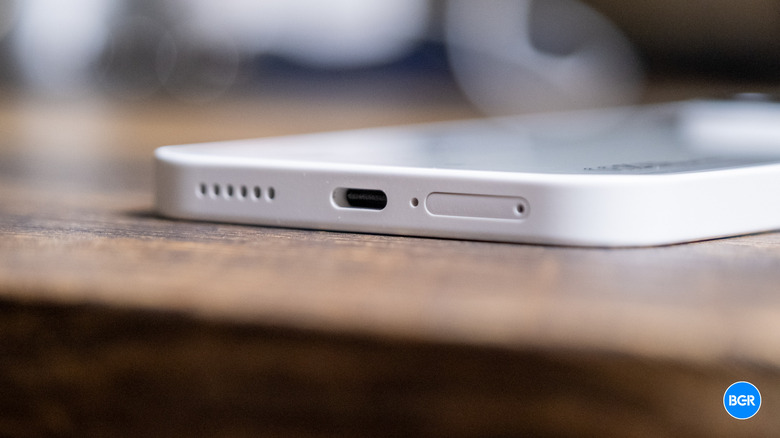
Charging speeds hit 50W with a wired connection, and there's 7.5W reverse wired charging to help you charge things like your wireless earbuds and other accessories. Unfortunately, there's no wireless charging on the Nothing Phone (4a). That's not entirely surprising at this price point, but it's still a bit of a bummer, especially when wireless charging has been around for so long now. I would hope that even budget phones would get support for wireless charging in the near future.
Charging speeds are decent for the price, though not mind-blowing. A 30-minute charge got me to 66%, and it took a little over an hour to hit a full charge. That's good enough, especially since many phones at this price point don't even come close to 50W.
Camera
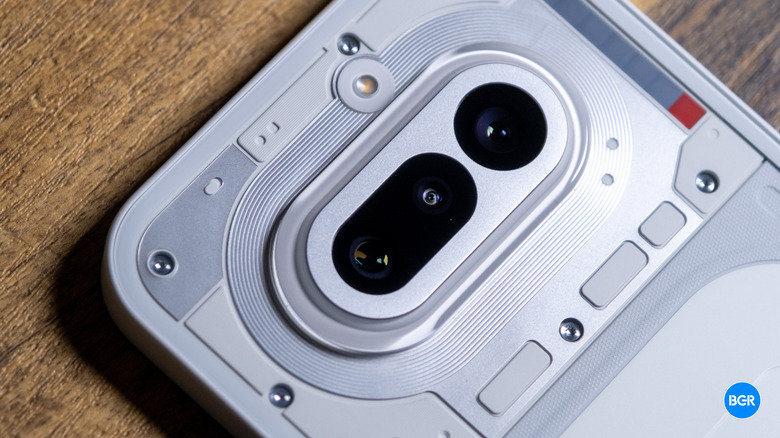
Perhaps the biggest advantage that the Nothing Phone (4a) has over other phones in this range is its camera system. The Nothing Phone (4a) offers a 50-megapixel main sensor, coupled with an 8-megapixel ultra-wide camera. Unlike most other phones at this price, it also goes a step further with a 50-megapixel periscope telephoto camera at 3.5x optical zoom.
Optical zoom on a phone at this price is fairly rare. Most competitors in this range skip the telephoto entirely and rely on digital cropping from the main sensor, which always introduces quality loss. The telephoto camera on the Nothing Phone (4a) is even a step up from last year's Phone (3a), which had an optical zoom of 2x. A 3.5x optical zoom is more useful, even if it means there's a bit more of a gap for the main camera to bridge with digital zoom. The Nothing Phone (4a) supports digital zoom of up to 70x, though of course at that point you won't be getting much in the way of detail. That said, I found images usable up to around 20x or so, especially in good lighting conditions. In low light, image sharpness drops off much earlier than that, though.
Image quality overall is quite good. Photos are reasonably crisp, colors are accurate, and dynamic range is solid. For this price -– or honestly, even under $500 –- the Phone (4a) easily holds its own, with the only real exception being the Phone (4a) Pro, which does everything a bit better.
The telephoto lens in particular is much improved over last year. It's not an incredible sensor, but it produces reasonably color-accurate photos with decent detail at native zoom. Having that reach is useful, whether you're taking portraits, grabbing shots of something across the room, or just framing a photo differently. The 8-megapixel ultrawide camera is perhaps the weakest of the three, but I found it to still offer good detail and color.
Overall, if you're shopping for a versatile, genuinely capable camera system in this price range, the Nothing Phone (4a) is the best option out there right now. Mind you, it would be among the best options in its price range even without the telephoto camera, as the main camera and ultrawide cameras capture solid shots in most lighting scenarios. The fact that the telephoto camera is there too makes it even better.
Software
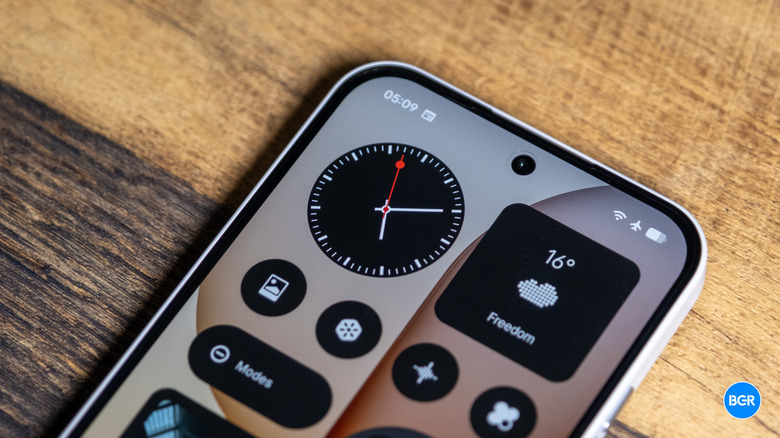
The Phone (4a) runs Nothing OS 4.1 based on Android 16 out of the box, and Nothing is promising three years of major OS updates and six years of security updates. That's not quite at the level of Samsung or Google's update policies, but it's fine for a mid-range phone.
Generally, I'm a fan of Nothing's approach to software. Whether you're using the company's distinctive monochrome-styled UI or sticking with a more standard Android look, everything is where you expect it to be, and there's basically no bloatware. Nothing also includes some well-designed, genuinely useful widgets for the home screen, which I really appreciate. The updated Glyph Bar notification system is a nice touch too, though it's more practical than flashy compared to the original Glyph interface.
My one complaint is how software works with the Essential Key. It's meant to be a shortcut into Nothing's AI-powered Essential Space, but honestly, I didn't use Essential Space all that much — and that hasn't changed over the past year or so that it's been a feature. The bigger issue is that there's no easy way to remap the Essential Key to something you'd actually use. Technically, you can do it through developer options, but most people aren't going to bother with that. For a dedicated hardware button, that's a real limitation, and I would have liked some of the customization you can get from other devices and their respective additional buttons.
Conclusions
The Nothing Phone (4a) is easily the best phone in its price bracket. It won't blow you away with raw performance, but it performs well enough for what most people need, and it pairs that with a good camera system, sleek software, and a design that looks and feels unique and reasonably premium. For the money, it's hard to beat.
The trade-offs compared to the (4a) Pro include worse performance, a less impressive camera system, and a less premium, less durable design. If you can stretch your budget, the Pro is the better phone. But if you can't, the standard Phone (4a) still gets you most of the way there without feeling like a compromise.
The competition
The obvious alternative is the Nothing Phone (4a) Pro, which is the premium variant of the same generation. It costs a bit more, but you get an even better camera system, better performance, and a more durable, premium design. If you care about any of those things, the extra spend is worth it.
The other main competitor is the Google Pixel 10a. It's more expensive, and its performance is slightly better. But its camera, while solid, is less versatile -– there's no optical telephoto.
Should I buy the Nothing Phone (4a)?
Yes. It's the best phone in its price range.