

Here's What Users Say Is The Best Phone For Voice To Text (And It's Not An iPhone)
According to a several Reddit users, the best phone for voice-to-text is Google's Pixel series. The consensus likely comes as no surprise to anyone who has been following the search giant's foray into smartphones, as Google has significant development resources into text-to-speech capabilities. Back in 2021, Google rolled out an "enhanced voice typing" experience for Android phones that aimed to improve the quality and accuracy of its voice-to-text module, while adding a number of quality-of-life features. These features included automatic punctuation detection and the ability to delete text by simply saying "clear."
Google optimizes the Pixel's entire stack using custom hardware, on-device AI models, software integration, and language processing, rather than just approaching text-to-speech as an afterthought keyboard feature. Google has also committed to constant, iterative speech-to-text improvements aiming to keep users satisfied. For example, Google described newer speech recognition models in 2023 as part of "almost eight-year journey that required extensive amounts of research, implementation, and optimization to provide the best quality characteristics across different use cases, noise environments, acoustic conditions, and vocabularies."
One Reddit user wrote, "get the pixel, you will not regret it," while another said, "all Pixels have great speech to text. It's the best in my experience."
Exploring why the Pixel excels
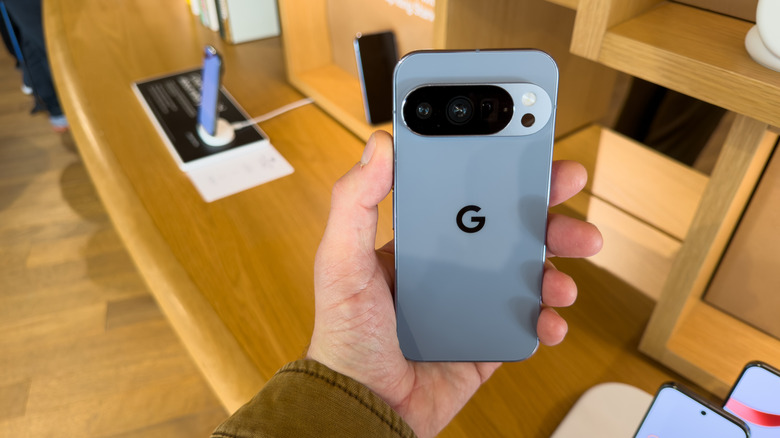
A key reason Google excels in the voice-to-text arena is how it deploys its highly developed AI capabilities (much like ChatGPT's voice transcription), which start with custom hardware. Months before the Pixel 6's rollout, Google switched from off-the-shelf chips to custom in-house processors. The company's own Tensor chip includes dedicated machine-learning hardware designed to accelerate AI workloads, which include functions like speech recognition, natural language processing, transcription, and translation.
The inclusion of Tensor inside the Pixel phones means that Google is able to run larger, faster AI models directly on the device, rather than having to send audio to cloud servers for remote interpretation. This decision results in massive latency reduction, to the point that your words seem to pop up on screen almost instantaneously. Google's documentation explicitly says that dictated text stays on the device except for some optional features like "Fix it" or some advanced edits.
Pixel's integration, training, and experience
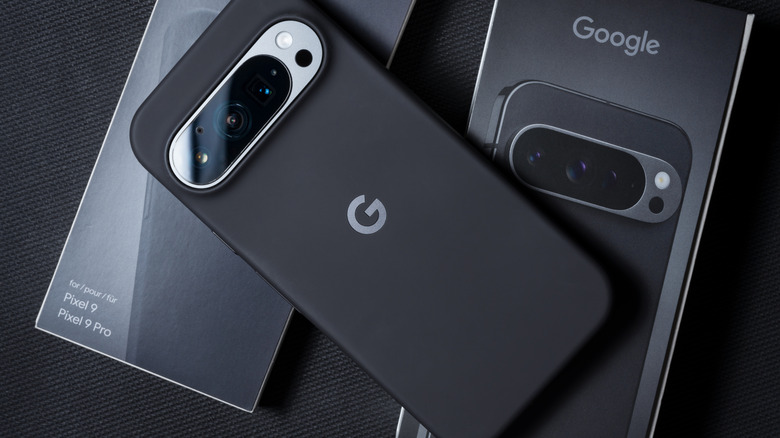
Some may not know how Google has a massive integration advantage — owning a huge swath of the software and hardware that goes into making a Pixel function. This means that, unlike a lot of OEMs that have to bolt dictation features onto a keyboard, Google can bake it directly into Gboard, Android system intelligence, and its Gemini AI assistant tools. This opens up a world of functionality beyond just transcription; it allows Android users to send emails with their voice, insert emojis, and parse previously written text.
Google also has the advantage of a huge training data library and natural language processing experience. The company has spent decades building speech systems for Google Translate, Google Assistant, its Live Transcribe feature, voice search, and captioning. Pixel gets to take advantage of this immense ecosystem, allowing it to use contextual language modeling to infer where one sentence ends and another begins, how to insert appropriate punctuation, or even to suggest replies – a function you'll see frequently in the newly AI-enhanced iteration of Gmail.