

What An Ethernet Switch Is, And When You Might Actually Need One
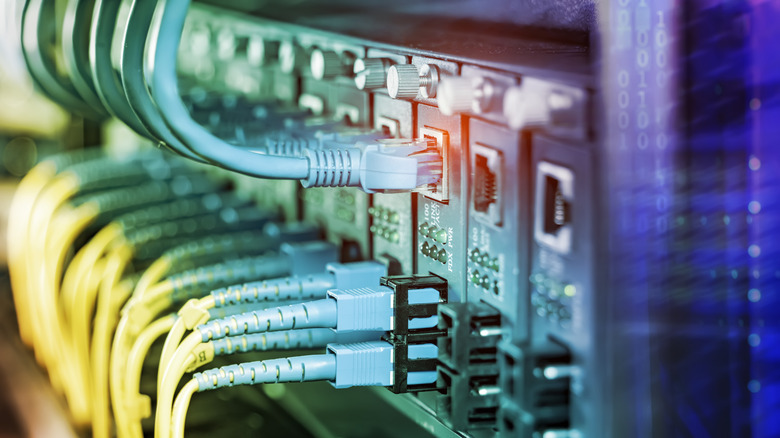
Ethernet switches allow you to expand a network's capacity with dedicated hardware that enables wired internet connectivity across multiple devices. Users will often install a network switch to integrate more devices into their networks, without having to replace the router or remove weak Wi-Fi from the mix. Adding a switch to your network can also open you up to some clever alternative uses for Ethernet ports.
You'll find a huge variety of network switches, ranging from five-port models to large racks of networking hardware powered by industrial-grade 96-port devices. Some Ethernet switches support Power Over Ethernet (PoE), allowing them to power connected devices through the ethernet cable.
Ethernet switches are also used in ways you wouldn't expect. In video production, an Ethernet switch might be used to provide multiple connections to key parts of the pipeline. Blackmagic Design launched a dedicated production-level switch to manage video streams between devices. Further, some productions now use Network Device Interface (NDI), which can significantly reduce costs for smaller productions. NDI lowers costs by using standard Ethernet networks, rather than expensive or limited video cables like SDI or HDMI. It then feeds video as a stream to video production software to be used as a source.
When do you need an Ethernet switch?
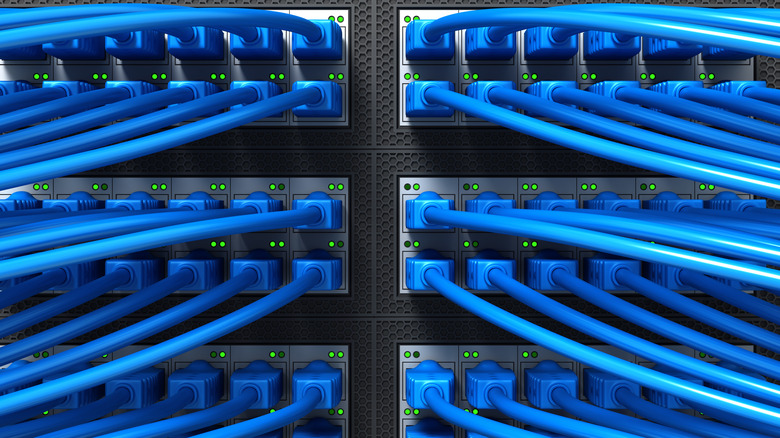
If you have multiple computers or devices that require a wired connection, it might be time to consider purchasing an Ethernet switch. For instance, once a PC, console, and smart TV all start relying on the same flaky Wi-Fi connection, it's time to invest in a network switch. These will provide you with a far more stable connection, but might require you to run Ethernet cables through your house. If that's not an option, power line adapters or upgrading your network to a mesh network could solve these issues. A secondary mesh node connected to a switch will absolutely work, and can be critical for those with an Eero router, which only sports two Ethernet ports. For a deeper look at options, check out our guide on the four most reliable Wi-Fi mesh systems, according to users.
However, chances are you won't require an Ethernet switch at all. Most home networks now have enough bandwidth to handle multiple people streaming and using the wireless connection daily. An Ethernet switch is a more significant consideration if you're planning on getting into the home lab or home server side of computing. Hosting your own server, whether exposed to the internet or not, can be a hassle if there aren't enough Ethernet ports around. That project of turning an old laptop into a media server could go up in smoke before you can plug it in without sufficient Ethernet ports.